
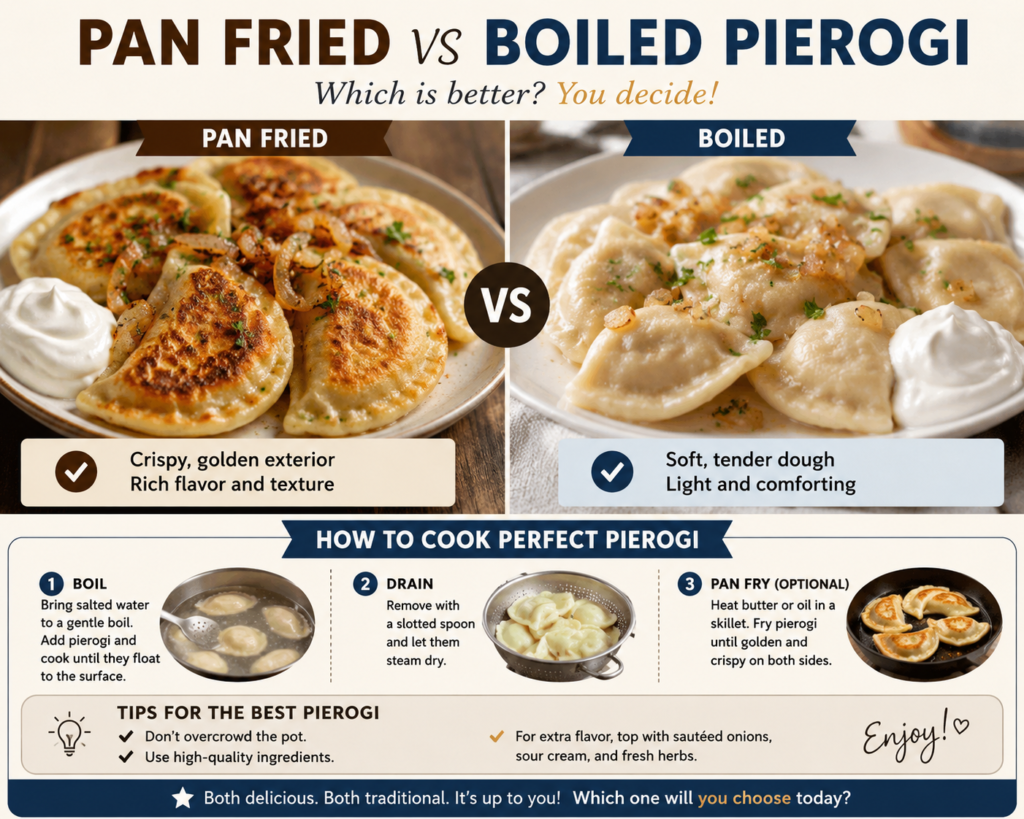
Pan Fried vs Boiled Pierogi – Which Is Better?
As a huge fan of Polish cuisine, I’ve always been fascinated by the debate over pan fried vs boiled pierogi. These delicious dumplings can be cooked in various ways, but which method yields the best results? In this post, we’ll explore the pros and cons of each cooking technique, and I’ll share my personal experience with both methods. By the end of this article, you’ll know exactly how to cook your pierogi to perfection, whether you prefer them pan fried or boiled.
Ingredients

To make delicious pierogi, you’ll need the following ingredients:
- 2 cups all-purpose flour
- 1/2 cup warm water
- 1/4 teaspoon salt
- 2 tablespoons vegetable oil
- Filling of your choice (e.g., potatoes, cheese, meat, or fruit)
Step-by-Step Instructions

Here’s a basic recipe for making pierogi dough and cooking them using both methods:
- In a large mixing bowl, combine the flour, warm water, and salt. Mix the dough until it’s smooth and elastic.
- Knead the dough for about 5 minutes until it becomes pliable and easy to work with.
- Divide the dough into smaller pieces and roll them out into thin circles.
- Place a tablespoon or two of your chosen filling in the center of each dough circle.
- Fold the dough over the filling, forming a half-circle shape, and press the edges together to seal the pierogi.
- To boil the pierogi, bring a large pot of salted water to a boil and gently add the pierogi. Cook for 5-7 minutes, or until they float to the surface.
- To pan fry the pierogi, heat a large skillet with some oil over medium heat. Add the pierogi and cook for 2-3 minutes on each side, until they’re golden brown and crispy.
Comparison of Cooking Methods

So, which method is better: pan fried vs boiled pierogi? The answer ultimately depends on your personal preference. Boiling pierogi is a more traditional method, and it helps preserve the delicate texture of the dough. On the other hand, pan-frying adds a crispy exterior and a richer flavor to the pierogi. I’ve tried both methods, and I must say that I enjoy the pan fried pierogi a bit more. There’s something about the crunch and the flavor that just can’t be beat.
My Personal Experience

I remember the first time I tried making pierogi at home. I was a bit intimidated by the process, but with some practice, I got the hang of it. I started by boiling the pierogi, and they turned out delicious. However, when I tried pan-frying them, I was amazed by the difference in texture and flavor. The pan fried pierogi were crispy on the outside and soft on the inside, with a depth of flavor that the boiled pierogi lacked. From that day on, I was hooked on pan-frying my pierogi.
Tips & Tricks
Here are a few tips to help you achieve the perfect pan fried vs boiled pierogi:
- Make sure to not overwork the dough, as this can lead to tough pierogi.
- Use the right type of filling, as some fillings are better suited for boiling, while others are perfect for pan-frying.
- Don’t overcrowd the pot or skillet, as this can cause the pierogi to stick together.
- Experiment with different seasonings and toppings to find your favorite way to enjoy pierogi.
Serving Suggestions
Pierogi can be served in a variety of ways, depending on your personal preference. Some popular options include:
- Sour cream and chives
- Fried onions and bacon
- Melted butter and garlic
- Marinara sauce and melted mozzarella cheese
FAQ
Here are some frequently asked questions about cooking pierogi:
- Q: Can I freeze pierogi dough?
- A: Yes, you can freeze pierogi dough for up to 3 months. Simply wrap it in plastic wrap or aluminum foil and store it in the freezer.
- Q: How do I know when the pierogi are done?
- A: Boiled pierogi are done when they float to the surface. Pan-fried pierogi are done when they’re golden brown and crispy on the outside.
- Q: Can I use a different type of flour to make pierogi dough?
- A: Yes, you can experiment with different types of flour, such as whole wheat or rye flour. However, keep in mind that the flavor and texture may vary.