
What Are Pierogi / Sweet Pierogi
Sweet Pierogi Recipes, pierogi are well-known polish dumplings and a big part of traditional polish dishes, loved both in Poland and as polish dumplings abroad. When we talk about sweet pierogi or dessert pierogi, we mean dumplings made with unleavened dough and filled with sweet fillings, though savory fillings also exist in polish cuisine. These are usually boiled dumplings, sometimes turned into pan-fried dumplings, and enjoyed as true comfort food.
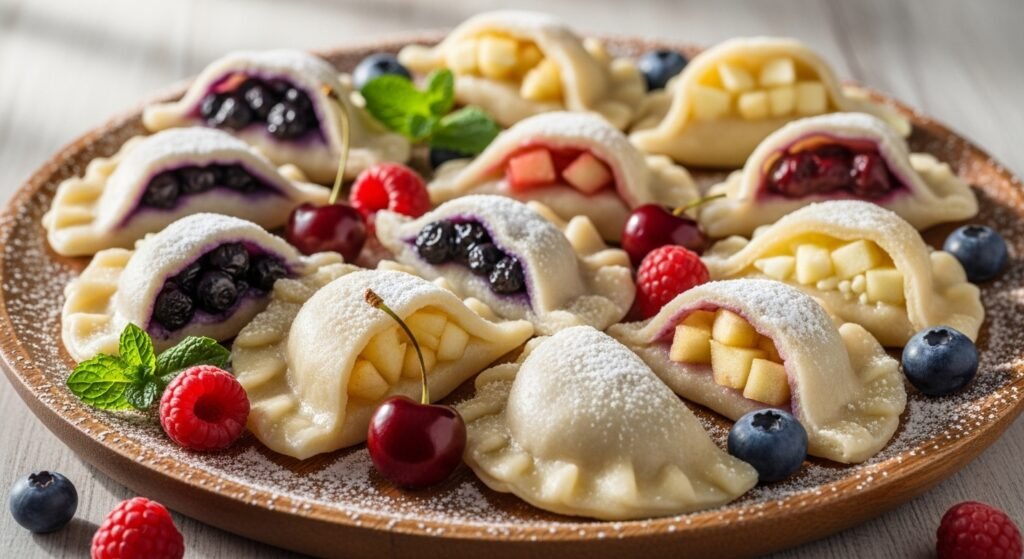
The naming can confuse many people. The correct form is pieróg singular and pierogi plural, while pierożki simply means small pierogi. Outside Poland, you may hear naming variations like pierogis, pierogies, perogy, or pyrogy, but they all point back to the same beloved dish.
Sweet Cheese Pierogi / Sweet Cheese Filling
sweet cheese pierogi are filled with twaróg cheese, also called polish farmer’s cheese or white cheese. Depending on preference, cooks use full-fat twaróg, reduced-fat twaróg, or low-fat twaróg, with farmer’s cheese substitute working well when needed. The filling blends egg yolks, sugar, vanilla extract,Bluebarry and vanilla pudding powder, with cornstarch substitute sometimes used for texture.
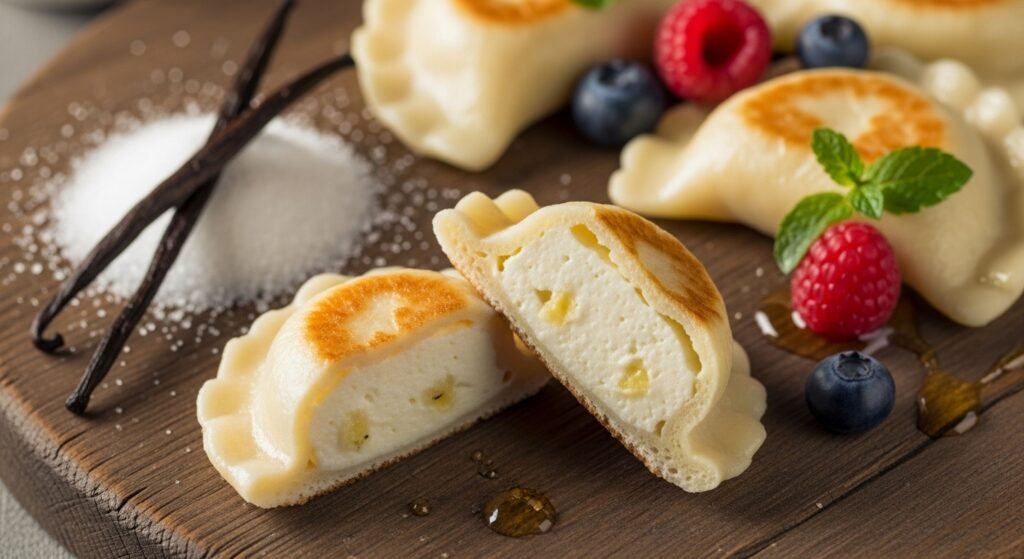
This creates soft, rich cheesecake bites with a creamy filling, a gentle tangy flavor, and perfectly sweetened cheese. It’s closely related to polish cheesecake sernik and even inspired by naleśniki filling, which I’ve personally used when I want a smoother, dessert-style pierogi.
Fruit-Filled Sweet Pierogi
fruit pierogi are my favorite when fresh produce is in season. Popular versions include blueberry pierogi, raspberry pierogi, and plum pierogi, all made with fresh berries and seasonal fruits. When cooked, the filling turns into bursting berries with juicy blueberries and fresh raspberries that release natural sweetness.
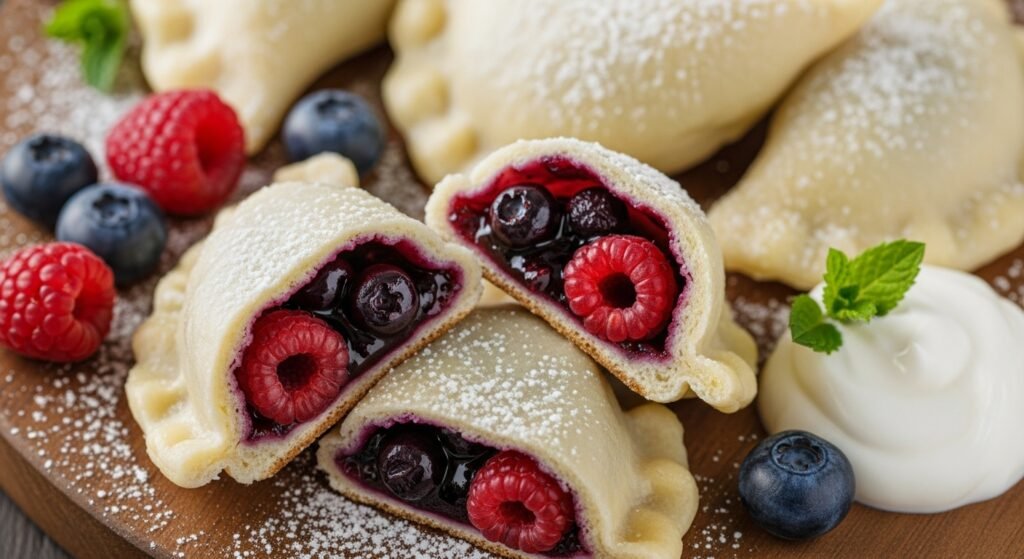
These dumplings offer a sweet tangy filling with a soft, jammy filling texture, making them perfect fruit dessert dumplings. This style follows traditional fruit filling methods and delivers a clean sweet berry flavor without feeling heavy.
Ingredients – Dough
A good pierogi dough starts with all-purpose flour or plain flour, mixed with hot water or warm water, salt, and fat like butter. Some cooks use vegetable oil, sunflower oil, canola oil, or even vegan butter. Depending on the recipe, you may add egg, egg yolk, sour cream, or greek yogurt for softness.
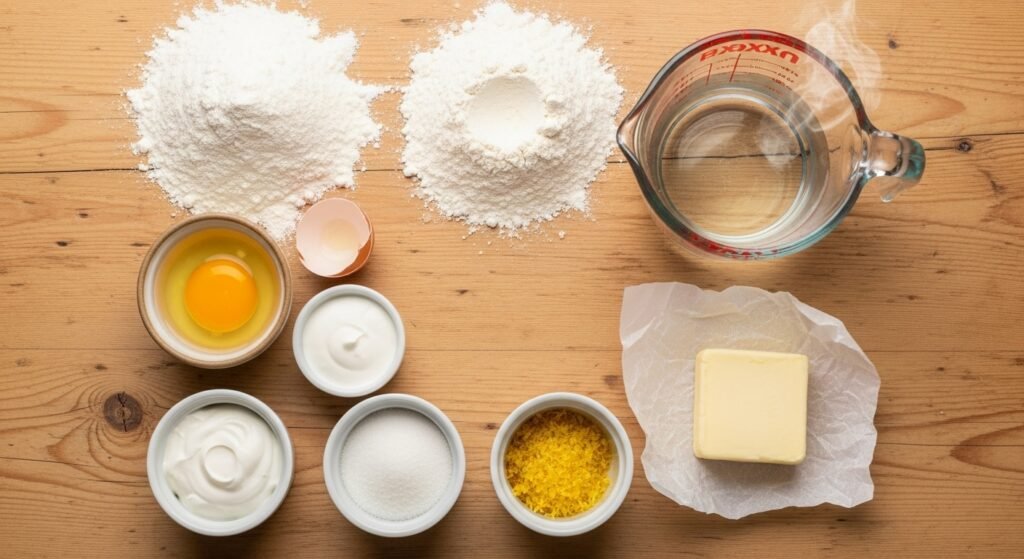
Flavor boosters like lemon zest, sugar, icing sugar, or a pinch of sea salt help balance sweet fillings. I’ve tested many versions, and small changes here really affect how tender the dough feels after cooking.
Ingredients – Filling
The classic sweet filling often combines twaróg cheese or farmer’s cheese with fruits like blueberries, raspberries, and fresh plum. Sweetness comes from sugar, brown sugar, or turbinado sugar, sometimes balanced with balsamic vinegar for depth. Thickeners like tapioca flour help control moisture.
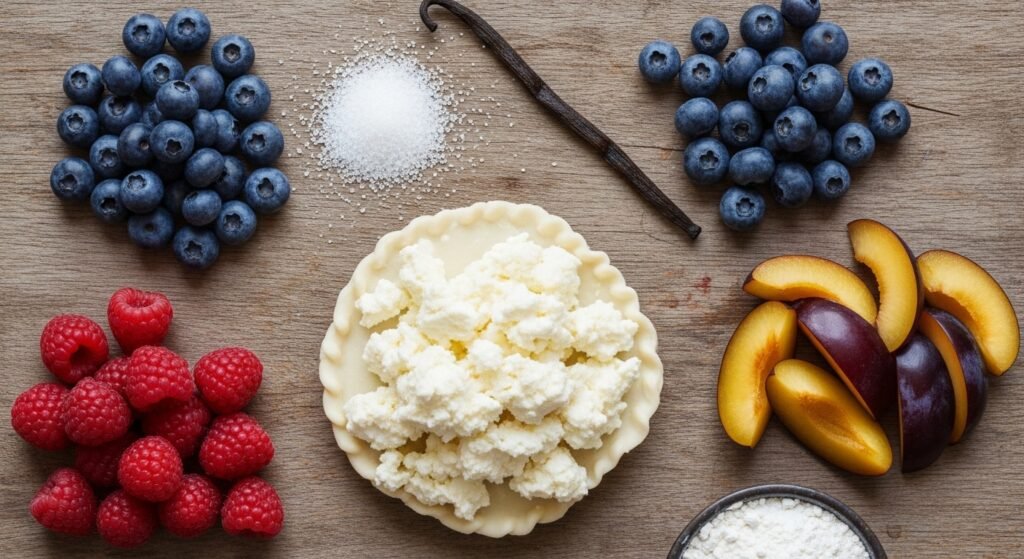
Flavor is rounded out using vanilla, vanilla extract, or pudding powder, along with egg or egg yolk for structure. Finishing touches such as powdered sugar, black pepper, and salt create contrast that keeps dessert pierogi interesting.
Dough Preparation
Start by mix flour and salt in a dough bowl, then add warm water with butter and begin spoon mixing until a rough dough forms. Proper kneading dough is key, whether through hand kneading, a stand mixer with dough hook, or a food processor, until you get elastic dough that feels soft dough and looks smooth dough.
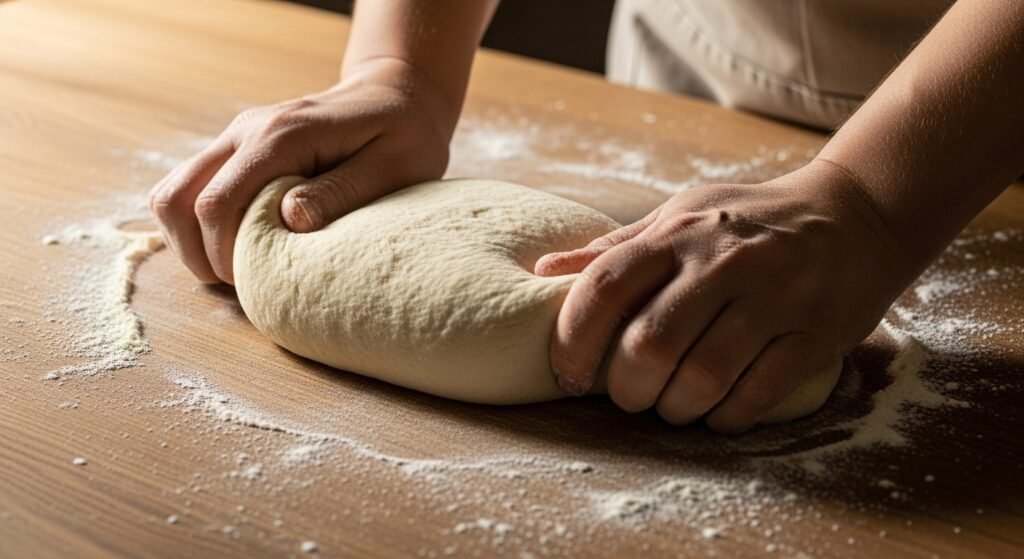
Once done, cover with plastic wrap and allow dough resting time. Some recipes need thirty minutes rest, others prefer one hour rest, and from experience, this pause makes shaping sweet pierogi far easier.
Filling Preparation
For a smooth start, mixing filling begins with careful egg and sugar mixing, which helps in sweetening cheese before any fruit mixing happens. I usually prefer gently folding fruit into the bowl so the filling keeps a soft body while developing a jammy texture as it cooks. When the mixture starts bubbling mixture, it’s important to remove it from heat and allow cooling filling time so flavors settle properly.
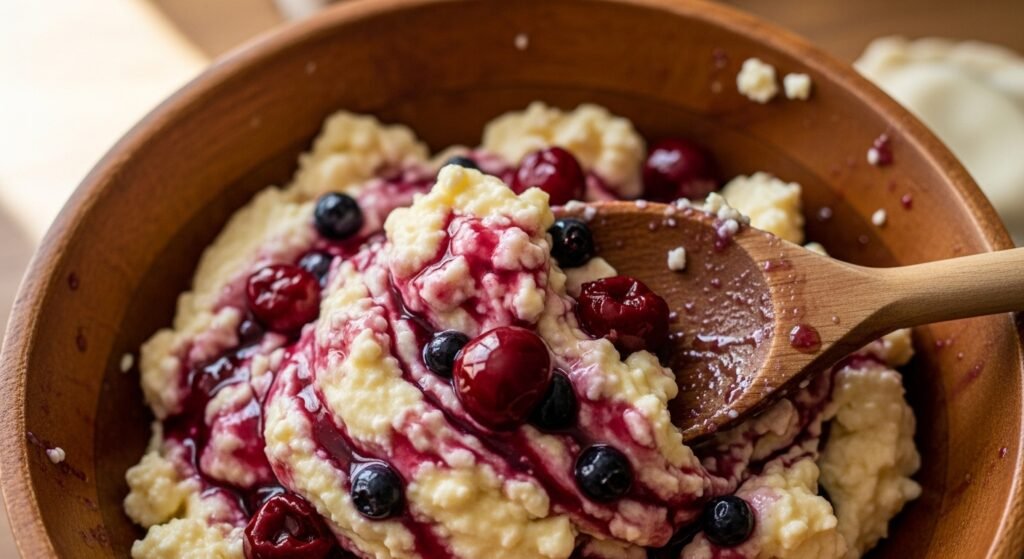
Depending on the batch size, I switch between a stand mixer paddle and simple fork mixing, both of which work well. Once blended, a short refrigerator chilling makes the filling easier to handle and prevents leaking during shaping.
Shaping / Assembling Pierogi
Start by divide dough evenly, then continue rolling dough on a lightly floured surface until you get thin dough. I’ve found that a silicone rolling mat helps a lot, though a pasta roller or classic rolling pin works just as well. For cutting, a glass cutter, biscuit cutter, or circle cutter all give neat edges.
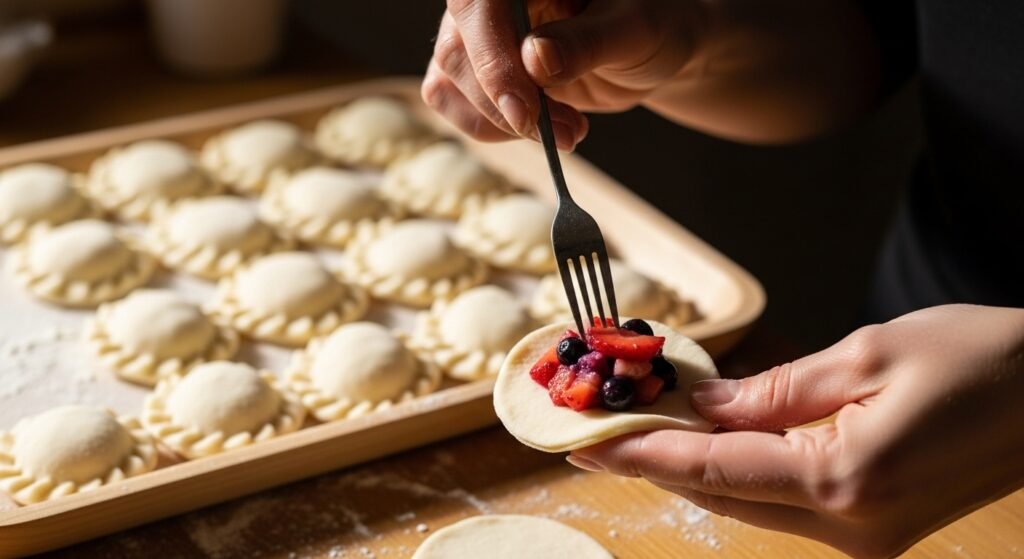
Place teaspoon filling in the center, fold into a half-moon shape, then focus on sealing edges using crimping fingers or fork sealing. Let the shaped pierogi sit with towel resting under a damp cloth so they don’t dry out before cooking.
Cooking Pierogi
Bring boiling water with salted water seasoning to a large pot, then use batch cooking to avoid crowding. I usually add ten to twelve dumplings at a time and wait for floating pierogi, which signals doneness. After that, allow one to two minutes extra cooking or three to five minutes cooking depending on dough thickness.
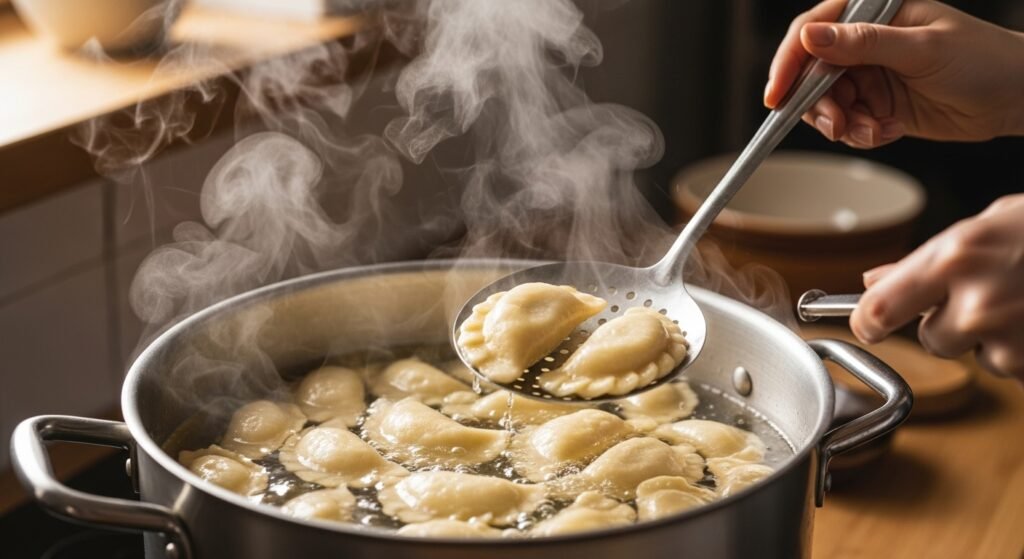
Remove gently with a slotted spoon, draining pierogi well before serving. For extra texture, a pan frying option with butter frying creates a light golden crust that works beautifully for sweet versions.
Serving Sweet Pierogi
Classic toppings like whipped cream and cinnamon are always welcome, while strawberry sauce or strawberry purée pair well with fresh strawberries. Lighter options include plain yogurt, sour cream, or crème fraîche, all finished with icing sugar dusting or caster sugar Sweet Pierogi Recipes.
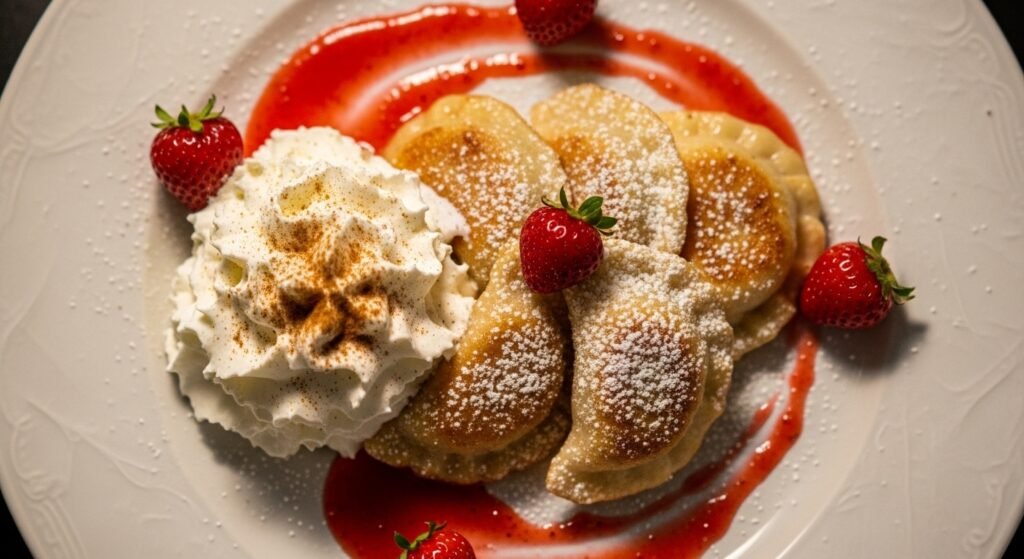
For richer plates, I like a caramelized crust topped with spiced sour cream, and for guests who want variety, applesauce optional is a surprisingly good match.
Storage and Freezing
When it comes to storing pierogi, I always start with a light melted butter coating to stop sticking, then place them in an airtight container for safe refrigerator storage. This method works best for short keeping, usually two days storage, without losing texture. For longer plans, freezing pierogi is reliable, whether you choose raw pierogi freezing or cooked pierogi freezing.Sweet Pierogi Recipes
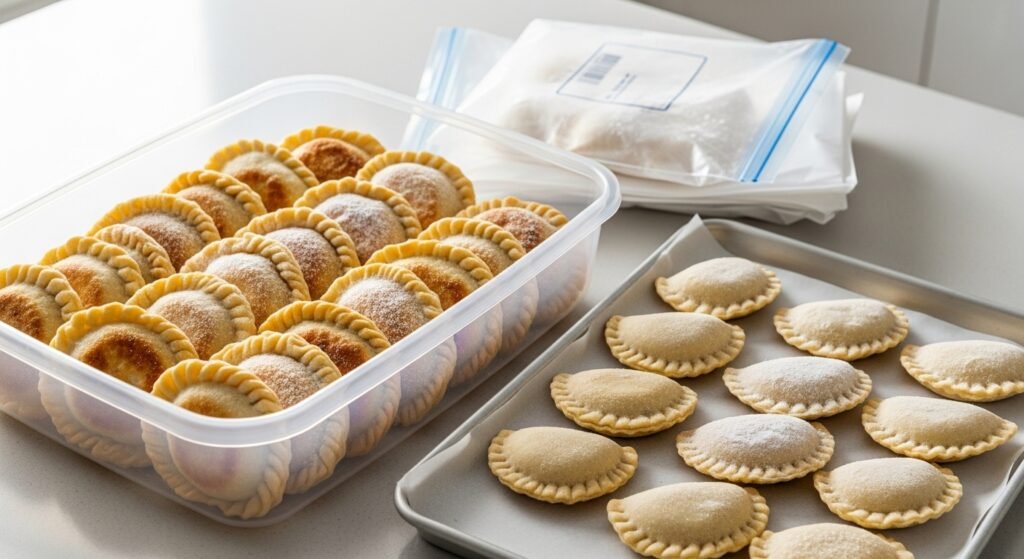
I freeze them first on a flour sprinkled tray, lined with parchment paper or wax paper, then move them into freezer bags or plastic bags. You can cook from frozen, but I stick to seven to eight frozen pierogi at a time to avoid water temperature drop, which increases bursting risk. Properly stored, they hold well for three months storage.
Frying Sweet Pierogi
I love making fried sweet pierogi when I want extra texture. You can choose deep frying for crunch or shallow frying for a lighter bite, both using oil frying with canola oil, vegetable oil, or peanut oil. The goal is always golden brown pierogi with a crispy exterior.
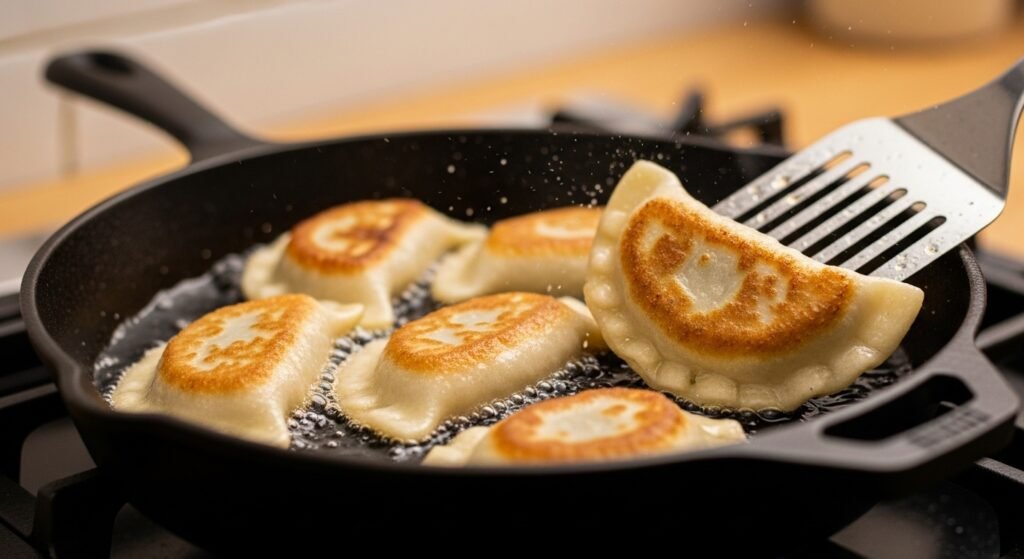
Inside, the magic is in the tender dough, which stays soft if the oil is right. I’ve learned the hard way that keeping the frying temperature three hundred seventy five fahrenheit makes all the difference between greasy and perfect.
Personal Experience & Tradition
My love for sweet pierogi started at a family christmas pierogi party, where we experimented with leftover dough use and even tried a food coloring experiment just for fun. Years later, visiting pierogi fest and especially seattle pierogi fest, after waiting three hours, led to my first sweet pierogi experience that truly changed my view.
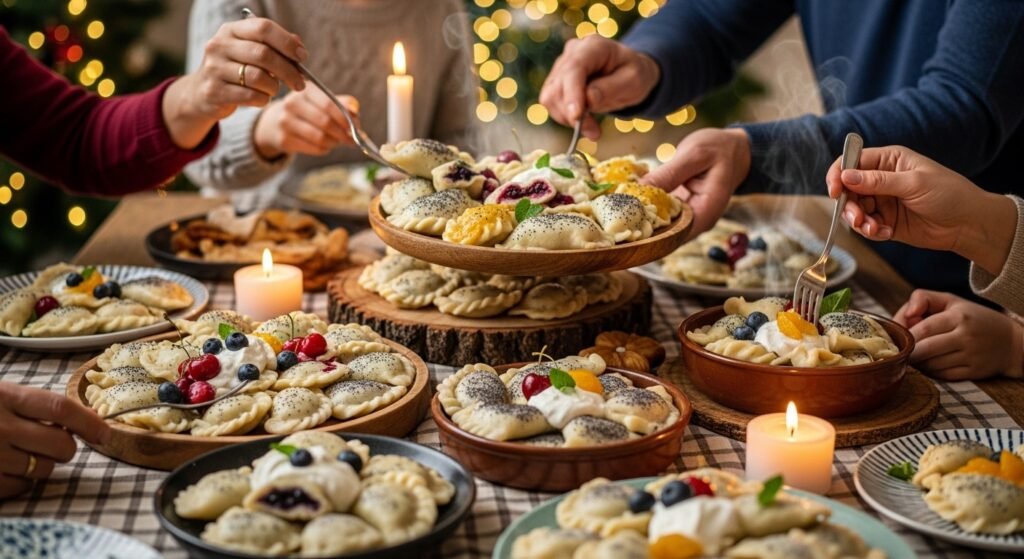
That moment pushed me into a serious home cooking attempt, full of recipe testing using every method I could think of: baking method, boiling method, and pan frying method. Each taught me something new about balance and flavor.
Recipe Details
Across different styles, a solid sweet pierogi recipe can range from a classic sweet cheese pierogi recipe to a crisp fried sweet cheese pierogi recipe or even a bold plum blueberry balsamic pierogi. Each version varies by prep time, cook time, resting time, and total time, depending on filling and technique. Sweet Pierogi Recipes
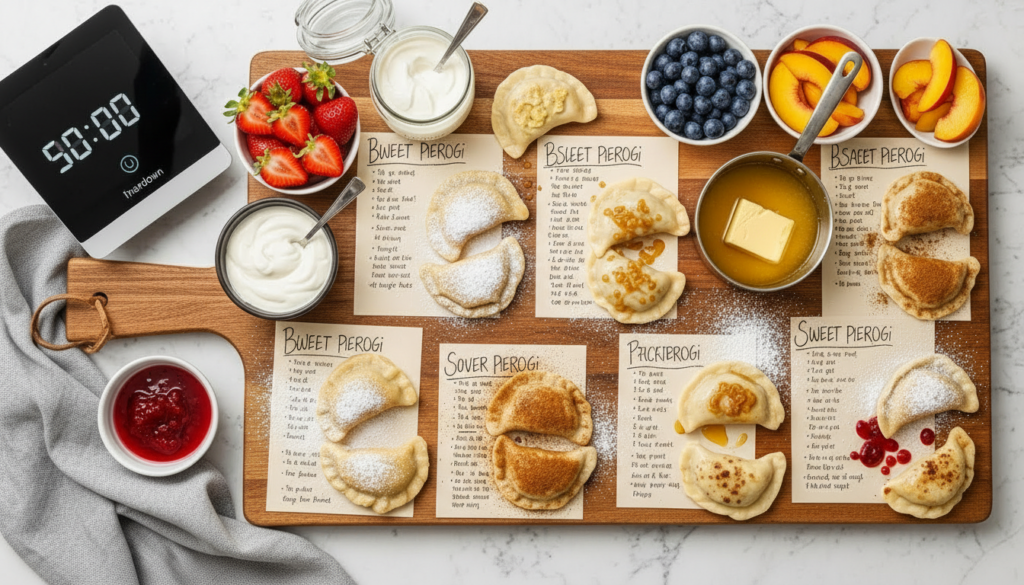
Batch sizes also change, from servings twenty to servings forty, or even fifty small pierogi for parties. Nutritional details like calories, along with ratings and reviews, help guide choices, but at heart these remain a polish dessert rooted deeply in polish cuisine. Sweet Pierogi Recipes
FAQs
What makes sweet pierogi different from regular pierogi?
Sweet pierogi are made with dessert-style fillings like fruits or sweet cheese instead of savory options. The dough stays the same, but the filling is lighter, sweeter, and often served with toppings like cream, sugar, or fruit sauce.
Can sweet pierogi be boiled and fried both?
Yes, sweet pierogi are first boiled until they float, then they can be lightly pan-fried in butter or oil. Frying adds a crispy outside while keeping the inside soft and creamy.
Which fruits work best for sweet pierogi fillings?
Berries like blueberries, raspberries, and plums work best because they soften quickly and create a jam-like filling. Seasonal fruits are ideal since they add natural sweetness and flavor.
Why do sweet pierogi sometimes burst while cooking?
Bursting usually happens when too many pierogi are cooked at once or when frozen pierogi lower the water temperature too much. Cooking in small batches helps prevent this.
Can sweet pierogi be frozen for later?
Yes, both raw and cooked sweet pierogi freeze very well. Freeze them in a single layer first, then store in bags. They can be cooked straight from frozen without thawing.
What is the best way to store leftover sweet pierogi?
Leftover sweet pierogi should be brushed with butter and kept in an airtight container in the fridge. They stay fresh for about two days and can be reheated by pan-frying.
Are sweet pierogi always served with sour cream?
Sour cream is traditional, but sweet pierogi are also great with whipped cream, fruit sauces, yogurt, or even a light sugar dusting. Serving styles depend on taste and filling.
Can sweet pierogi be deep-fried?
Yes, sweet pierogi can be deep-fried at the right temperature. This gives a crisp outer layer while keeping the dough tender inside, especially for cheese-filled versions.
Do sweet pierogi take longer to cook than savory ones?
No, cooking time is mostly the same. The key sign is when pierogi float, then cooking them a little longer to ensure the dough is fully cooked.
Are Sweet Pierogi Recipes considered a dessert or a main dish?
Sweet pierogi are usually served as dessert, but in Polish tradition they can also be eaten as a main dish, especially when served in larger portions.