
Sweet and Savory Crepes Explained
Sweet and Savory Crepe Filling Ideas are classic french crepes known as thin pancakes with lacy edges, a light texture, and a soft bite that feels rich because of buttery crepes. These delicate crepes work beautifully as sweet crepes or savory crepes, which is why they are a true crowd pleaser. I’ve served them as breakfast crepes, brunch crepes, lunch crepes, and even dinner crepes, and every time they feel special without being heavy. Their biggest strength is customizable crepes, a core part of french cuisine, where fillings change with mood and season.
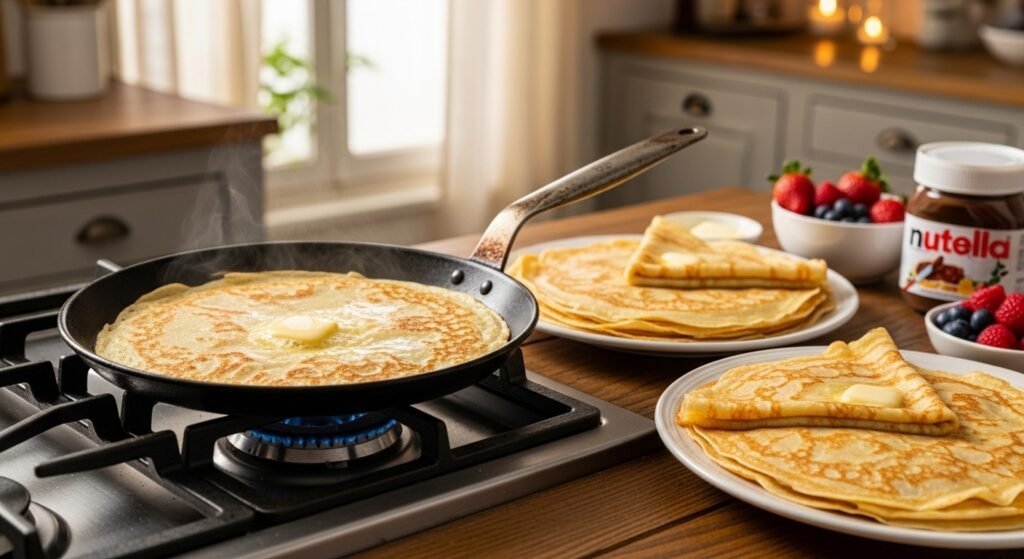
From fruit and sugar to cheese and vegetables, crepes adapt easily without losing their charm. That flexibility is what makes them ideal for mixed tables where everyone wants something different, sweet or savory, from the same base.
Crepes vs Pancakes
The real difference in crepes vs pancakes comes down to structure. Crepes use a thinner batter with no leavening agents, which gives them a lighter texture and a wider, larger size crepes shape. In any fair pancake comparison, pancakes rise and feel fluffy, while crepes stay flat with crispy edges and a signature lacy texture.
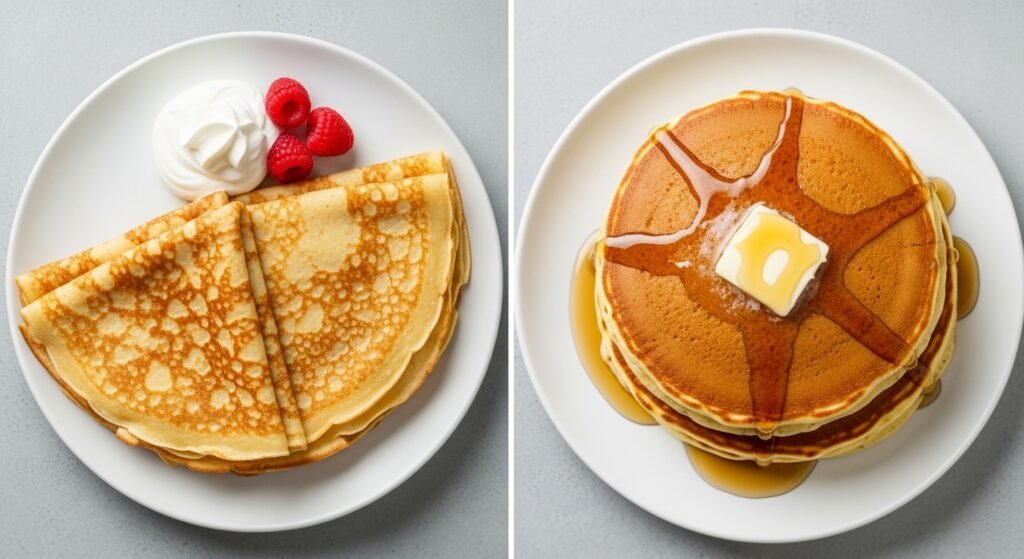
Because of the watery batter, Sweet and Savory Crepe Filling Ideas, crepes spread fast in the pan and cook evenly. Once you make them a few times, the technique feels natural, and you stop thinking of pancakes as competition—they’re simply a different experience.
Crepe Batter Essentials
At the heart of good crepes are simple crepe batter ingredients: all-purpose flour or plain flour, milk or whole milk, water, eggs or large eggs, and butter or melted butter for flavor. Proper seasoning with kosher salt or fine sea salt, a touch of sugar, and optional vanilla extract balances both sweet and savory fillings.
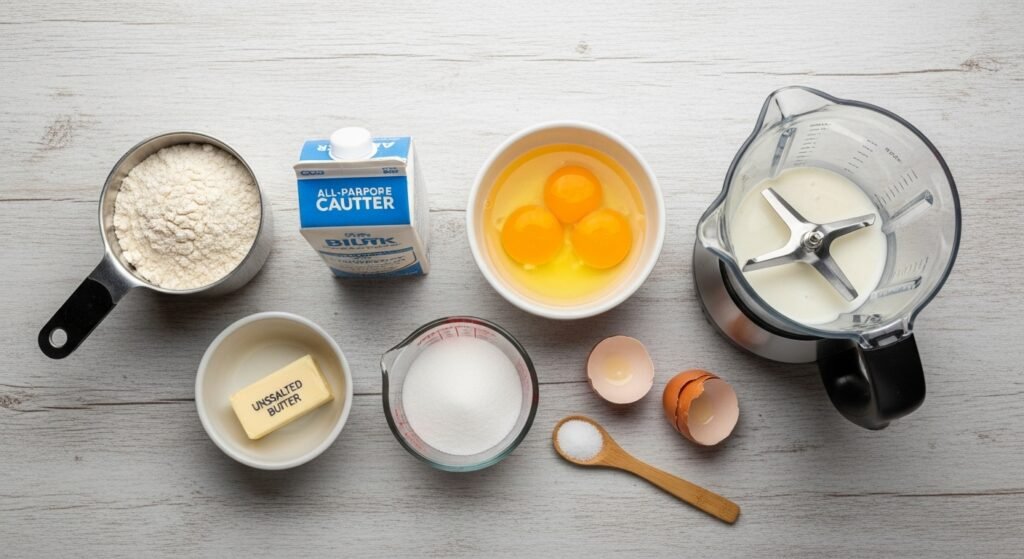
For tools, I rely on a blender or magic bullet to get a smooth mix, then cook on a nonstick skillet or crepe pan using a spatula. This setup keeps things fast and consistent, especially when making multiple batches.
Making and Cooking Crepes
The easiest method starts with blender batter, combining and mixing ingredients until smooth. Letting the batter rest—either a one hour rest or overnight refrigeration—helps with gluten relaxation and ensures the batter reaches room temperature batter before cooking. This step alone improves texture more than people expect.
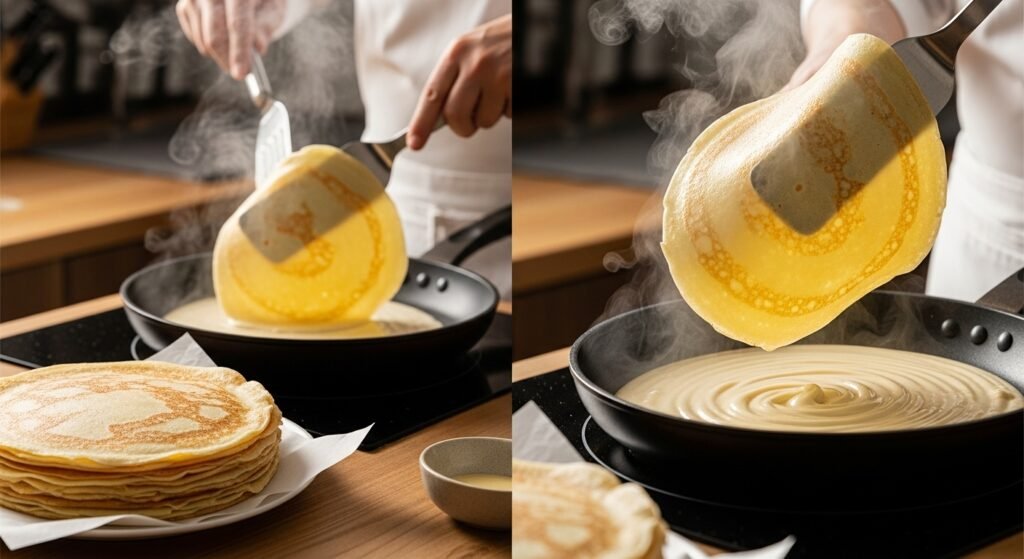
When cooking, focus on preheating skillet over medium heat, lightly buttering pan, and adding a quarter cup batter. Tilt the pan for swirling pan, then wait before flipping crepes. As they finish, stacking crepes with wax paper separation or parchment paper separation keeps them soft and ready for any sweet or savory filling.Sweet and Savory Crepe Filling Ideas
Sweet Crepe Filling Ideas
When it comes to dessert-style crepes, I always start simple with butter and sugar, then build flavor from there. Spreads like nutella paired with bananas or strawberries never fail, especially when finished with powdered sugar. I often rotate fresh fruit, whipped cream, and cream cheese mixed with brown sugar for balance. On days I want something brighter, lemon curd with ricotta cheese, a touch of lemon zest, or even orange zest brings a clean, fresh taste.To elevate both sweet and savory crepes even more, you can also experiment with different creamy, savory, and sweet sauces, which work beautifully as drizzles or side dips.

For classic French flair, crepes suzette stand out, using grand marnier and orange juice for a rich citrus sauce. When time is short, jam or fruit preserves do the job without losing that homemade feel. These combinations work equally well for breakfast or a light dessert.
Savory Crepe Filling Ideas
Savory crepes shine when comfort meets structure. I often lean on ham and cheese with gruyere cheese, or a warm mushroom filling with spinach filling and a light onion sauté. For melty textures, mozzarella or provolone work beautifully, especially when finished with hollandaise sauce for richness.Sweet and Savory Crepe Filling Ideas“Savory crepe fillings follow the same logic as dumplings, where dough and stuffing work together, much like these pierogi stuffing ideas.”If you enjoy fruit-based dessert crepes, you may also like these sweet pierogi recipes, which use similar fillings like berries, cream, and sugar-based combinations.
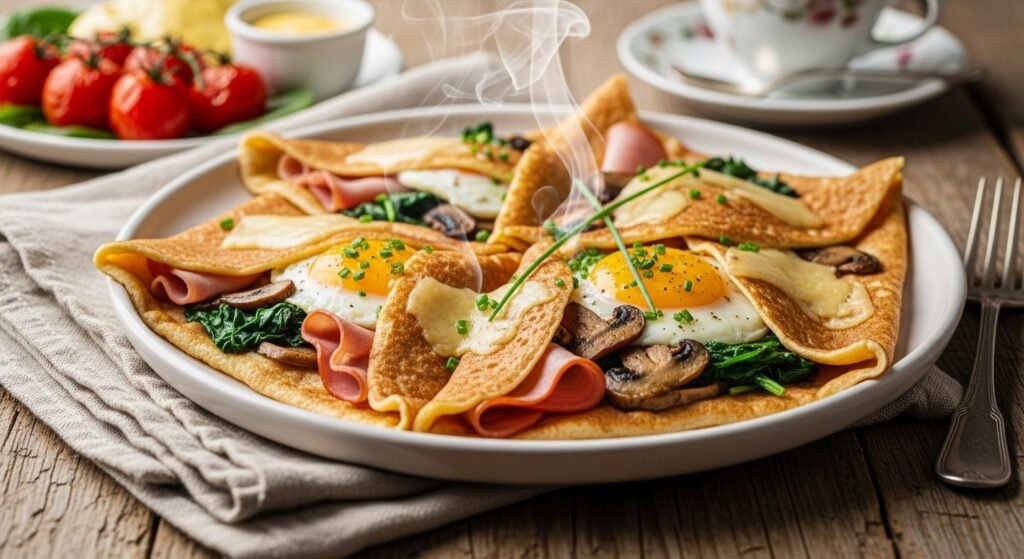
For bolder flavors, smoked salmon with dill cream cheese feels refined, while eggs and bacon remain a go-to for brunch. Heartier options like chicken and pesto, shredded chicken, swis cheese, deli ham, or full chicken cordon bleu turn crepes into a complete meal.
Vegetarian Crepe Filling Ideas
Vegetarian crepes don’t feel like a compromise when flavors are layered right. Caprese crepes with mozzarella, tomato, and fresh basil are light but satisfying. I also love mushroom and gruyere or a creamy spinach artichoke filling finished with brie cheese for depth.
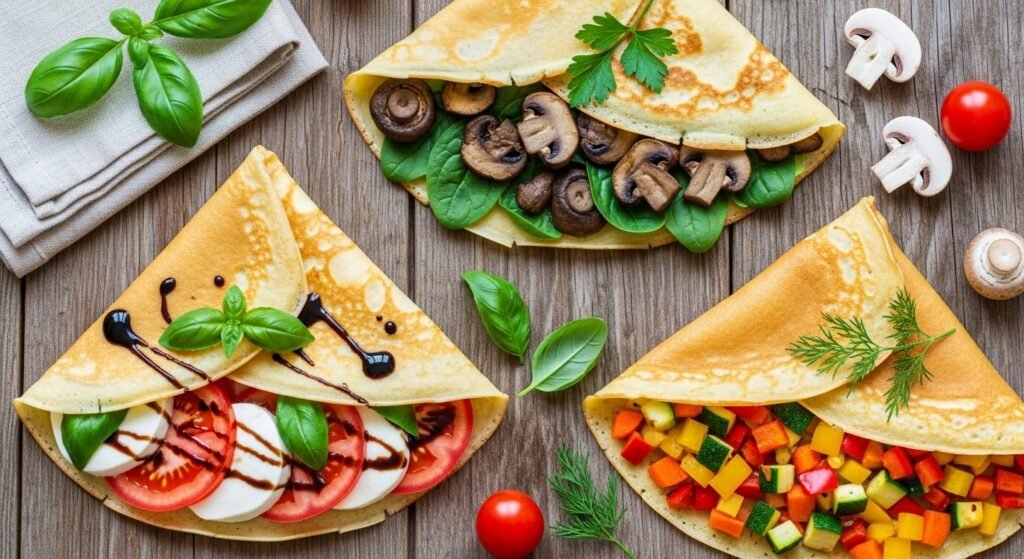
For breakfast-style fillings, eggs and cheddar with chives work well, while huevos rancheros crepes bring bold notes using black beans, salsa, avocado, and cilantro. These fillings prove crepes can be filling without meat.
Non-Dairy and Vegan Crepe Fillings
For plant-forward options, I focus on texture and freshness. A mix of summer squash, tomato, and chickpeas feels hearty without heaviness. A bright kale salad dressed with lemon juice and olive oil, topped with pine nuts or pepitas, adds crunch and balance.
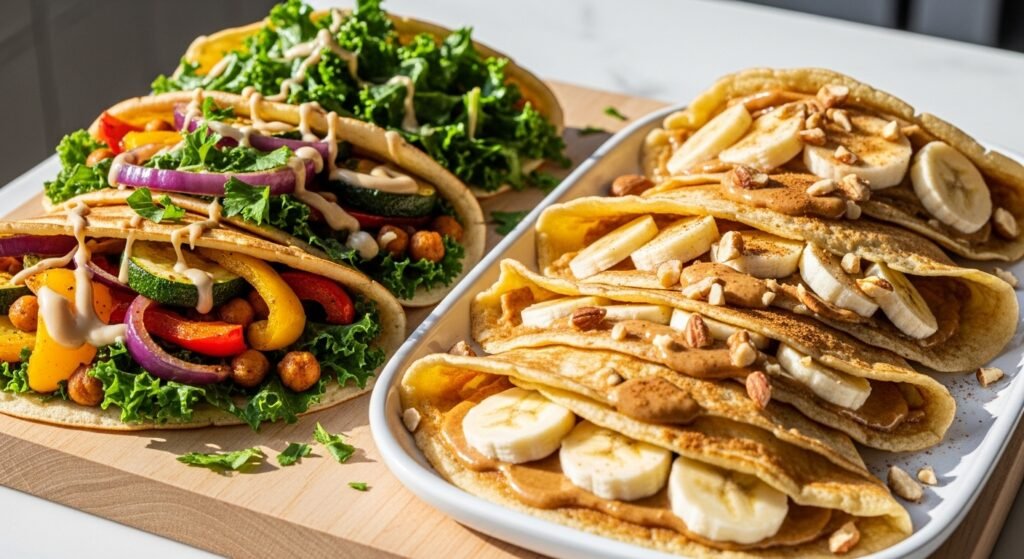
For sweet vegan choices, almond butter and banana crepes are reliable favorites. Using plant based fillings built from nuts, herbs, and spices keeps flavors bold while staying completely dairy-free.
Creative Sweet–Savory Pairings
Some of my favorite crepe moments come from mixing contrast, like strawberries and ricotta finished with lemon zest and a light dusting of powdered sugar. When I want something softer and airy, berries and whipped cream always work. On the savory side, chicken and ham make a solid meat and cheese combination, and if I’m cooking for everyone,
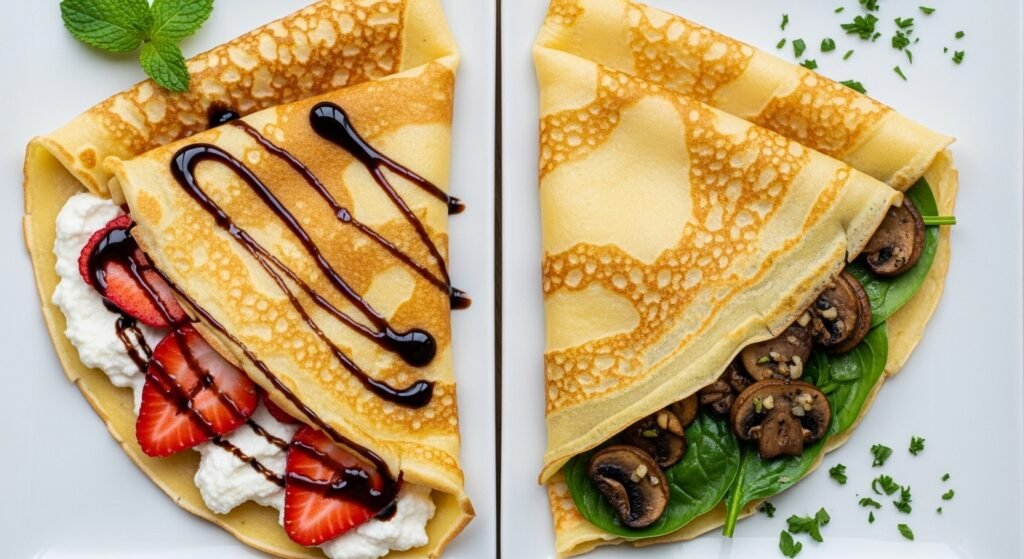
I often do a vegetarian swap using mushrooms and spinach. Honestly, the best ideas sometimes come from fridge leftovers, and crepes are forgiving enough to make that feel intentional.
Assembling and Serving Crepes
How you serve crepes matters just as much as what goes inside. I switch between folded crepes, rolled crepes, or a neat quarter fold, while heartier fillings work better with a burrito style roll. For parties, mini crepes turn into easy finger food or elegant appetizers.

A DIY breakfast bar or relaxed brunch buffet lets guests choose, whether they want dessert crepes or savory ones, and small tweaks in plating really elevate the presentation ideas.
Storing and Freezing Crepes
For leftovers, storing crepes is simple with refrigerator storage using plastic wrap or foil wrapping, which keeps them fresh for two to three days storage. I often make extra and rely on freezing crepes in freezer bags, layering with wax paper separation so they don’t stick, and they hold well for four months freezing.
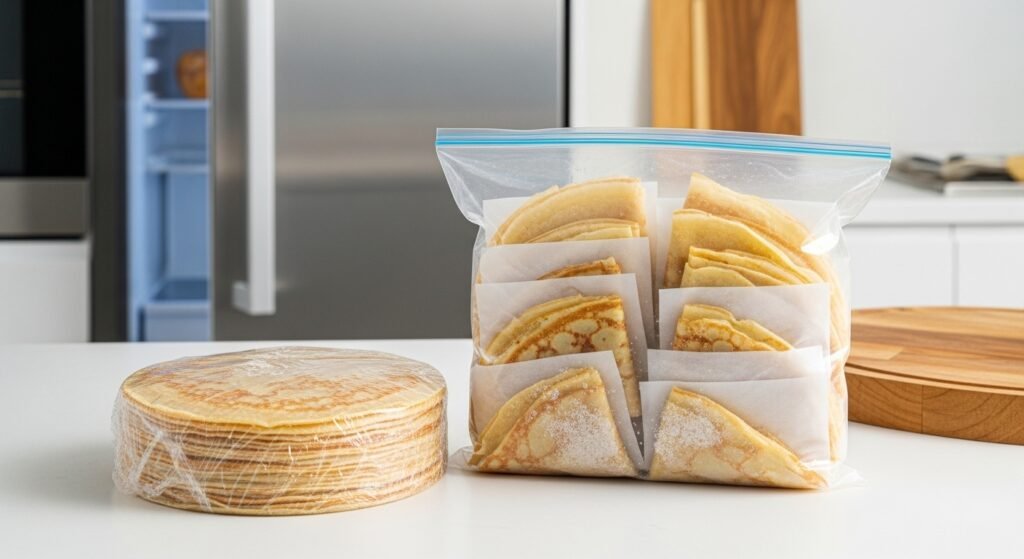
When ready to eat, gentle thawing at room temperature works best, and quick reheating crepes with microwave reheating saves time without drying them out.
Recipe Snapshot
This flexible crepe base fits real life: prep time ten minutes, cook time twenty minutes, and total time thirty minutes makes it practical for weekdays. It easily covers servings eight crepes or servings twelve pancakes, depending on size, with about calories one hundred thirty one each.
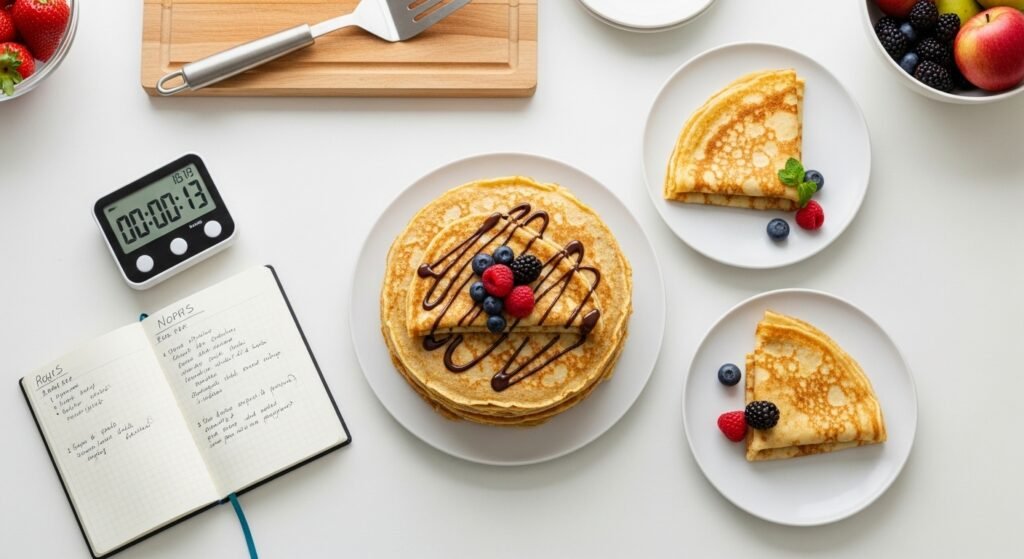
I rely on it as a french breakfast recipe, an easy brunch recipe, and a reliable crowd friendly recipe when hosting.
FAQ’s – Sweet and Savory Crepe Filling Ideas
Can crepes be used for both sweet and savory meals?
Yes, crepes are naturally neutral in taste, which makes them perfect for both sweet and savory meals. I often make one batch and split it—half for fruit and cream, half for cheese or chicken fillings.
What is the difference between crepes and pancakes?
Crepes are thinner and lighter than pancakes and don’t use any leavening agents. Pancakes are fluffy, while crepes have delicate, lacy edges and a soft, flexible texture.
Do I need a special pan to make crepes?
Not at all. A nonstick skillet works just fine. A crepe pan helps with even cooking, but I’ve made great crepes using a simple pan and a spatula.
Why should crepe batter rest before cooking?
Resting the batter allows the gluten to relax, which makes crepes softer and easier to cook. I usually rest mine for about an hour, and the texture is noticeably better.
What are the easiest sweet crepe fillings for beginners?
Butter and sugar, Nutella with bananas, fresh fruit with whipped cream, and jam are all easy and forgiving options. They don’t require cooking and taste great every time.
Which savory crepe fillings are most popular?
Ham and cheese, mushroom and spinach, chicken and pesto, smoked salmon with cream cheese, and eggs with bacon are classic savory choices that always work.
Are crepes good for vegetarian or vegan diets?
Yes. Vegetarian fillings like caprese, mushroom and cheese, or spinach artichoke are very popular. For vegan options, use plant-based batter and fillings like roasted vegetables, chickpeas, or nut butter.
Can crepes be folded or rolled?
Both work well. Sweet crepes are often folded or quarter-folded, while savory crepes are usually rolled, especially if baked or served warm with sauce.
How long can cooked crepes be stored in the fridge?
Cooked crepes stay fresh for two to three days when wrapped well in plastic wrap or foil and stored in the refrigerator.
Can crepes be frozen?
Yes, crepes freeze very well. Stack them with wax paper in between and store in freezer bags for up to four months. Let them come to room temperature before reheating.
What is the best way to reheat crepes?
The microwave is the fastest option. Heat them briefly so they stay soft, then add your fillings after reheating.