

Naleśniki z Serem – Polish Crepes with Cheese / Polish naleśniki / Perfect Polish crepes (Naleśniki recipe)
When people think of Polish Naleśniki Recipe crepes, they imagine France, but Naleśniki z Serem or Polish Crepes with Cheese have deep Central Europe origin roots in Hungary Slovakia Russia Poland, gaining around 1800 popularity and becoming a true staple in Polish cuisine. Known as naleśniki z serem, with the plural naleśniki and singular naleśnik, they were also called Blintzes Yiddish name in the USA.

Unlike rich desserts, Polish desserts not too sweet reflect simple balance, making these delicate thin pancakes perfect as breakfast brunch snack lunch dinner option. In Poland, you’ll find them in naleśnikarnia restaurants, served as sweet crepes or savory crepes, and considered real Polish comfort food. Compared with the French street food staple found in French café crêperies from Brittany origin, once made with buckwheat flour history and later with white flour batter, these paper-thin crepes are slightly different. Polish versions are slightly thicker flexible crepes, not the ultra-thin delicate texture of French ones, and reheated crepes hold up beautifully.
Polish naleśniki vs. French crêpes
The difference in Polish naleśniki vs French crêpes is subtle but important. French versions are often richer butter milk crêpes, made with milk and butter batter, sometimes tracing back to the buckwheat flour original version before moving to the white flour sweet version.
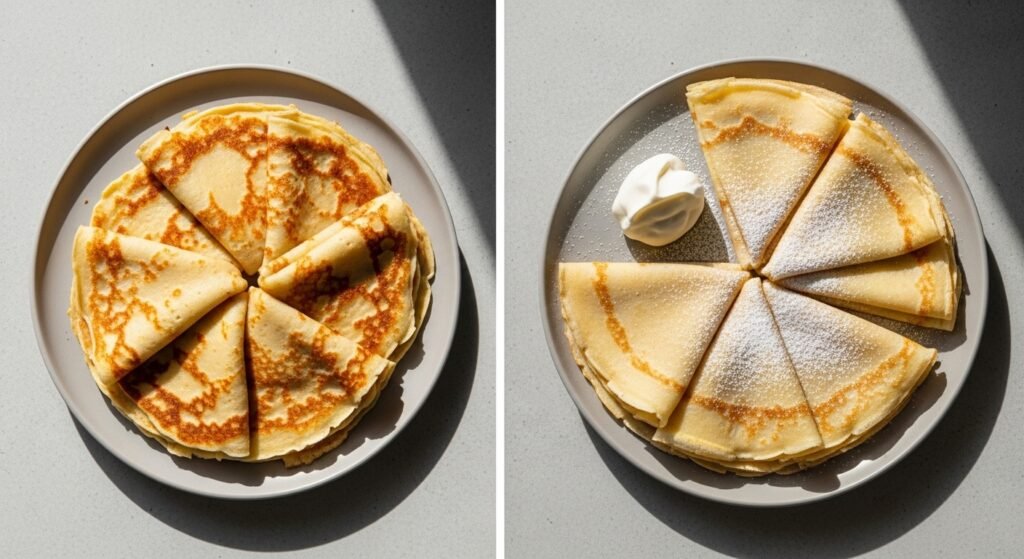
Polish crepes often use seltzer water airy texture, giving a slightly thicker texture and making them more flexible crepes than the ultra-thin delicate French crêpes. This flexibility makes them easier to fill, fold, and reheat without tearing.
Ingredients (Crepes)
Traditional batter can be simple like 1/2 cup flour, 1/2 cup milk, 1/4 cup warm water, 2 eggs, 1/2 teaspoon salt, and 2 tablespoons melted butter. Modern versions may use 1 cup (125g) all-purpose flour, 1 1/4 cup (300g) milk, 3 large eggs, 2 tablespoons sugar, 1 teaspoon vanilla extract, or vanilla sugar option, plus 2 tablespoons melted butter or vegetable oil and a pinch of salt.
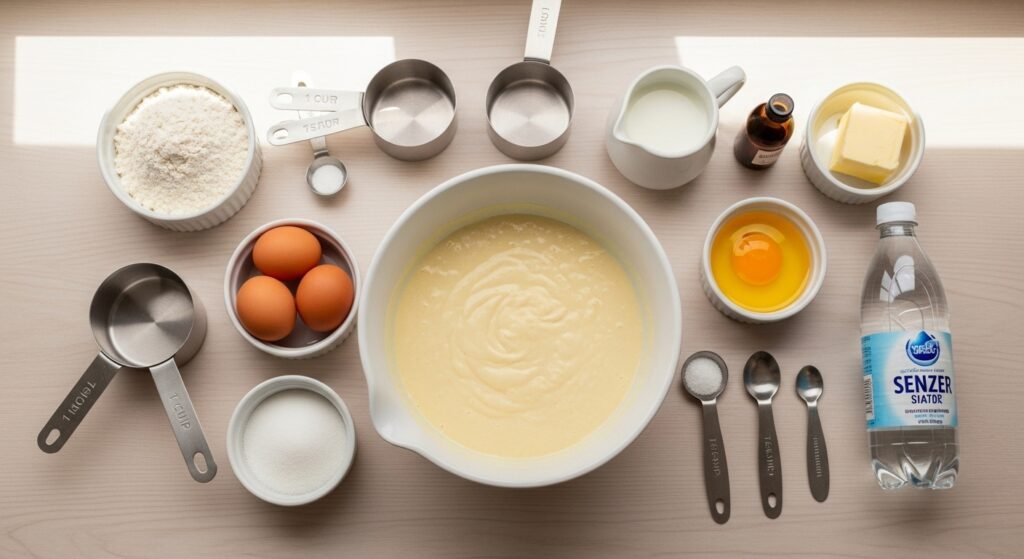
Some recipes call for 1 cup milk with ¾ cup seltzer water or a tap water substitute, along with 2 tablespoon vegetable oil or avocado oil option. You can use 2 tablespoon granulated sugar and ½ teaspoon salt, greasing with butter or non-stick spray, even a cold butter stick, or another neutral oil. Dairy can be swapped with plant-based milk almond milk oat milk, but not coconut milk. The key is proper sugar and salt balance.
Ingredients (Sweet Cheese Filling)
Classic sweet cheese filling includes 12 ounces farmer’s cheese, 2 ounces cream cheese, 1 egg yolk, 3 tablespoons sugar, 2 tablespoons melted butter, 1/2 teaspoon salt, and zest of a lemon. In Poland, you’ll often see 18 oz (500g) Polish twaróg cheese, 2 egg yolks, 1/4 cup (50g) granulated sugar, 2 tablespoons heavy cream or milk, and 1 teaspoon vanilla extract. Authentic twaróg cheese can be full-fat twaróg tłusty, twaróg półtłusty reduced-fat, or twaróg chudy low-fat.
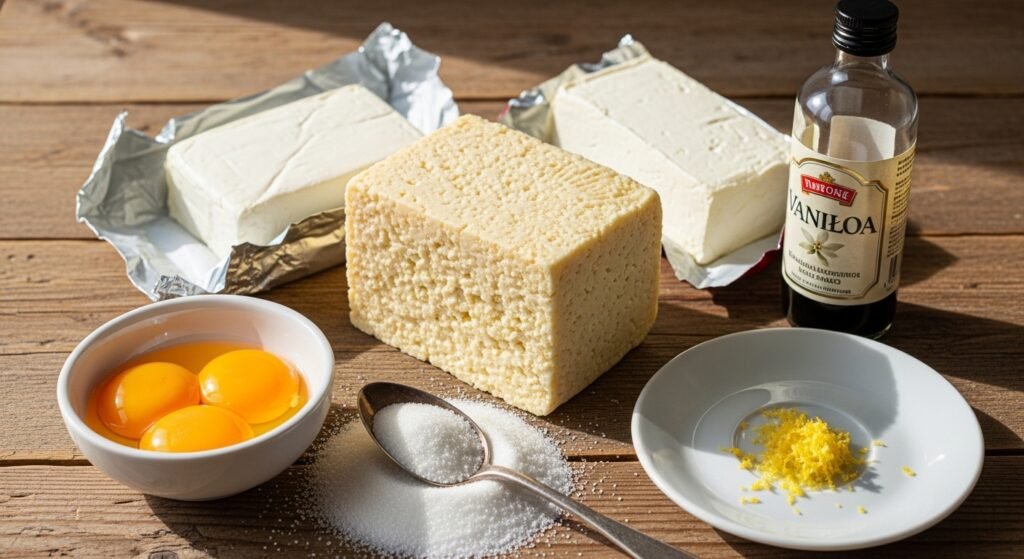
If unavailable, use farmer’s cheese substitute, cottage cheese substitute, or blended cottage cheese such as 10 oz cottage cheese with 5 tablespoon powdered sugar and 1-2 teaspoon vanilla. You can add raisins option, keep egg yolks optional, adjust with heavy cream to thin filling, or enhance with lemon zest and vanilla paste. The same cheese is used in Polish cheesecake sernik.
Step-by-Step Instructions (Crepe Batter & Cooking)
To prepare, Combine flour milk water eggs salt and whisk until smooth using an electric mixer option, food processor or blender. The result should be a thin batter. Let it batter rest 1 hour or at least batter rest 15-30 minutes, cover with kitchen cloth plastic foil, then add butter after rest. Heat pan medium-high heat or use high heat cooking, brush with butter, pour a scant 1/4 cup batter, and tilt and shake pan into a circle 8 inches diameter.
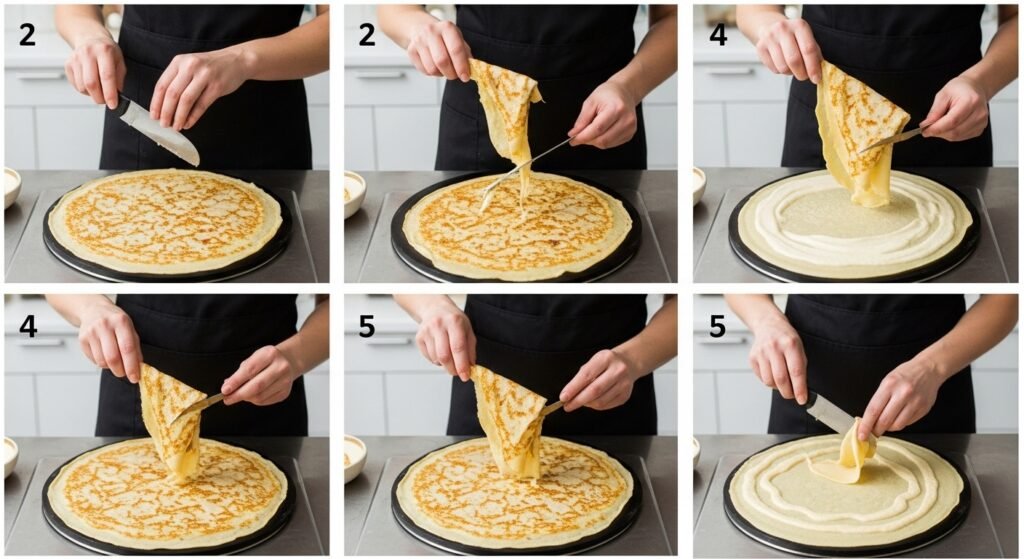
When edges crispy dry lacy and golden brown bottom appear, flip crepe, cook 15 seconds, then cook 10 seconds second side. Slide spatula under crepe, transfer to plate, and repeat until batter used. Some prefer blender batter 10 seconds and ⅓ cup batter pour, ensuring to tilt to coat bottom evenly. You’ll get 8-9 crepes yield or sometimes 6 crepes yield, depending on size.
Sweet Cheese Filling Preparation
For authentic Polish Naleśniki Recipe (Traditional Crepes), the heart of the dish is the filling. Start by Combine cheeses egg yolk sugar, then stir in butter salt lemon zest until smooth. I usually mix filling with fork or mixer, but for a silkier result, I blend cottage cheese powdered sugar vanilla and use an immersion blender smooth filling technique. The texture should be filling more on dry side, because it softens later when heated.
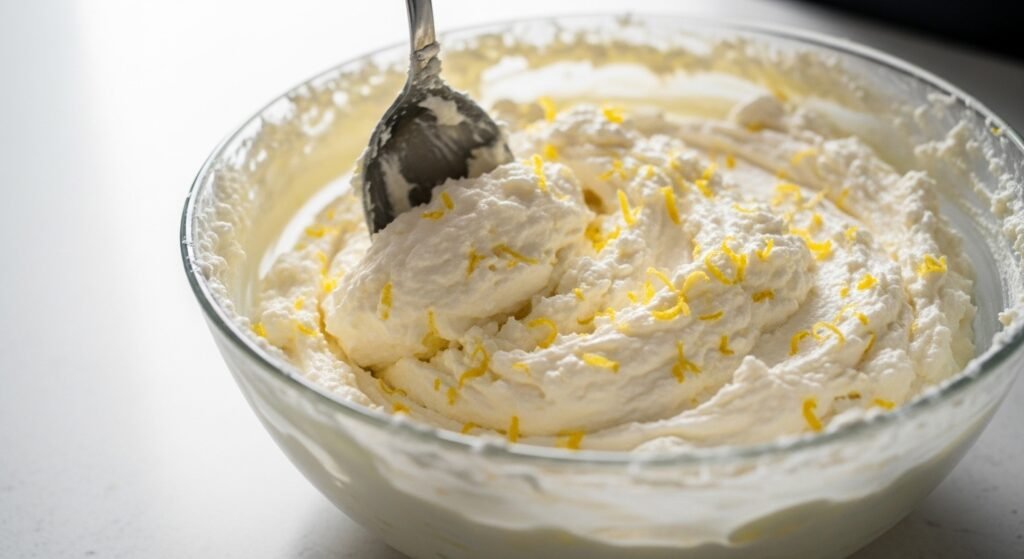
Since consistency may vary by brand, you can add more heavy cream if needed to adjust. If egg yolks are included, always cook egg yolks by pan frying after assembling to ensure the filling is fully set.
Assembly & Folding
When assembling, Spoon line of filling 1 inch by 4 inches across the center, then fold sides in and roll to wrap filling. You can also fold into triangles, simply fold in half then again in half, or choose the roll up option. Some prefer to fold into quarters after you spread 2-3 tablespoons filling, but remember don’t add too much filling or the crepes may tear.

From experience, thinner layers make them easier to brown evenly and hold their shape.
Pan-Frying & Serving
To finish, Lightly brown filled crepes in butter, and I agree that clarified butter best option gives the richest flavor. Cook on both sides until golden or heat in lightly greased skillet, about 1 minute per side. You can serve on their own, or top with whipped cream, cinnamon, and fresh berries. For extra sweetness, try strawberry sauce pureed strawberries powdered sugar, chocolate sauce melted chocolate heavy cream, or Nutella banana slices.\

Traditional options include fruit sauce canned pie filling, warm jam, or simple fresh berries topping with powdered sugar dusting, a drizzle chocolate sauce, and a final powdered sugar sprinkle.
Storage & Make Ahead
These crepes are practical for meal prep. Store crepe batter 2 days fridge, and store raw filling 2 days fridge in an airtight container or under plastic wrap. You can also store cooked crepes with filling 3 days fridge, ideally stack with parchment paper between layers. For longer keeping, freeze 3 months storage, then thaw in fridge and reheat in dry pan both sides.\
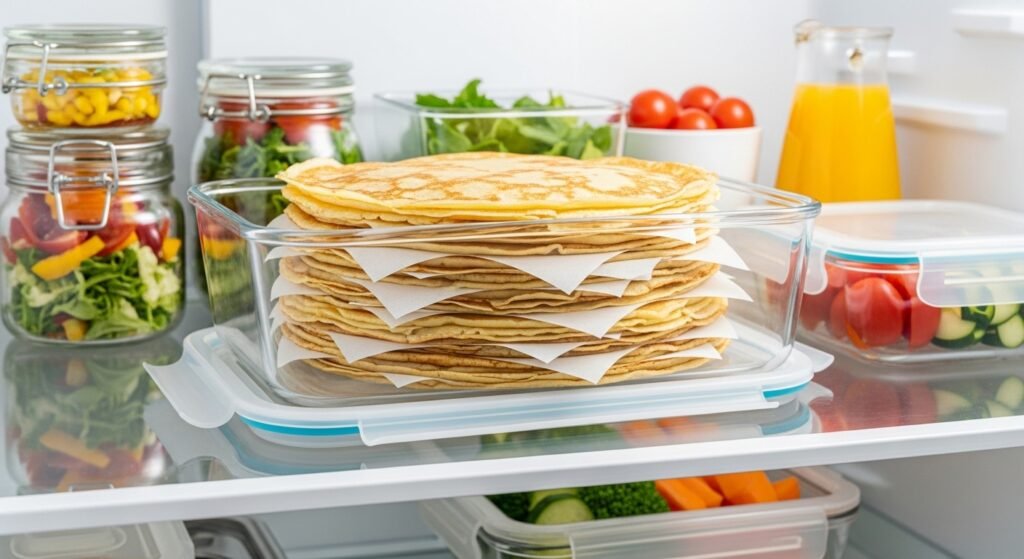
I often store crepes and filling separately, then thin filling with milk before assembling to refresh the texture before serving.
Equipment
When making authentic Polish crepes, the right tools make the process smoother. I usually switch between a 10-inch crepe pan, a non-stick skillet, or even a 10-inch non-stick ceramic skillet depending on how many I’m cooking at once. For the batter, a blender jug bullet-style blender gives the fastest results, but a hand mixer whisk option works just as well if you prefer mixing by hand.
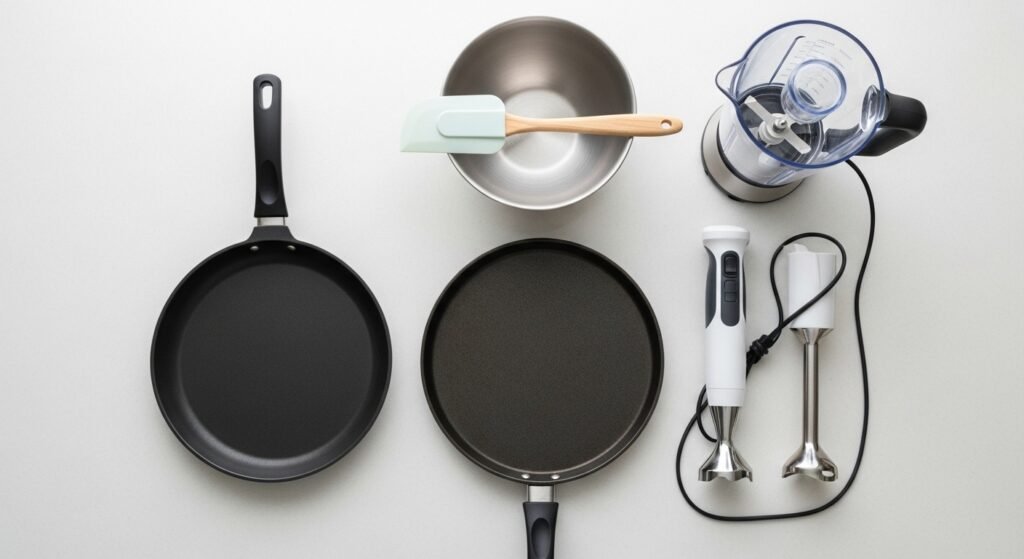
For sweet cheese filling, I rely on an immersion blender or small food processor to get that creamy texture. When flipping delicate naleśniki, a flexible long spatula helps prevent tearing and keeps the crepes evenly golden.
Recipe Details
This classic recipe appears in different versions, with timing that suits your schedule. Some traditional methods list Prep Time 70 min, Cook Time 10 min, and Total Time 1 hour 20 minutes with a Yield 6 crepes, while quicker weekday versions use Prep Time 15 minutes, Cook Time 15 minutes, and Total Time 30 minutes, serving 4 servings (8-9 crepes) with about Calories 577 kcal per portion.
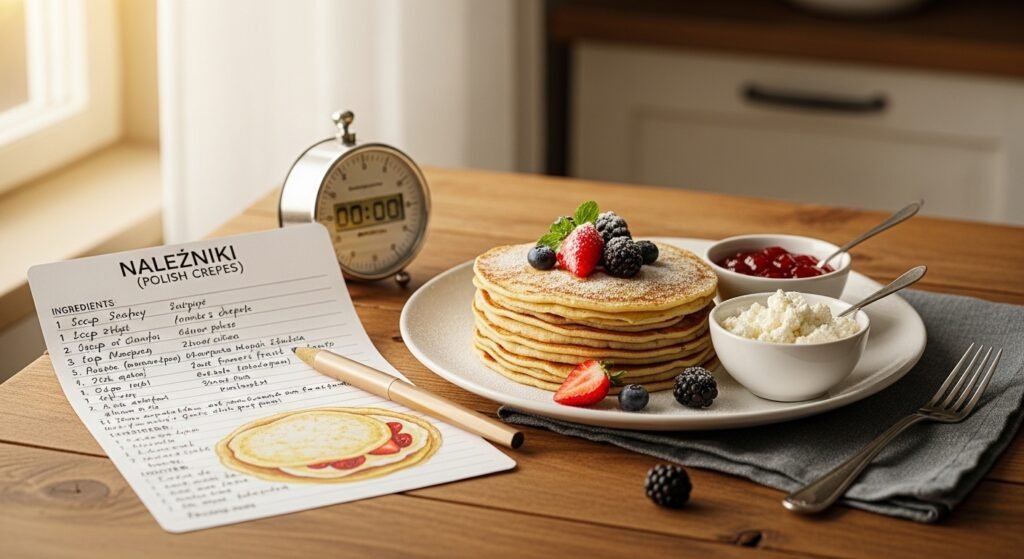
A faster blender method can take Prep Time 5 minutes, Cook Time 30 minutes, serving Servings 8 with around Calories 179 kcal each. Across recipes rated 5 from 1 review, 4.80 from 5 votes, and 5 from 6 votes, shared by Author Polish Housewife, Author Aleksandra, and Author Agnieszka, the technique may vary slightly, but the heart of traditional naleśniki remains the same.
Polish Naleśniki Recipe (Traditional Crepes) – FAQs
1. What are Polish naleśniki?
Polish naleśniki are thin crepes made from flour, milk, eggs, and a small amount of fat. They can be filled with sweet or savory fillings, but the most traditional version is naleśniki z serem (crepes with sweet cheese filling).
2. What is the difference between Polish naleśniki and French crêpes?
Polish naleśniki are slightly thicker and more flexible, while French crêpes are ultra-thin and delicate. Naleśniki often include seltzer water for an airy texture and hold up better when reheated.
3. What cheese is used in traditional naleśniki?
Traditional sweet filling uses Polish twaróg cheese (farmer’s cheese). Outside Poland, farmer’s cheese or blended cottage cheese can be used as a substitute.
4. Can I substitute twaróg cheese?
Yes. Farmer’s cheese is the closest substitute. Blended cottage cheese also works well. Ricotta and quark are similar but have a creamier, milder texture.
5. Do I need to rest the batter?
Yes. Resting the batter for 15–30 minutes (or up to 1 hour in some recipes) helps the flour hydrate and improves texture.
6. Why is my first crepe not perfect?
The first crepe is often uneven because the pan may not be hot enough yet. This is normal. The next crepes usually turn out better once the pan temperature stabilizes.
7. Should I pan-fry filled naleśniki?
If the filling contains egg yolks, pan-frying helps cook them through. Even without egg yolks, lightly browning filled crepes in butter improves flavor and texture.
8. Can naleśniki be made savory?
Yes. Simply skip sugar in the batter and fill with ingredients like spinach, mushrooms, ham, cheese, or meat.
9. How do I store leftover naleśniki?
You can store:
- Crepe batter for up to 2 days in the fridge
- Raw filling for up to 2 days
- Cooked crepes with filling for up to 3 days in an airtight container
They can also be frozen for up to 3 months.
10. How do I reheat naleśniki?
Reheat in a lightly greased skillet or dry pan on both sides until warmed through. Frozen crepes should be thawed in the refrigerator before reheating.