
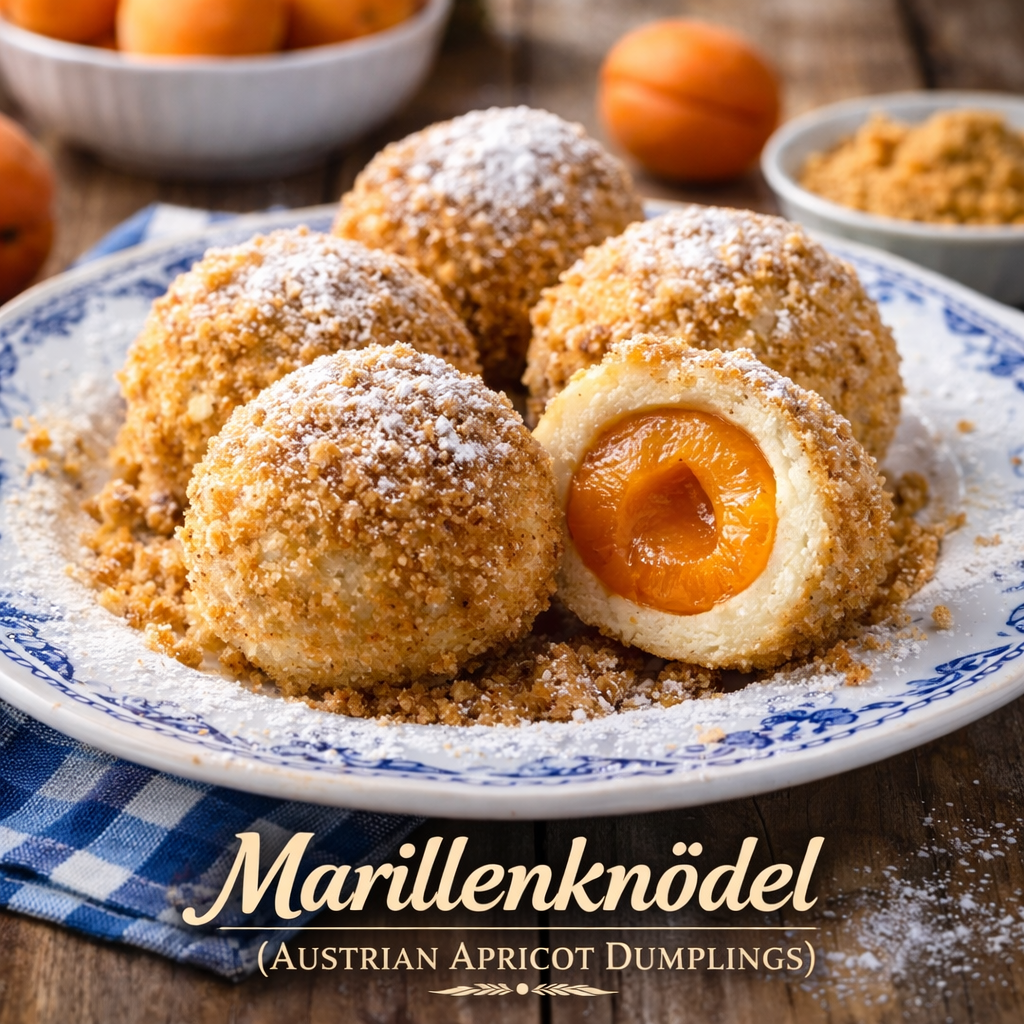
A Classic from the Austrian Kitchen
In Austria, few Austrian dishes feel as comforting as Marillenknödel. Also known as Austrian Apricot Dumplings, these tender apricot dumplings are a proud part of Austrian and German cuisine and belong to the world of Mehlspeisen. During apricot season, this stone fruit specialty becomes a true summer delight, often enjoyed as a summer meal, summer dinner, or even as a main dish for lunch in Southern Germany. Though I prefer them as a dessert, they are flexible enough to fit both roles, which explains why they remain a classic dish in every Austrian kitchen.
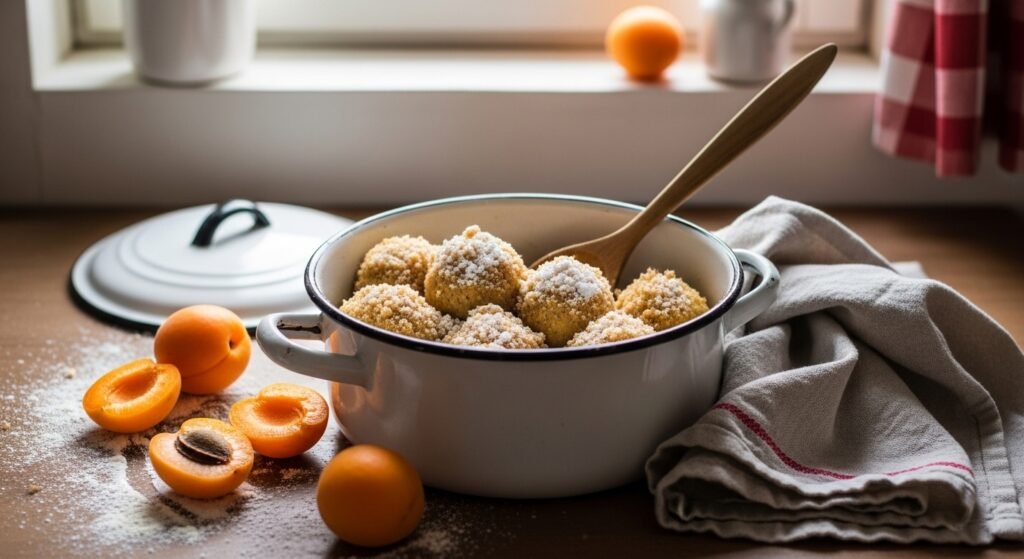
Traditionally prepared as a historic Viennese dish dating back to the 19th Century (around 1858), it is even said that Ferdinand I of Austria, the emperor, demanded dumplings every meal. The magic lies in the contrast: ripe apricots wrapped in soft dough, whether it’s fluffy cheese dough, quark dough, Topfen dough, or even potato dough known as Kartoffelteig. Depending on what is available, cooks use curd cheese, a ricotta substitute, farmer’s cheese, or a cream cheese substitute, each giving a slightly tangy taste or more neutral taste. The result is always light and delicious, gently fruity, with low added sugar, and so addictively delicious that these sweet treats truly disappear fast. As a traditional recipe and cherished old-fashioned dish, they continue to define what makes Marillenknödel – Austrian Apricot Dumplings so special.
Name and Meaning Explained
Before talking about how they taste, it helps to understand the name. Marillen means apricots, and it is the Austrian term apricots used instead of the word common in German-speaking countries, where they are called Aprikosen German-speaking countries. The second part of the name comes from Knödel dumplings, which are traditional round-shaped dumplings found across Central Europe. When you combine apricots dumplings, you get the full idea behind Marillenknödel.
These dumplings belong to a special group foods Mehlspeisen, which includes sweet flour-based dishes often served as a main meal or dessert. I always find it interesting how one simple name carries so much cultural meaning. It clearly shows that Marillenknödel (Austrian Apricot Dumplings) are not just fruit wrapped in dough, but a dish rooted in language, tradition, and everyday Austrian cooking.
Ingredients
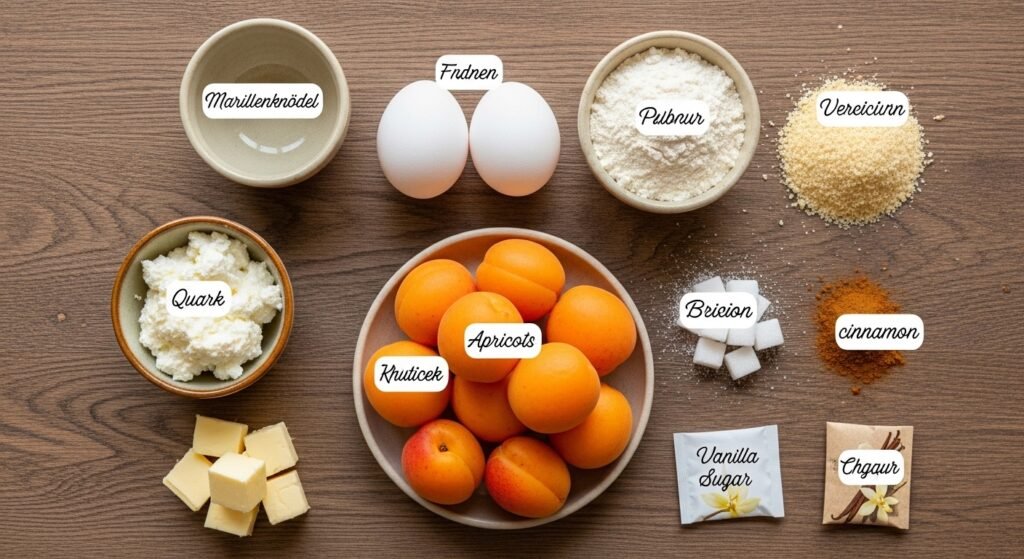
| Category | Ingredients & Measurements |
| Fruit (Filling Base) | apricots, 8 small apricots, 6 large apricots, 8-10 apricots, fresh apricots, ripe fruit, stone fruits, plums, strawberries, cherries |
| Filling Options | sugar cubes, granulated sugar, teaspoon sugar alternative, apricot jam, chocolate cube, nougat cube |
| Cheese Options for Dough | quark 200g 250g, Topfen, cream cheese, strained ricotta, farmer’s cheese |
| Flour & Structure | flour 1 cup 4.5oz 130g, 1 2/3 cups 200g flour, 4 1/2 cups 585g bread flour, all-purpose flour, plain flour 125g, wheat semolina 45g, coarse wheat semolina cream of wheat farina, dry fine bread crumbs |
| Eggs & Dairy Additions | egg 1 large egg cold, 3 egg yolks, 7 eggs, sour cream 3 tablespoons, heavy cream, mashed potatoes |
| Butter Variations | butter soft 4 tablespoons 2oz 60g, 6 tablespoons 85g butter, 75g unsalted butter, 50g unsalted butter, melted butter |
| Sweeteners & Seasoning | granulated sugar 1 tablespoon, vanilla sugar 2 tablespoon, powdered sugar, icing sugar, confectioners’ sugar, pinch salt, coarse sea salt, light brown sugar, cinnamon pinch |
| Breadcrumb Topping | fresh breadcrumbs 150g, dried breadcrumbs 65g |
| Serving Suggestions | whipped cream, vanilla ice cream, vanilla custard, pumpkin seed oil |
Dough Options for Marillenknödel
When making Marillenknödel, the choice of dough changes the whole character of the dumpling. The most popular is cheese dough, often called Topfen dough or Quark dough, which gives a soft, slightly tangy bite that pairs beautifully with sweet apricots. If Topfen is hard to find, a simple cream cheese dough works well and tastes milder and more neutral. I personally prefer the cheese-based versions because they stay tender after cooking and feel lighter, especially in summer.
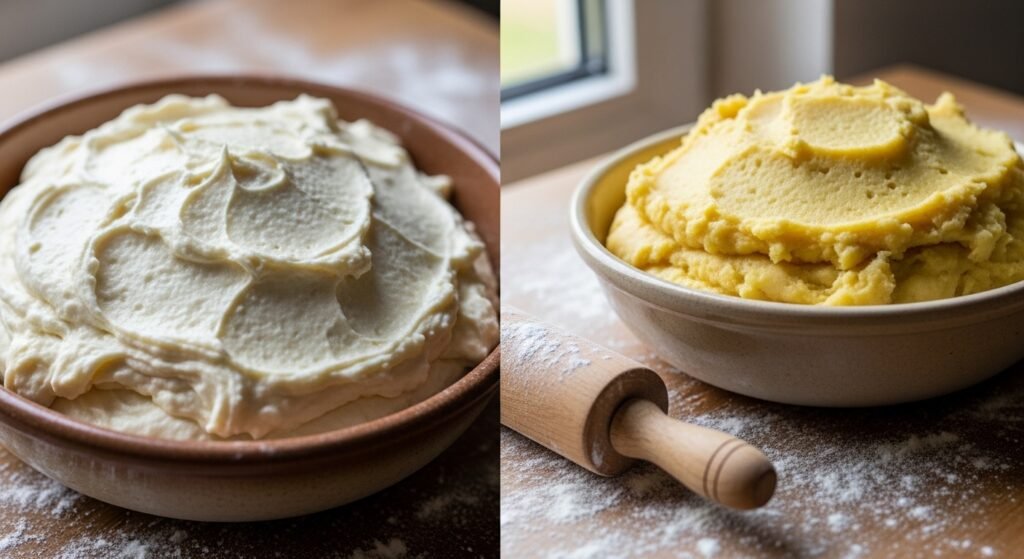
Another traditional option is potato dough, sometimes made from leftover mashed potatoes dough. This version is slightly firmer and has a more rustic texture. It reminds many people of Polish plum dumplings knedle, which use a similar potato base. Both styles are authentic, and choosing between them often depends on what you have at home and the texture you enjoy most.
Balancing Dough and Apricots
Getting the right Dough-to-Filling Ratio makes a big difference in Marillenknödel. I usually work with 8 small to medium apricots and divide dough into 8 parts, which gives a neat and even result. If the fruit is larger, it’s better to divide into 6 parts large apricots so the dumplings don’t feel too thin or overstretched. Over the years, I’ve found that a small batch preference helps control the texture and shape more easily.
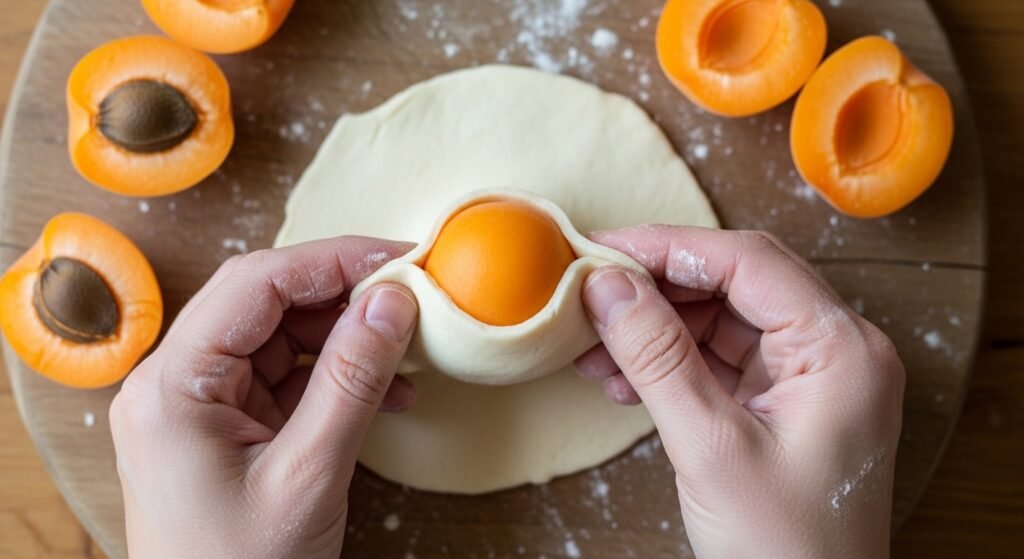
Personally, I lean toward a dough more than filling preference because a slightly thicker layer protects the fruit while cooking and keeps the dumplings soft and fluffy. Too little dough can break during boiling, while too much fruit can make sealing tricky. Finding that balance ensures each dumpling stays round, tender, and full of flavor.
Measuring Flour the Right Way
Accurate flour measurement keeps the dough light instead of heavy. I always recommend using a kitchen scale, but if you rely on measuring cups, remember that 1 cup flour 120-150g can vary depending on how it’s filled. In my kitchen, I treat 1 cup flour 125g as the standard for consistency.
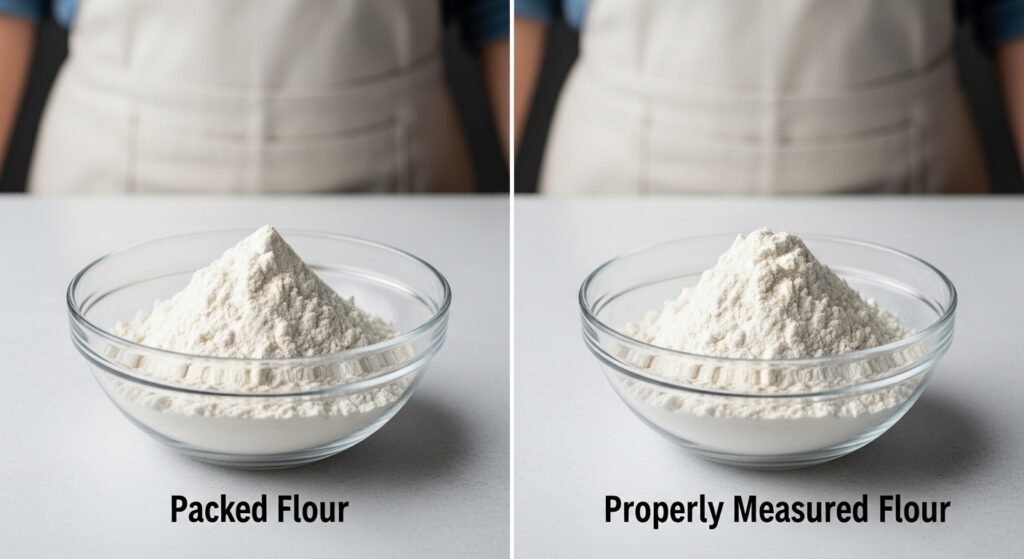
To measure properly, fluff flour spoon, then sprinkle into measuring cup, and sweep excess knife across the top. Do not scoop directly, because that causes a compact flour warning situation where the dough becomes dense and sticky. Small details like this make a noticeable difference in the final texture of Austrian Apricot Dumplings.
Step-by-Step Guide to Perfect Dumplings
To make classic Marillenknödel, begin with soft butter room temperature while keeping the rest as cold ingredients fridge fresh. Whisk butter sugar vanilla salt until smooth, then add egg cheese whisk combined; a few lumps fine are perfectly normal. Add flour stir lightly sticky dough and do not overmix, as that keeps the texture tender. Wrap plastic foil, form round disk, and let it rest in the fridge 30 minutes overnight chill so it becomes easier to handle. After chilling, divide into 6 or 8 pieces on a well-floured surface or silicone rolling mat, dust hands flour, pat rounds, and flatten dough gently.
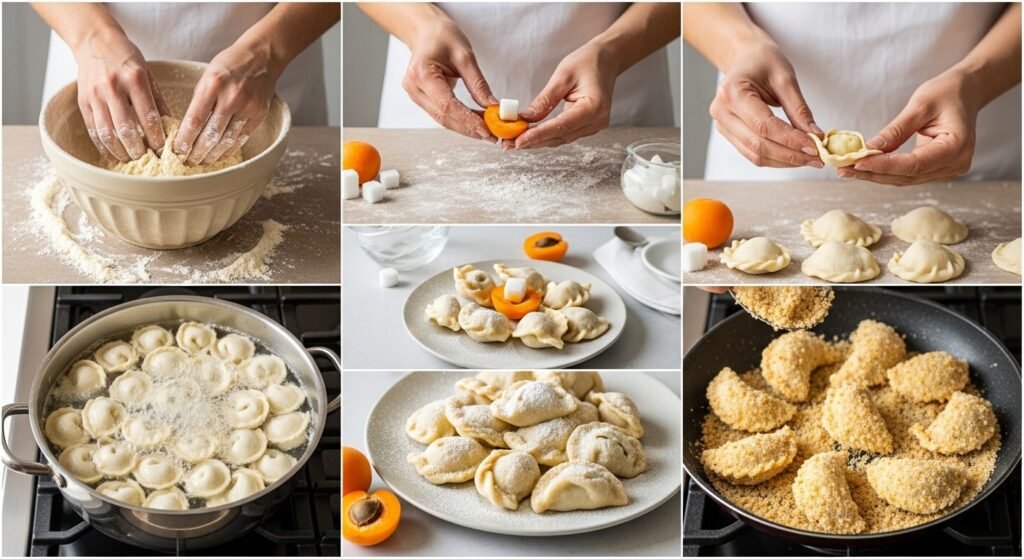
Prepare the fruit by remove apricot stone using the cooking spoon method or knife slicing method, insert sugar cube, and press halves together. Wrap dough around apricot, seal seam tight, pinch edges, and roll between palms snowball shape, making sure to avoid air inside. Drop them into a large pot salted water with boiling water, then reduce to simmer medium-low heat for 10-15 minutes cook, sometimes 12 minutes cook or 8-10 minutes simmer, until you see floating dumplings. Gently stir prevent sticking bottom, then use a slotted spoon remove and drain well. In another pan, melt butter pan, add breadcrumbs, stir frequently until golden brown breadcrumbs and fragrant crumbs form, then add sugar cinnamon. Coat dumplings breadcrumbs, roll until covered, allow a slight brown bottom crust, serve warm, sprinkle powdered sugar, and serve immediately.
Serving Ideas and Finishing Touches
When serving Marillenknödel, I usually keep it simple and classic. Freshly cooked dumplings taste best when sprinkled powdered sugar generously while still warm. For a richer plate, I like adding a spoonful of whipped cream or a scoop of vanilla ice cream, letting it slowly melt over the warm dumplings. If you want to try something truly traditional, drizzle a little pumpkin seed oil Austrian topping over the ice cream—it sounds unusual, but it adds a deep, nutty contrast that works beautifully.
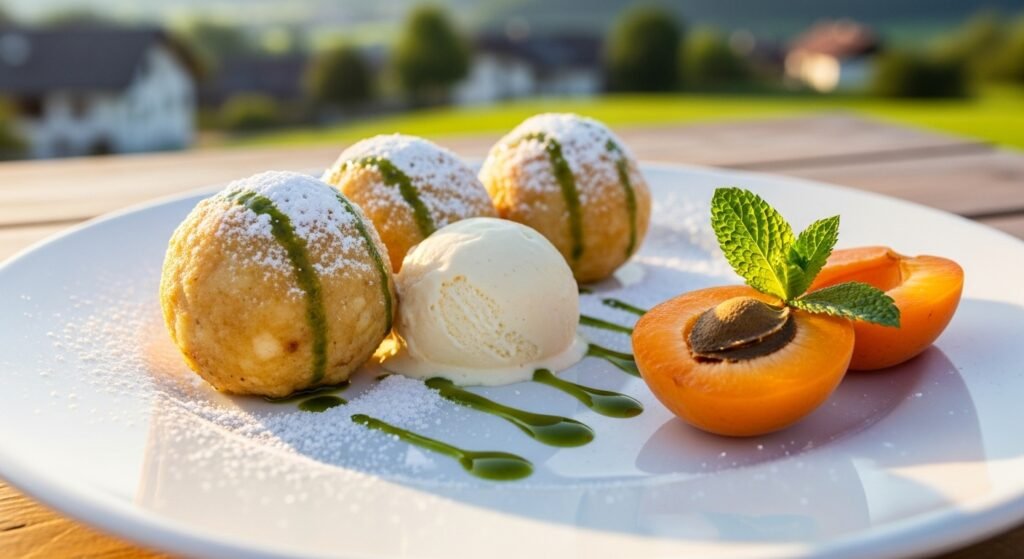
If you prefer extra fruit flavor, make an apricot sauce puree blender style by blending ripe apricots and letting them cook sugar thick sauce until glossy. A light drizzle of chocolate sauce or warm custard also pairs well, especially if you serve this as a light meal. In Austria, enjoying sweets as a main dish follows the dessert first tradition, and honestly, with dumplings this good, that rule makes perfect sense.
Storage and Freezing Tips
For the best flavor and texture, taste best fresh is always true for Marillenknödel, especially when the dough is soft and the fruit is juicy. If you need to keep them, store before coating breadcrumbs so they don’t turn soggy. The next day, you can gently steam next day portions or dip them back into boiling water 30-60 seconds reheat until warmed through. I’ve done this many times, and it keeps the dumplings soft without overcooking them.
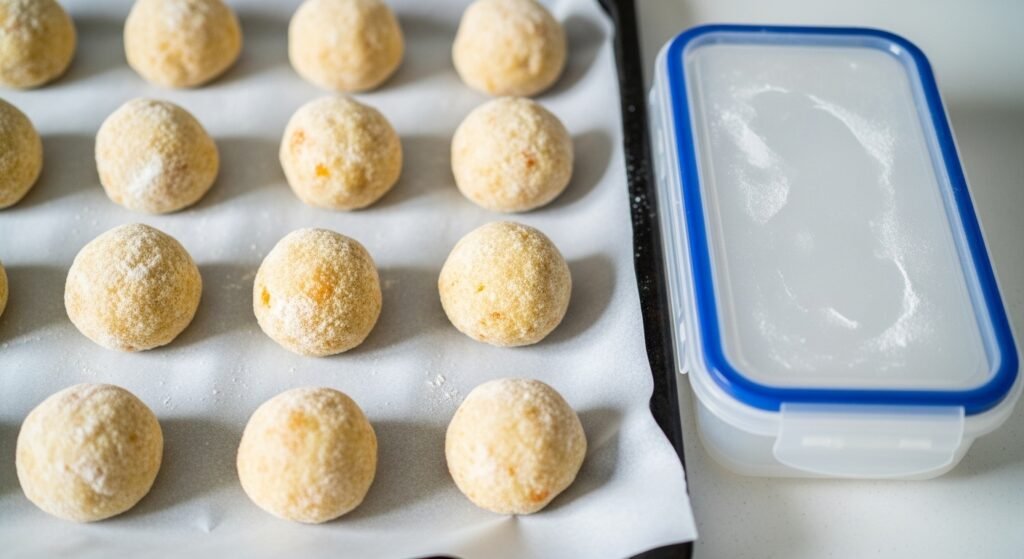
If you want to prepare ahead, you can freeze uncooked dumplings and always freeze without breadcrumb coating. This is common in Austria, and even frozen apricot dumplings grocery store Austria versions follow the same method. Place them on a parchment-lined sheet so they don’t stick, then transfer to freezer bags once firm. When ready to serve, cook from frozen few extra minutes, and they turn out just as tender as fresh.
Nutrition and Recipe Timing
When planning Marillenknödel (Austrian Apricot Dumplings), timing can vary slightly depending on the dough you choose and how confident you are shaping them. Most versions list Prep Time 20 minutes, sometimes written as Prep Time 20 min, while others allow a little more breathing room with Prep Time 30 minutes. Cooking can range from Cook Time 15 minutes for a simple simmer to Cook Time 25 minutes or even Cook Time 45 minutes if you include chilling, shaping, and breadcrumb toasting. Overall, you’ll usually see Total Time 45 minutes or Total Time 35 mins, which makes this classic Austrian dessert very manageable even on a busy day.
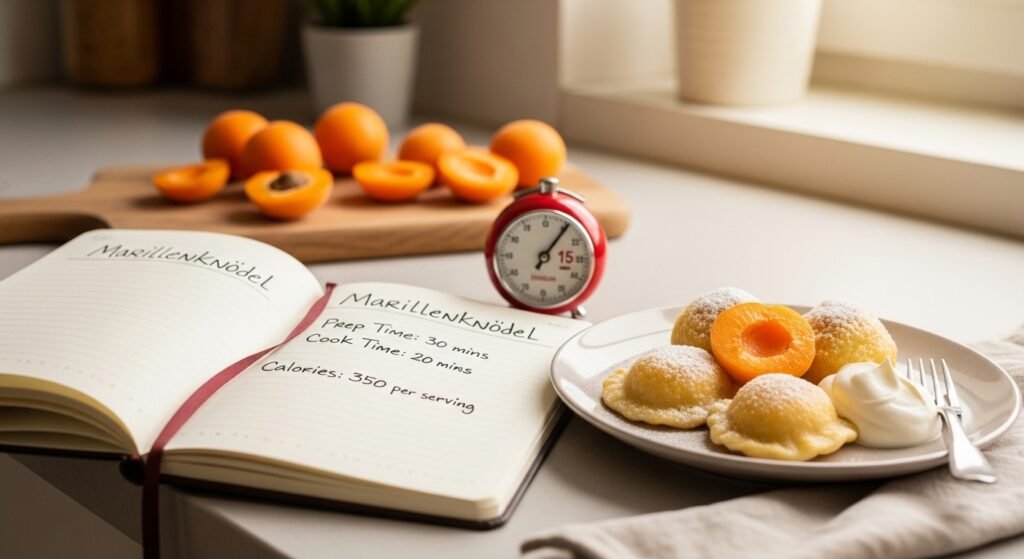
In terms of yield, the recipe commonly Serves 6, though smaller batches may list Servings 2 servings 8 dumplings depending on portion size. Nutritionally, some recipe cards calculate Calories 1054 kcal whole recipe, while others break it down to Calories 423 kcal per dumpling. I always remind readers that these numbers depend on dough thickness, breadcrumb coating, and toppings like whipped cream or ice cream, so treat them as a helpful guide rather than an exact rule.
Friendly Asked Question’s
1. What are Marillenknödel?
Marillenknödel are traditional Austrian apricot dumplings made with soft dough wrapped around whole apricots, usually filled with a sugar cube, then boiled and coated in buttery breadcrumbs. They are popular during apricot season and can be served as a dessert or even a main dish.
2. What does “Marillenknödel” mean?
“Marillen” is the Austrian word for apricots, and “Knödel” means dumplings. Together, the name simply means apricot dumplings.
3. What type of dough is best for Marillenknödel?
The most common options are Quark (Topfen) cheese dough and potato dough. Cheese dough is softer and easier to work with, while potato dough is slightly firmer. Beginners usually find quark dough more forgiving.
4. Can I use ricotta instead of quark or Topfen?
Yes. If quark or Topfen is unavailable, well-drained ricotta or farmer’s cheese works well. Make sure it is not too wet, or the dough may become sticky.
5. Can I use other fruits instead of apricots
Yes. Plums, cherries, or strawberries are great alternatives. Choose ripe but firm stone fruits so they hold their shape during cooking.
6. Do I have to put sugar cubes inside the apricots?
No. Sugar cubes are traditional because they create a syrupy center, but you can use granulated sugar, apricot jam, or skip the sugar completely.
7. How do I know when the dumplings are cooked?
They usually float to the surface after 10–15 minutes of simmering in salted water. Let them cook gently, not at a rolling boil.
8. Can I freeze Marillenknödel?
Yes. Freeze them uncooked and without the breadcrumb coating. Place them on a parchment-lined tray first, then transfer to freezer bags. Cook directly from frozen, adding a few extra minutes.
9. How should Marillenknödel be served?
They are traditionally rolled in golden breadcrumbs and sprinkled with powdered sugar. Many people serve them with whipped cream, vanilla ice cream, custard, or apricot sauce.
10. Are Marillenknödel served as dessert or main dish?
In Austria and Southern Germany, they are often served as a main lunch during summer. Outside Austria, they are usually enjoyed as a dessert.