
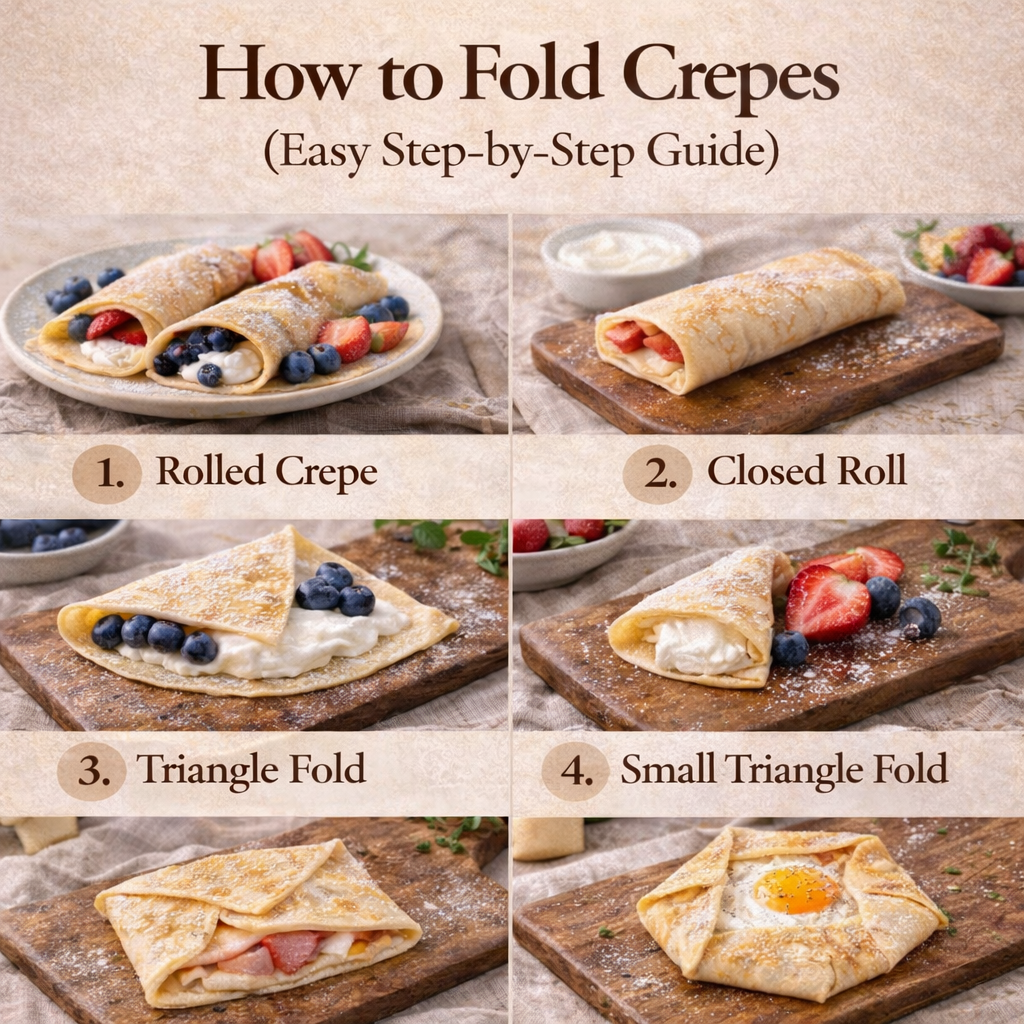
How to Fold Crepes / How to Fold a Crepe (7 Easy Ways)
When learning How to Fold Crepes, it helps to see it as part of a full comprehensive guide to French Crêpes, not just a random trick. In this How to Fold Crêpes tutorial, you’ll see 7 easy ways, and even three different ways that work beautifully for both sweet crepes and savoury crepes. As a classic French street food staple found in every French café and cozy crêperies, these delicate pancakes trace back to Brittany origin, where they were first made with buckwheat flour, before evolving into a softer white flour batter version. Whether you’re serving them for breakfast, brunch, a quick snack, easy lunch, or elegant dinner option, the key is to choose your filling wisely and properly enclose filling so nothing spills.
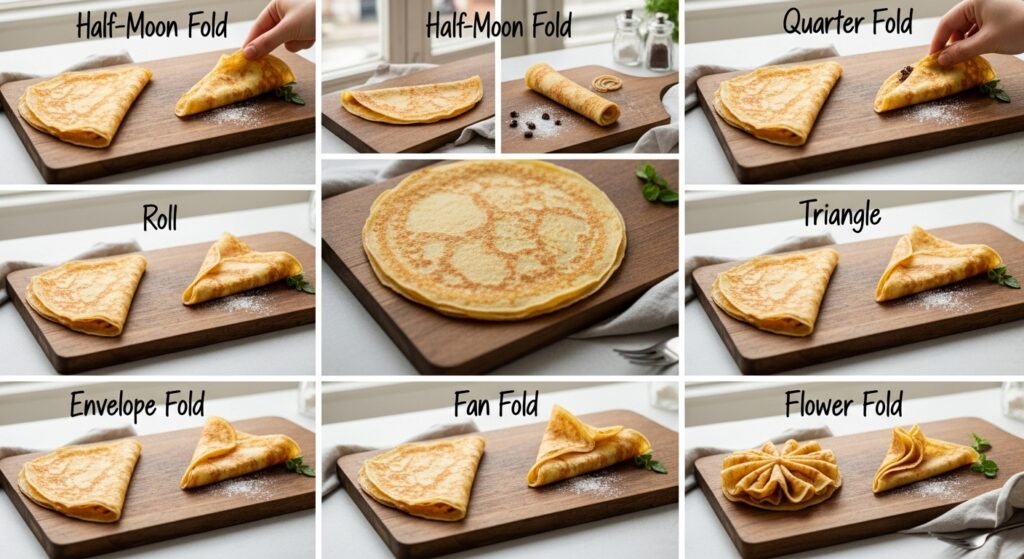
I’ve tested these folding techniques and folding options many times at home with paper-thin crêpes and warm steaming crêpes, and I always recommend following a foolproof recipe with solid hints and tips—just like the pros and even Paris street vendors do. Clear steps and sometimes step-by-step photos make a big difference, especially if you want neat, portable crepes for lunchboxes or something fun and kid-friendly.
Rolled Crepe / Open Roll
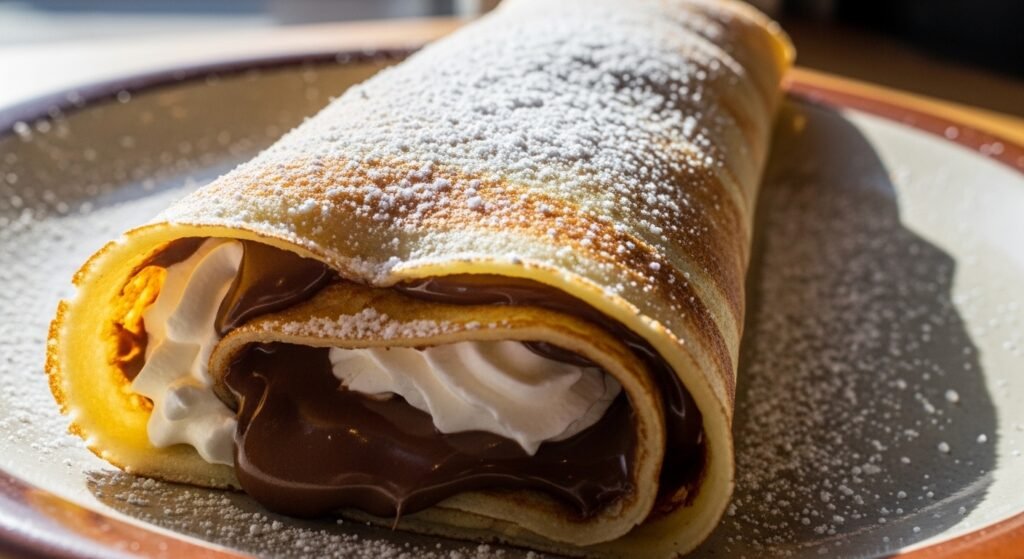
The simplest method is the How to Fold Crepes Open Roll, also called crepe roll-ups or a Rolled Crepe. Place the crepe with the best side facing down, then either spread filling thin layer, lay the filling down the middle, or smooth an even layer over surface. Gently roll from right to left or roll from left to right, but do not roll too tightly or the filling will squeeze out. Finish with the seam on bottom and use a fork to eat if serving on a plate.
How to Fold Crepes This fold works beautifully with a whipped cream topping, lemon curd drizzle, or Nutella drizzle, and you can go extra with hot fudge sauce, chocolate drizzle, a touch of desiccated coconut, fresh cherries, any berries topping, or a light powdered sugar sprinkle.
Closed Roll / Burrito Style Roll
If you want something more secure, try the Closed Roll, which is similar to roll like a burrito. After adding filling, leave 5cm gap or a 2-inch border, then fold top and bottom to middle, or fold upper and bottom sides, making sure to overlap edges slightly.
Fold ends in so the filling can’t fall out, creating a tidy portable fold perfect for travel or packed lunches.How to Fold Crepes I often add sliced fruit like chopped bananas, a nuts sprinkle, or even a layer of cookie butter spread inside for extra texture.
Triangle Fold / ¼ Triangle Fold
Another classic is the How to Fold Crepes into triangles, also known as the ¼ Triangle Fold or Triangular Fold. Simply fold in half to create a semi-circle shape, then fold again in half into a neat triangle shape. This is the most popular fold, especially the elegant Crêpes Suzette style often seen as a street vendor fold. It works perfectly with jam and cream or strawberries and cream, and it’s easy to turn into a hand-held crepe with a simple paper wrap option.
Small Triangle Fold
For a more compact version, the Small Triangle Fold adds an extra step. After the initial fold, create a 3-inch wide triangle or about an 8cm triangle, then fold by ⅓ to form an extra fold smaller size. This style is small hands friendly, which makes it great for children. I love serving it warm with a tiny salted butter knob and a gentle honey drizzle on top.
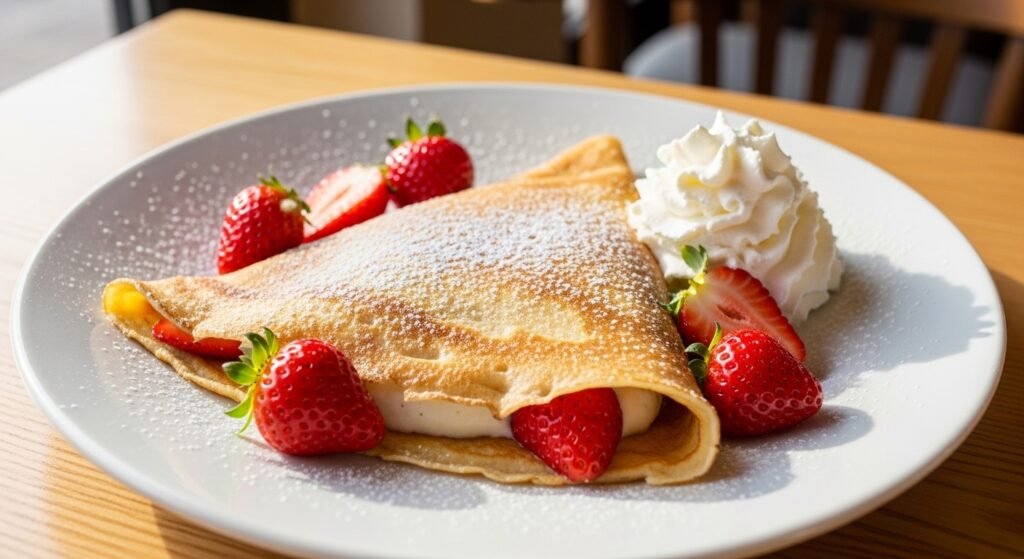
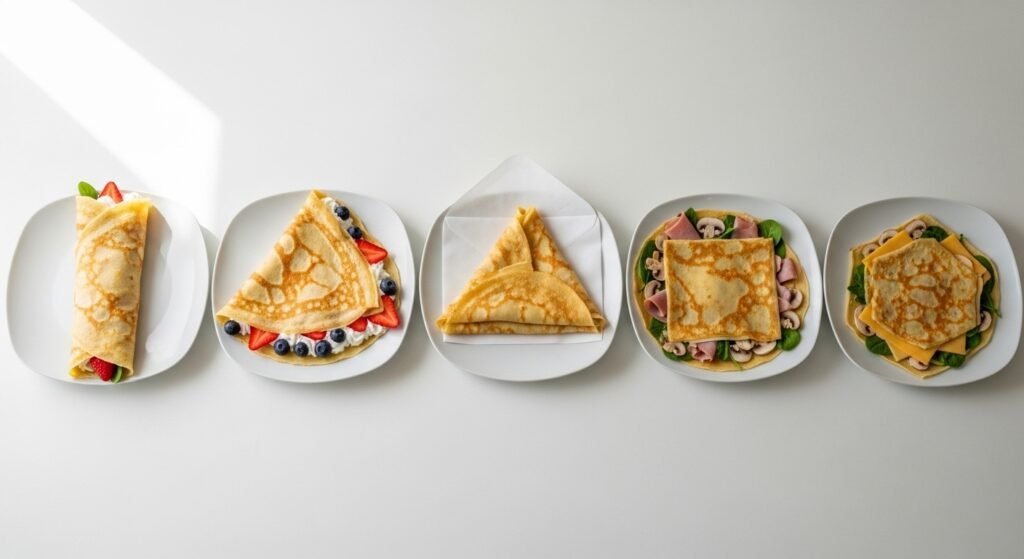
Fold Over / Envelope Fold / Square Fold / Pocket Fold
When I teach beginners, I always start with the Fold over style because it is simple and practical. First, spoon filling in middle top to bottom, then fold left and right sides with a slight overlap to secure it. If you need something more secure for lunch or travel, use the Pocket fold by creating a neat square pocket—just fold top and bottom to middle after the sides to form a portable square. For extra texture, there is a pan-fry option that gives a light crisp.
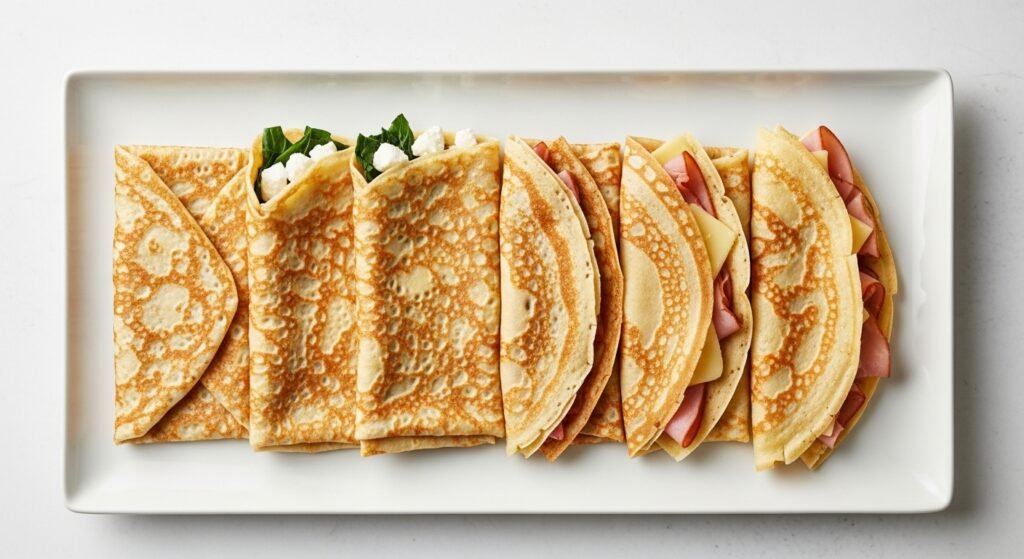
The Envelope Fold works best when you want structure: fold sides to meet center, then fold bottom up and finally fold top down flap to seal. The classic Square Fold is ideal for serving on a plate, keeping the seam on bottom for clean fork eating, especially if you have a heavily filled crepe and want to try the crispy crêpe option.
Square Overlapping Fold / Open Fold /
For more visual appeal, the Square overlapping fold is excellent. Leave a 2-inch border or 5 cm border, then overlap folds clockwise to create square frame around the filling. If you prefer a rustic café look, try the Open Fold. Simply leave 2.5cm gap or 1-inch border, then fold top and bottom edges followed by fold right and left edges to highlight filling center. This works beautifully with eggs filling like ham mushroom spinach egg, especially in galette style using buckwheat crêpes.
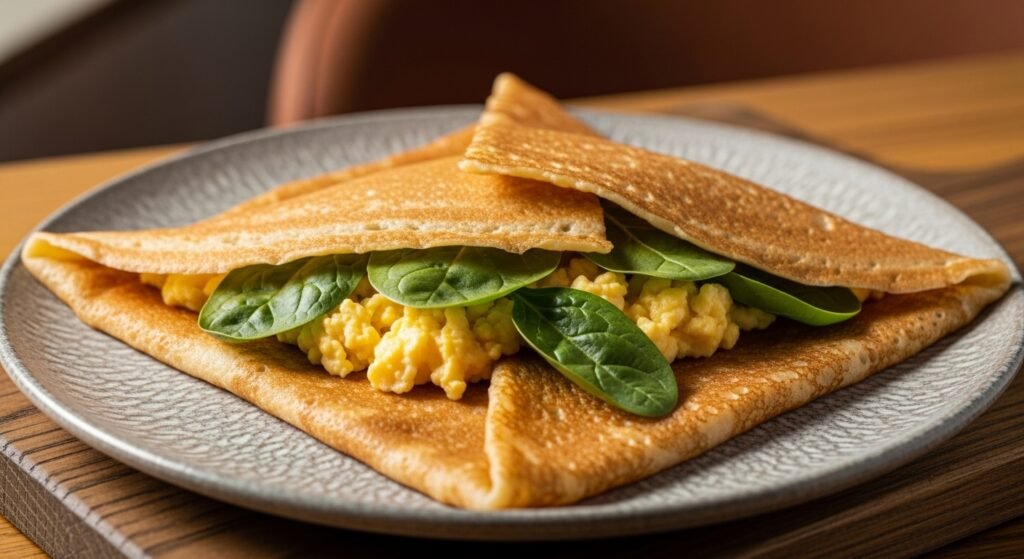
For a more refined touch, the Hexagon Fold forms a six edges shape—fold top edge to middle and then fold remaining edges clockwise for an eye-catching presentation. I often finish it with lemon curd, a spoon of créme fraîche, a sprinkle of fresh thyme, and a little lemon zest for a simple but elegant plate.
Hexagon Fold
The Hexagon Fold is one of the most impressive styles in this How to Fold Crepes (Easy Step-by-Step Guide) because it creates a clean six edges shape that instantly upgrades your presentation. Start by laying the crepe flat and fold top edge to middle, then continue to fold remaining edges clockwise until the shape forms evenly. The key is keeping the folds neat and slightly overlapping so the structure holds without tearing. After doing this many times, I’ve learned that gentle pressure with your fingertips keeps the crepe smooth and prevents cracking.
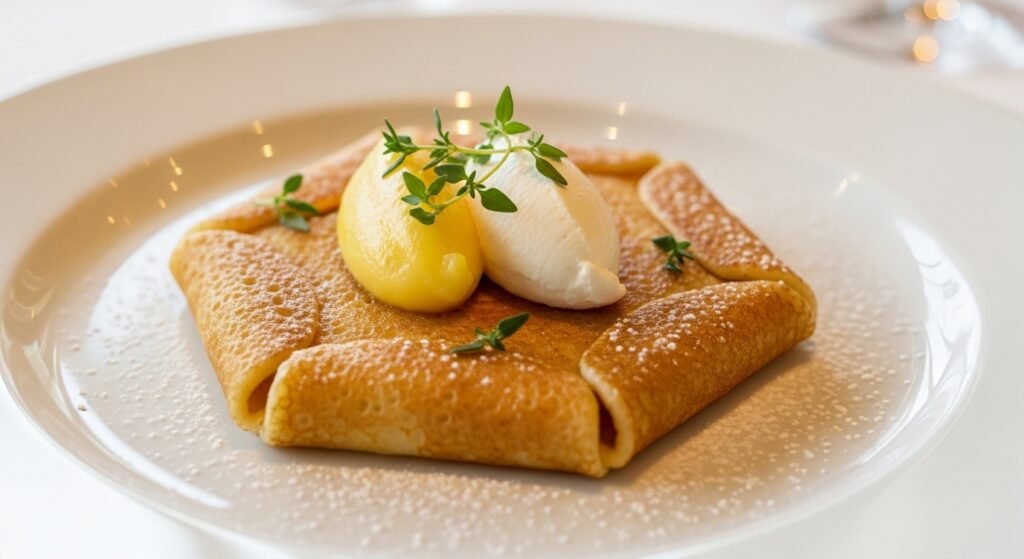
What makes this fold special is its eye-catching presentation. It frames toppings beautifully, especially when finished with lemon curd, a spoon of créme fraîche, and a sprinkle of fresh thyme with a touch of lemon zest. The contrast of soft crepe and bright garnish makes the plate look refined but still simple enough for home cooking.How to Fold Crepes
Crêpes Layer No Fold / Layer Cake
The Crêpes layer no fold method is less about folding and more about a careful layering technique that turns simple crepes into a bakery-style centerpiece. For this style, I always prepare a double batch batter to make around 24 crêpes, which gives enough height for a proper Vanilla Mille Crêpes Layer Cake. How to Fold Crepes Spread about ¼ cup cream per layer, making sure each one is a smooth even layer before placing the next crepe on top.
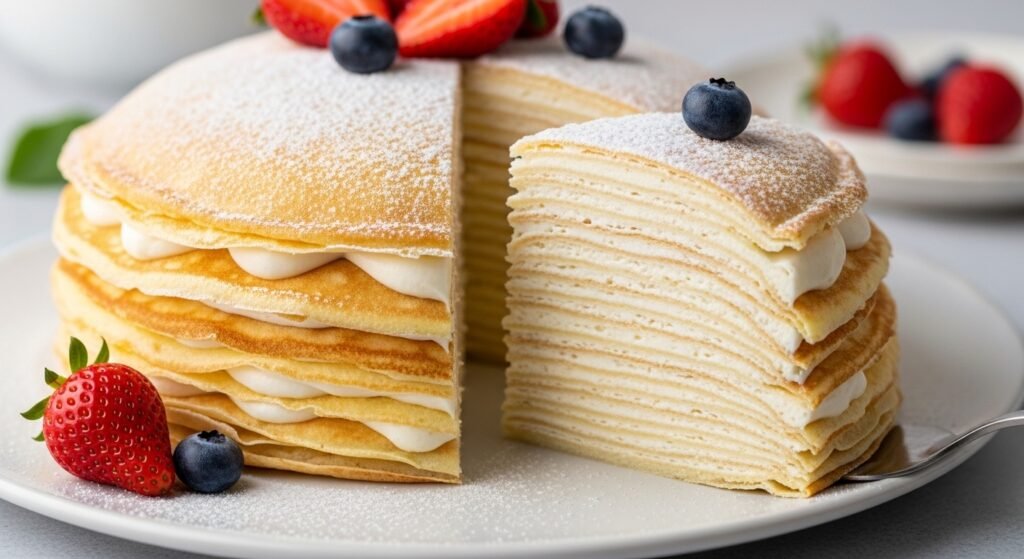
The beauty comes from the alternating layers of crepes and sweetened whipped cream, creating a soft structure that feels light but looks impressive. Once chilled slightly, you can slice into wedges and reveal those delicate lines—truly a showstopper dessert that feels far more complex than it is.
Pro Tips
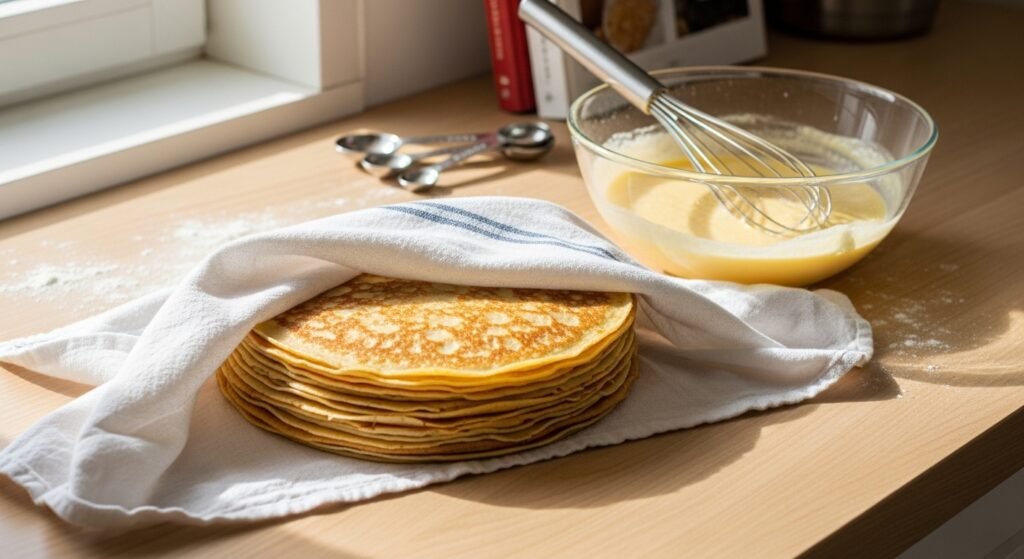
To get perfect results, always rest batter 1 hour or give it a proper fridge rest so you end up with tender crêpes that fold and stack easily. While cooking, keep crêpes warm by letting them stack and cover with tea towel to trap gentle heat. One mistake I see often is adding too much filling; always avoid overstuffing filling to prevent squeezing out, especially when stacking layers or preparing any folded version from this guide.
FAQs: How to Fold Crepes
1. What is the easiest way to fold crepes?
The easiest way is the rolled crepe (open roll). Simply spread the filling in a thin layer and roll from one side to the other. It works well for both sweet and savory crepes and is perfect for beginners.
2. How do French street vendors fold crepes?
In France, crepes are commonly folded into a triangle (¼ fold). The crepe is folded in half, then folded again to form a hand-held triangle that can be wrapped in paper and eaten on the go.
3. How do you fold crepes so the filling doesn’t fall out?
Use a closed roll (burrito style) or envelope fold. Fold the top and bottom edges in first, then roll or fold the sides toward the center. This keeps the filling enclosed and makes the crepe portable.
4. What is the best fold for savory crepes?
For savory fillings like eggs, ham, mushrooms, or spinach, the square fold, envelope fold, or open fold works best. These folds frame the filling and hold heavier ingredients in place.
5. Can you fold crepes ahead of time?
Yes. You can fold crepes in advance and store them in the refrigerator for 1–2 days. Reheat gently in a skillet before serving to maintain texture.
6. Why do my crepes tear when folding?
Crepes may tear if they are too thin, overcooked, or not rested properly. Let the batter rest for at least one hour and avoid overcooking to keep them flexible and easy to fold.
7. What fold is best for kids?
Small triangle folds or pocket folds are ideal for kids. They are easy to hold, less messy, and great for lunchboxes.
8. Can crepes be folded without filling?
Yes. You can stack them flat or use the layering method to create a crepe cake without folding. This works well for desserts like mille crêpes cake.
9. Should crepes be warm before folding?
Yes. Warm crepes are more flexible and easier to fold. Stack them and cover with a clean towel to keep them soft and pliable.
10. How many folding styles are there?
There are 7–8 popular folding techniques including roll, burrito style, triangle, small triangle, square, envelope, open fold, hexagon fold, and layered (no fold) style.