
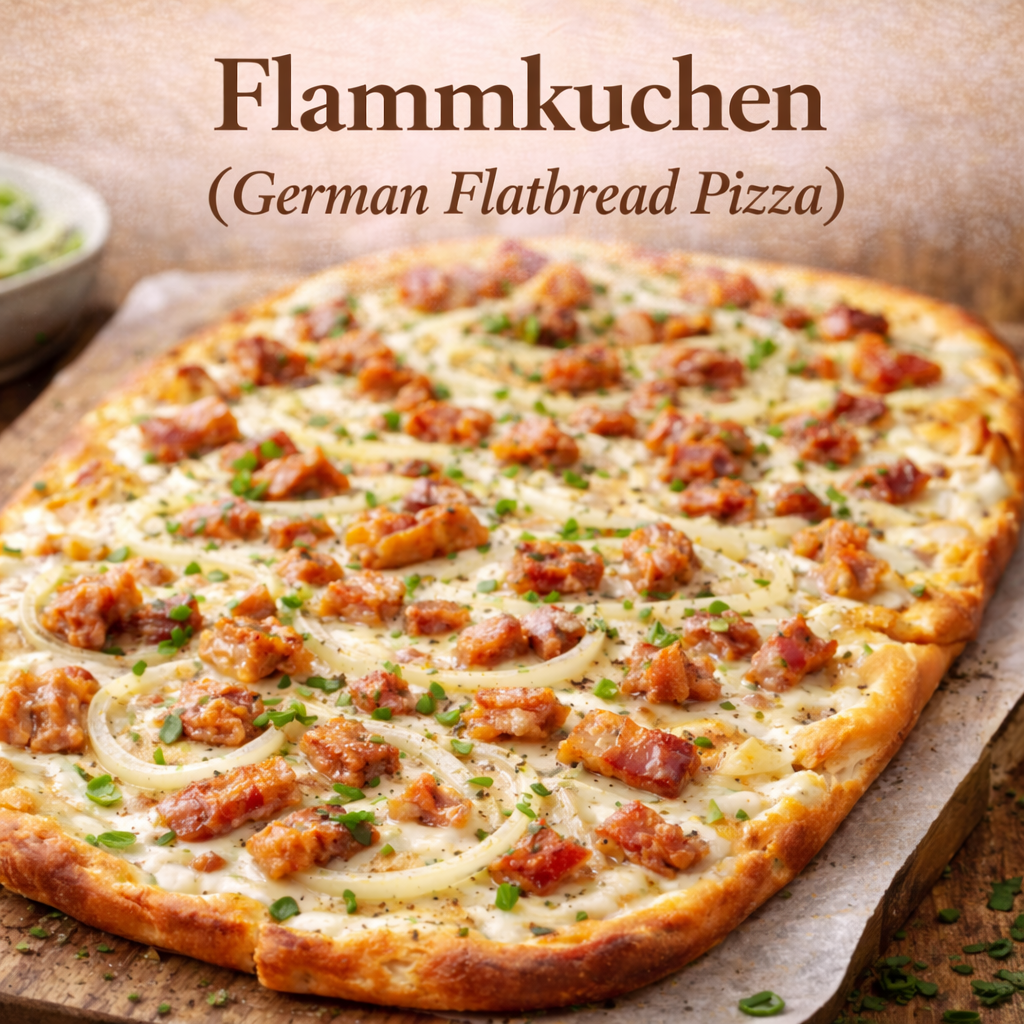
What is Flammkuchen?
Often described as a German flatbread pizza, Flammkuchen — also known as Tarte Flambée, Flammekueche, or tarte flambee — is a traditional Alsatian dish from the Alsace region France, near the French German border. It is also popular across Southwestern German regions Mosel Baden-Württemberg Palatinate Rheinland-Pfaltz Austria, where German settlers baked this rustic flatbread in a wood-fired oven. The name means pie baked in the flames, sometimes called a flame cake, and it was originally used to test oven heat. Unlike a not round pizza, this comes in a rectangular oval shape, made with unleavened dough no yeast that bakes into a thin crisp cracker-like crust with a lightly blistered crust.
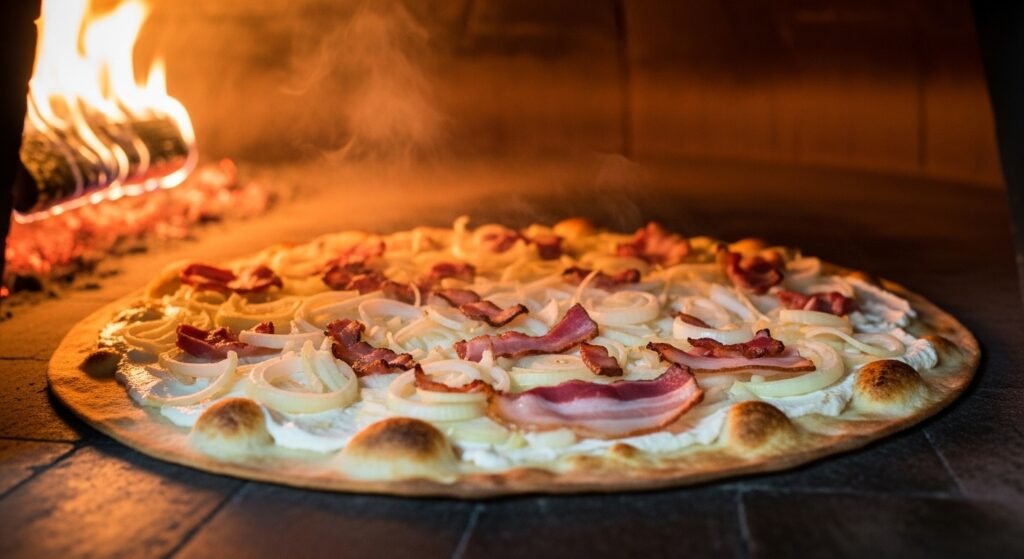
Traditionally, it is topped with creamy crème fraîche or fromage blanc, creating a rich sour cream base with a hint of nutmeg seasoning. The classic version uses raw onions traditional and raw bacon traditional, often in the form of lardons, Speck, or thick-cut bacon made from smoked pork belly and cured bacon such as Jausenspeck Bauchspeck Frühstücksspeck, clearly not Italian Speck prosciutto. There is no tomato sauce, it is not white pizza, and there is no traditional cheese topping, though gruyere optional is sometimes added. Gaining mainstream exposure 1960s pizza craze, you can now even find a frozen version Trader Joe’s, but the homemade version remains easy to make with a few ingredients or just a handful ingredients, staying true to its roots as an authentic German recipe.
Ingredients and Ingredient Notes
For the base of Flammkuchen (German Flatbread Pizza), you can work with all-purpose flour, strong white flour, wholemeal flour, or even strong 00 flour depending on the texture you prefer. I have tested both the classic no yeast dough version and one with dried yeast, using measurements like 500 g flour, 2 cups 250g flour, or even 1 cup flour for smaller batches. The liquid can vary between 320 g warm water, 1/2 cup 120g warm water, or ¼ cup water, mixed with olive oil or vegetable oil, plus 7 g salt or 1/2 teaspoon fine sea salt for balance. Personally, I find the unleavened style gives that crisp, authentic bite, but the yeast-based dough creates a slightly softer edge if that’s what you enjoy.
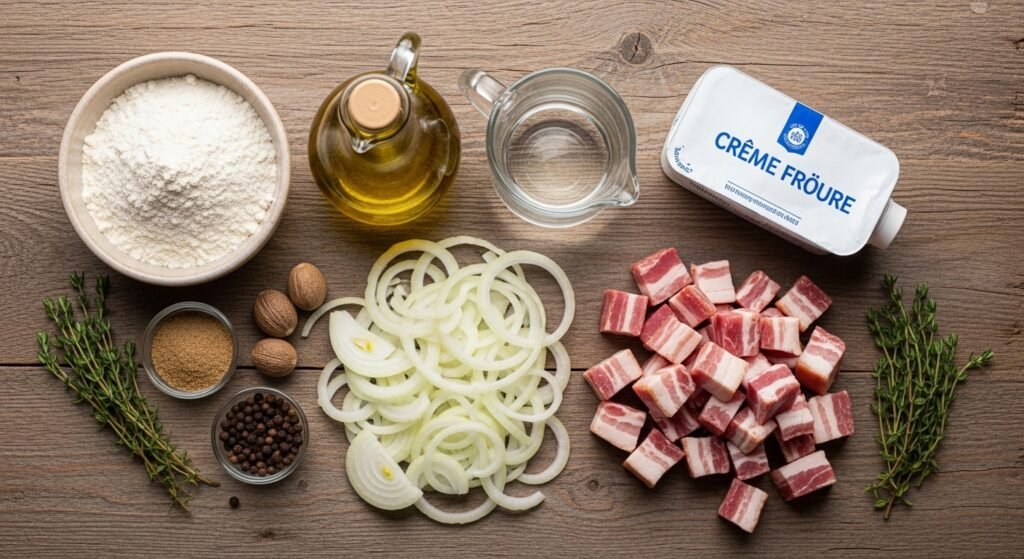
For the topping, the creamy layer can be crème fraiche, sour cream, Greek yogurt, Schmand 20% fat, or fromage blanc. If needed, you can even prepare heavy cream buttermilk homemade crème fraiche at home. The meat ranges from 7 oz 200g bacon, 12 strips bacon, or 2 ½ oz smoked bacon, ideally thick-cut bacon ¼-inch cubes strips, traditional lardons, or Speck German style. Add either 1 small medium onion or 2 onions finely sliced rings, whether onions thinly sliced raw or onions sautéed butter in a bit of butter. Finish with a light touch of nutmeg, black pepper, and simple salt pepper seasoning, plus thyme optional, chives garnish, or scallions optional. Some recipes even blend in 230 g Greek yoghurt for extra creaminess, which I’ve found works well when crème fraiche isn’t available.
How to Make Flammkuchen / Step-by-Step Instructions
Start by preheat oven highest setting 500°F 250°C 450F 230C, and always preheat baking tray 30 minutes in advance. If you want extra crispness, let your pizza stone preheat 1 hour. In a bowl, mix flour water olive oil salt and combine dough ingredients rough dough. Then knead into a soft smooth elastic velvety dough 10 minutes, either by hand or using a stand mixer dough hook. Once ready, wrap plastic foil rest 20-30 minutes, though you can also rest 1-2 hours room temperature overnight fridge for deeper flavor. After resting, divide dough 4 parts 8 small, use a dough scraper, shape ball rest 10 minutes, then roll very thin oval rectangular circle 2-3 mm ⅛in 3mm for that classic crisp base. Filling Ideas.
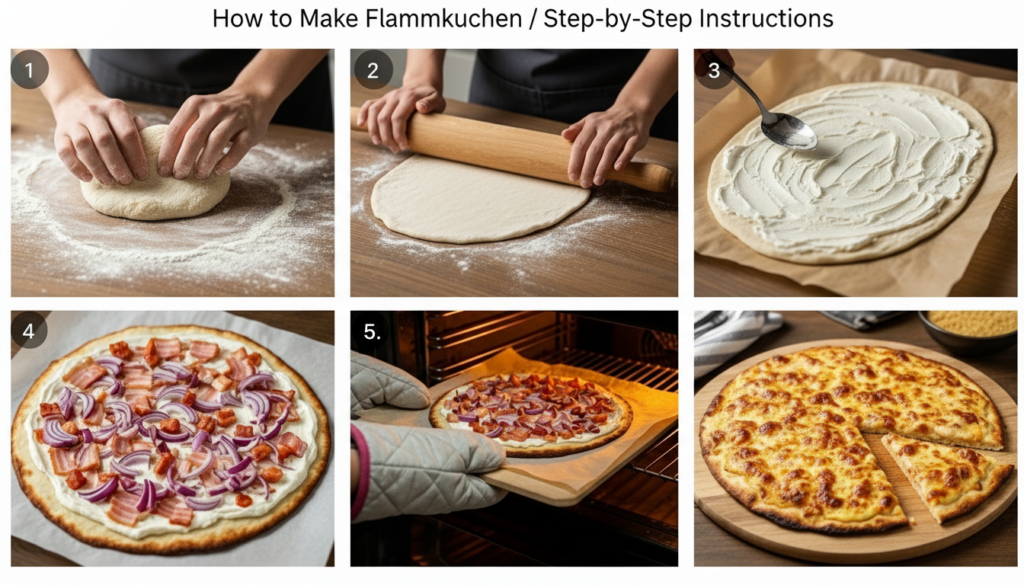
Carefully transfer parchment paper baking sheet, then spread crème fraiche mixture leaving border so the edges turn golden. Lightly sprinkle nutmeg salt pepper, cut bacon small cubes strips, and either fry bacon almost cooked not crispy or use raw traditional. Do the same with onions: fry onions slightly browned or use raw traditional sprinkle salt soften depending on your style. Bake for 10-12 minutes 14-18 minutes 12 minutes until golden brown crisp edges, keeping an eye on color and texture. Once done, cut into 6 squares chef’s knife and serve immediately while the crust is still crackling hot.
Creative Variations to Try
When it comes to Flammkuchen (German Flatbread Pizza), the classic bacon and onion topping is just the beginning. One popular twist is Gratinée Gruyère cheese added, which brings a nutty richness, or even Munster Muenster cheese for a stronger flavor. If you enjoy earthy notes, try Forestière mushrooms or a simple mix of leeks mushrooms over the creamy base. For a lighter option, go vegetarian grilled vegetables shredded cheese, or balance sweetness and salt with roasted butternut squash red onion feta. I’ve also tested combinations like figs red onion goat cheese and pear gorgonzola, both of which work beautifully on the thin crust without overpowering it.

For fresher flavors, a Caprese tomatoes mozzarella basil version keeps things simple yet vibrant. If you prefer something bold, add smoked salmon arugula horseradish cream cheese after baking for contrast and texture. And when turning it into a treat, the sweet dessert apples cinnamon blueberries Calvados sweet liqueur variation transforms this savory flatbread into a delicate dessert. The key I’ve learned is to keep toppings balanced so the crust stays crisp while each ingredient stands out clearly.
Storage and Reheating
After making Flammkuchen (German Flatbread Pizza), it’s best enjoyed fresh, but you can store fridge airtight container plastic foil 2 days 3 days without losing too much flavor. I usually place slices in an airtight container or wrap them tightly in plastic foil, then reheat oven toaster oven until crispy to bring back the thin crust texture. It also surprisingly tastes good cold room temperature, especially when the crème fraîche base firms up slightly.
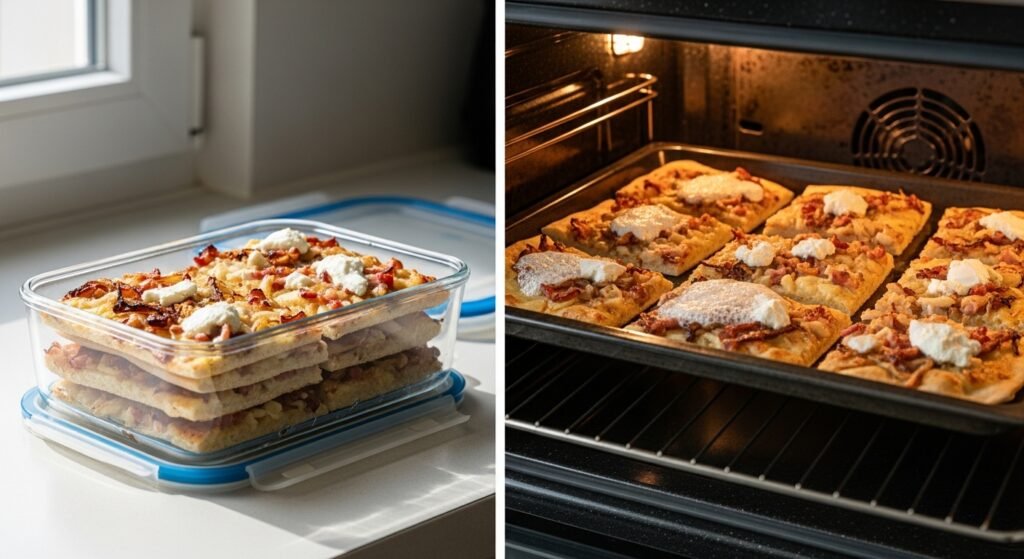
If you have leftover dough refrigerate cling film next day, it works perfectly for another quick bake. For longer storage, you can freeze dough par-bake 3 mins fully cooled before freezing re-bake, which keeps the base from becoming soggy later.
Serving Suggestions
Traditionally, this rustic flatbread pairs beautifully when you serve with cold beer, especially in casual settings. If you prefer wine, a crispy dry white wine or even Austrian Weißburgunder balances the creamy topping and smoky bacon.

I personally like adding a simple green salad vinaigrette on the side to cut through the richness and keep the meal light while still satisfying.
Frequently Asked Questions : Flammkuchen (German Flatbread Pizza)
1. Is Flammkuchen the same as pizza?
No. While it’s often called German pizza, Flammkuchen uses an unleavened dough with no yeast, no tomato sauce, and traditionally no cheese. The base is crème fraîche instead of tomato sauce, and the crust is thinner and crispier than regular pizza.
2. What is the traditional topping for Flammkuchen?
The classic Alsatian version includes crème fraîche, thinly sliced raw onions, and bacon (Speck or lardons). These are traditionally added raw before baking.
3. Can I use sour cream instead of crème fraîche?
Yes. You can substitute sour cream or mix Greek yogurt with a little olive oil. However, crème fraîche gives the most authentic texture and flavor.
4. Do I need yeast for Flammkuchen dough?
Authentic Flammkuchen is made with unleavened dough, meaning no yeast. Some modern recipes include yeast, but the traditional version does not.
5. Can I make Flammkuchen ahead of time?
It tastes best freshly baked, but leftovers can be stored in the fridge for 2–3 days and reheated in the oven until crispy. It can also be enjoyed cold.
6. Can I freeze Flammkuchen?
You can freeze the dough. Par-bake it for about 3 minutes, let it cool completely, then freeze. When ready to use, add toppings and bake again.
7. Why did my Flammkuchen turn soggy?
Too many toppings or too much moisture from onions or bacon can cause sogginess. Keep toppings light and bake at a very high temperature.
8. What temperature should I bake Flammkuchen at?
Bake at the highest oven setting, usually around 450–500°F (230–250°C), to achieve a crisp crust.
9. Can I add cheese to Flammkuchen?
Cheese like Gruyère is optional but not traditional. The authentic version does not include cheese.
10. What drinks pair well with Flammkuchen?
Cold beer, a crisp dry white wine, or Austrian Weißburgunder pair very well with its creamy and smoky flavors.