
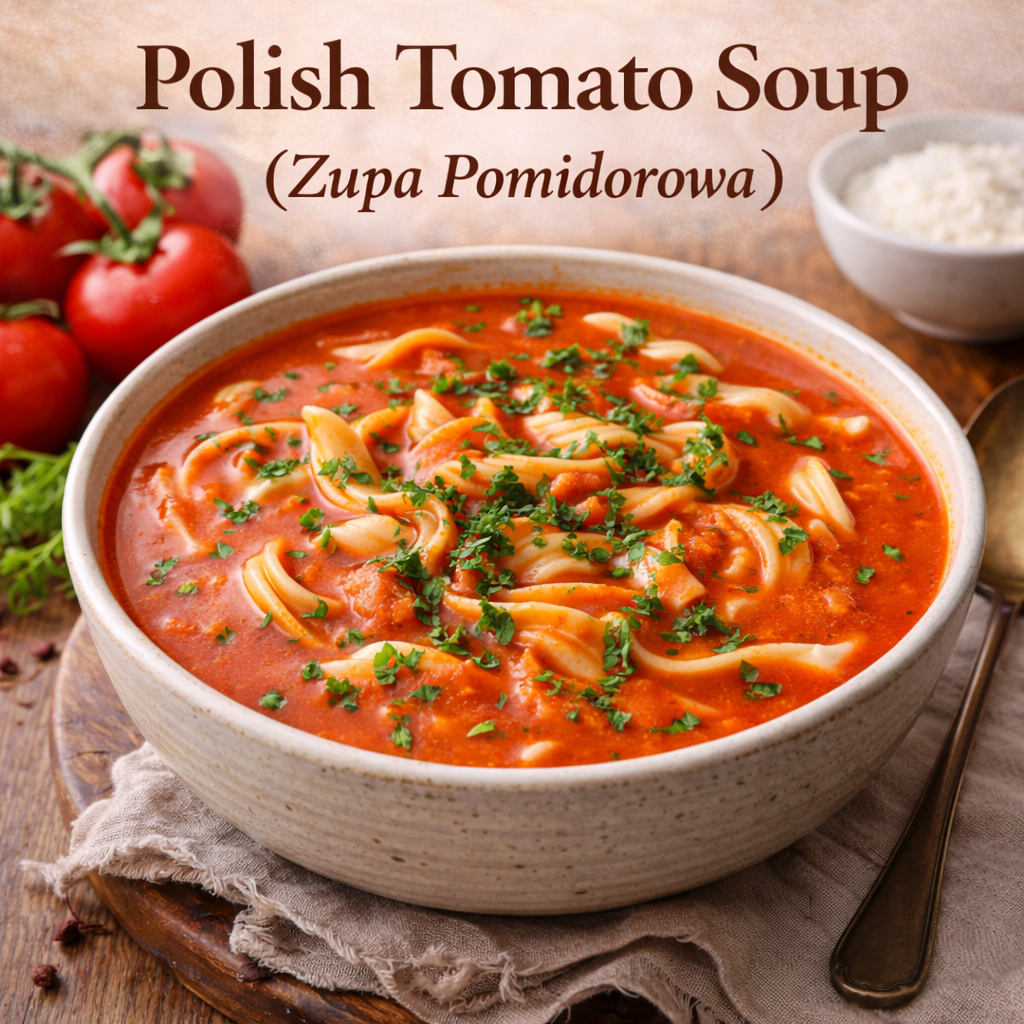
Polish Tomato Soup (Zupa Pomidorowa)
For me, Polish Tomato Soup is more than just a recipe; Zupa Pomidorowa, also called zupa pomidorowa, pomidorowa, or pomidorówka, is a true Polish cuisine staple. If you’re unsure how to say it, the zoo-pah pomido-rovah pronunciation makes it easier to remember. This old-school tomato soup is classic comfort food, often described as kid-friendly and served in Polish milk bars and canteens, but nothing beats a warm homemade version. Traditionally, it’s a Monday soup made from leftover Rosół after the Sunday dinner tradition, and it easily ranks among the top 5 favourite foods in many homes. This Polish style tomato soup works beautifully as a Main Course Soup in Cuisine Polish, and you’ll often see it featured in posts dated 1 September 2021, Last Updated 11 July 2024, March 27 2023, or Sep 22 2023, shared by creators like Aleksandra and Victoria, sometimes with a Victoria affiliate disclosure Amazon Associate, and stats like 442 shares 36 406, plus options such as Jump to Recipe and Printable Recipe.
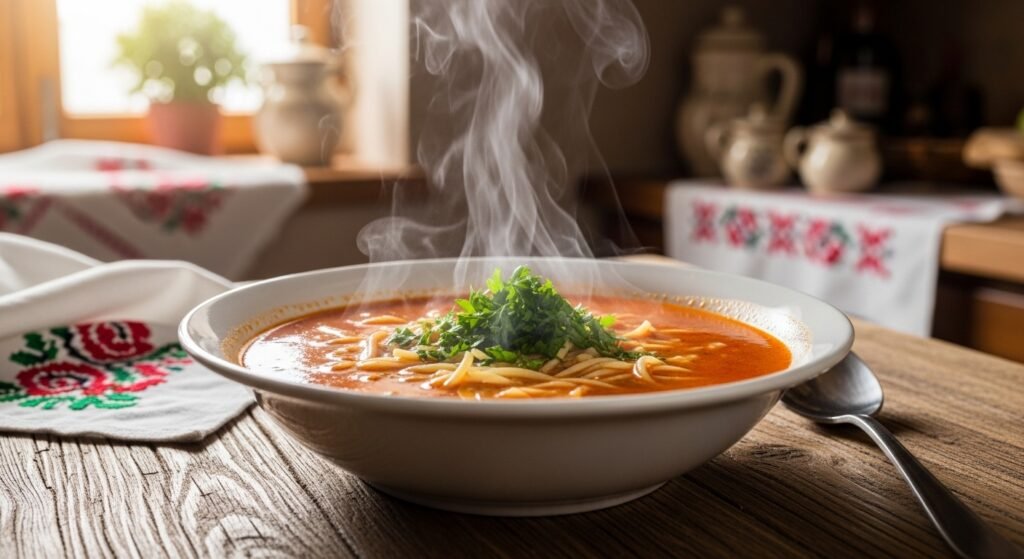
It’s praised with ratings like 5 from 4 votes or 4.6 Stars 99 Reviews, and what makes it special is flexibility: a 15 minutes quick easy version with Cook Time 20 minutes and Total Time 20 minutes, or a richer approach with Prep Time 15 minutes, Cook Time 1 hour, and Total Time 1 hour 15 minutes. Depending on your table, it can serve Servings 4 servings or Servings 6 servings, with nutrition around Calories 109 kcal or Calories 206. I’ve made it both ways—quick for busy weekdays and slow-simmered when I want deeper flavor—and it never fails to bring that familiar, nostalgic warmth.
Broth / Rosół Base
The heart of Polish Tomato Soup (Zupa Pomidorowa) is the base, whether it’s Chicken broth, chicken stock, store-bought chicken broth, or rich homemade chicken broth. Many families rely on leftover Rosół, the classic Polish chicken soup Rosół, often similar to chicken noodle soup, but deeper and more aromatic. A delicate chicken broth gives a lighter taste, while a rich meaty broth made from 6 cups chicken broth, 8 cups water, or even 8.5 cups 2 litres chicken broth creates a fuller body. Some simmer for 1 hour simmer, others prefer a slow 6 hours Rosół simmer for maximum flavor.
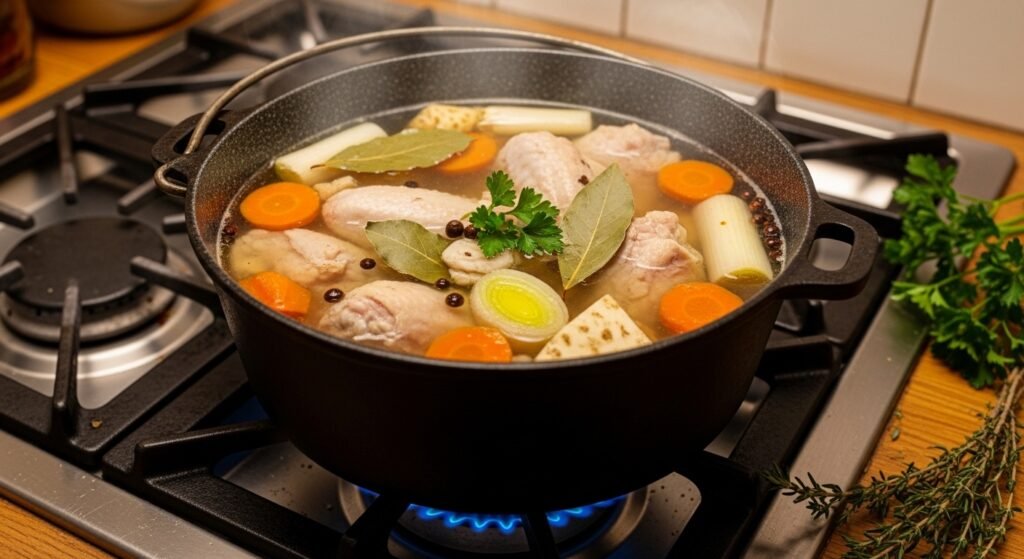
For depth, I like using chicken wings, chicken thighs, drumsticks, or whole chicken legs, especially bone-in skin-on chicken parts, then removing the meat off the bones later. The traditional soup vegetables włoszczyzna—carrots, parsley root, leek, celeriac, and onion—build that signature aroma, supported by parsley leaves, parsley twigs, bay leaves, allspice berries, and black peppercorns, often measured as 2 bay leaves, 3 allspice berries, and 10 black peppercorns. For a lighter twist, a vegetable stock vegetarian option works surprisingly well, especially if you still follow the same layering of spices and slow simmering for balanced flavor.
Tomato Base
When building the flavor of Polish Tomato Soup (Zupa Pomidorowa), I always focus first on the Tomato puree. You can use tomato passata, tomato paste, or traditional Polish przecier pomidorowy. A good canned tomato puree is reliable, but I also enjoy using homemade tomato puree when I have time. If using store-bought, 2 cups tomato passata 500 ml works well, while a lighter homemade version may need 3 cups homemade puree. Some recipes call for 24 oz 680–700 ml tomato paste, which equals 4 regular tins 6 oz tins. What matters most is that it’s a thick sauce pureed briefly cooked tomatoes with strained seeds skins for that intense saturated flavor.
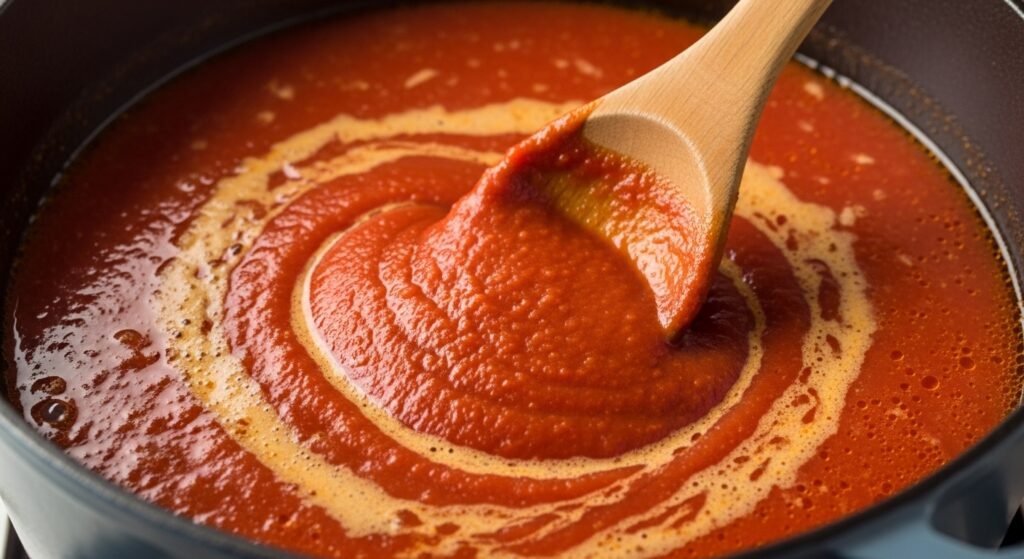
For the best finish, choose a smooth tomato puree velvety texture and crushed tomatoes avoid if you want a classic consistency. While fresh peeled seeded tomatoes alternative is possible, I find that concentrated passata gives a deeper color and more stable taste. Over time, I’ve learned that controlling thickness at this stage makes the soup feel balanced before adding dairy, especially when serving it with noodles or rice.
Cream / Dairy
The creamy touch in Polish Tomato Soup (Zupa Pomidorowa) can come from simple Cream, sour cream, or heavy cream. In Poland, many cooks prefer 18% cream cream for soup Poland, while others use 12% sour cream or richer 30–36% heavy cream. A balanced mix like 3 tablespoons heavy cream and 3 tablespoons sour cream, or even 0.8 cups 200 ml sour cream, works beautifully. I often use half sour cream half heavy cream to control both tang and richness.
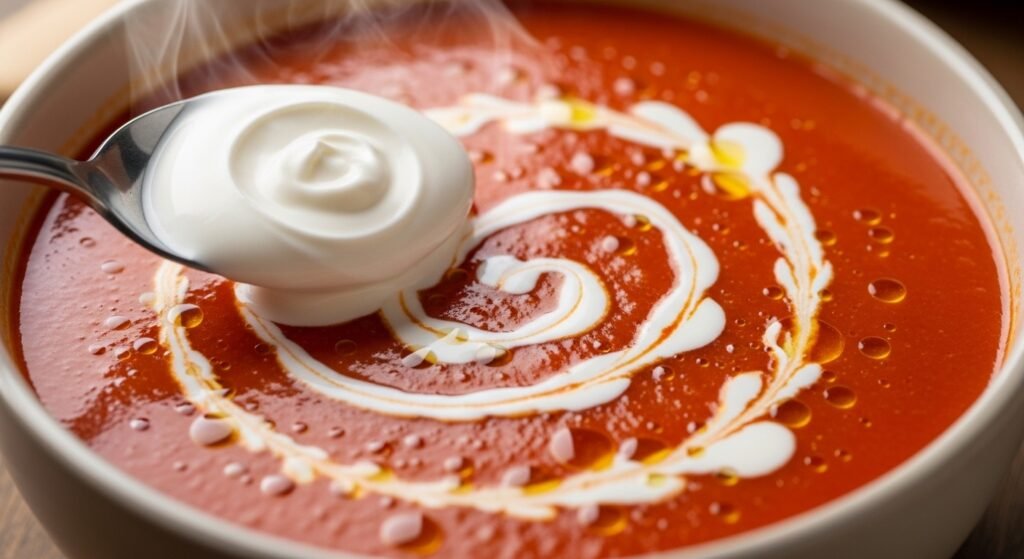
Always follow the temper cream method by adding a tablespoon hot soup to cream, then gradually adding up to 8 tablespoons soup tempering to prevent curdling. If it ever turns into a grainy soup blender smooth texture, a quick blend fixes it easily. When tomatoes taste too sharp, a pinch of light brown sugar adjust sourness gently rounds everything out without overpowering the natural tomato flavor.
Pasta or Rice Debate / Serving Style
In Polish Tomato Soup (Zupa Pomidorowa), there is always the classic Noodles or rice debate, and truly Polish people divided best way. Some families swear by egg noodles, especially homemade egg noodles, while others happily use store-bought noodles. I’ve seen it served with ribbon pasta tagliatelle, or shorter rotini fusilli shapes for a modern twist. If using rotini, about 130 grams 4½ ounces 1½ cups uncooked rotini gives roughly 300 grams 10½ ounces 3 cups cooked rotini, which is enough for several bowls.
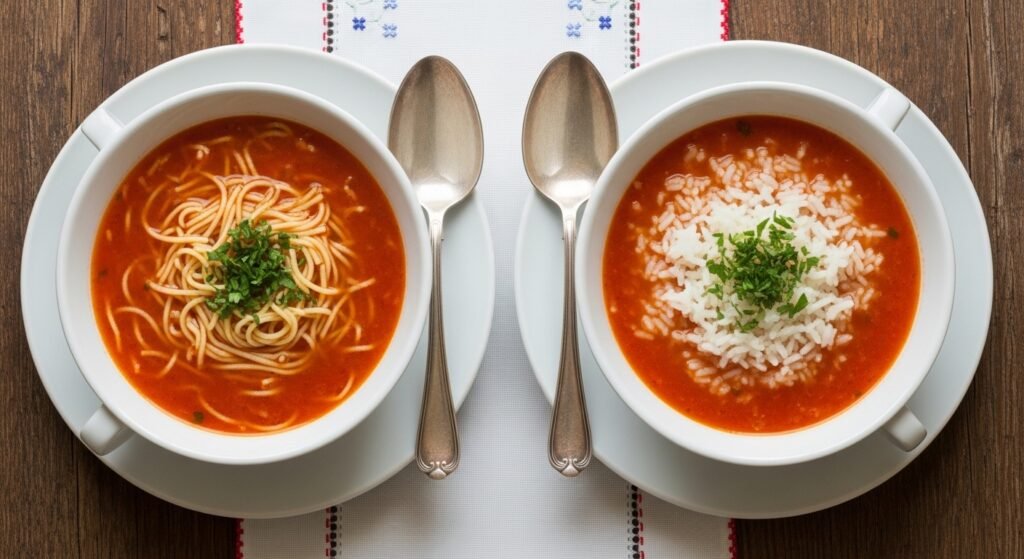
If you prefer regular white long grain rice, it gives a lighter texture but still absorbs flavor beautifully. Add cooked pasta or rice directly into the bowl—about ¾ cup per bowl for a lighter serving or 1 cup per bowl if you want it heartier. Finish with chopped parsley garnish, though basil leaves alternative can work if parsley isn’t available. From experience, adding the carb separately keeps the soup base balanced and prevents it from thickening too much over time.
Step-by-Step Method
To prepare the base for Polish Tomato Soup (Zupa Pomidorowa), first Bring broth to boil, then simmer partially covered 1 hour. After that, strain broth discard vegetables, though you can slice carrots optional and return them if you enjoy extra texture. Set meat aside cool, then continue by add tomato puree to broth and bring it to a gentle boil gentle simmer. At this stage, season salt pepper carefully so the tomato flavor stays fresh.
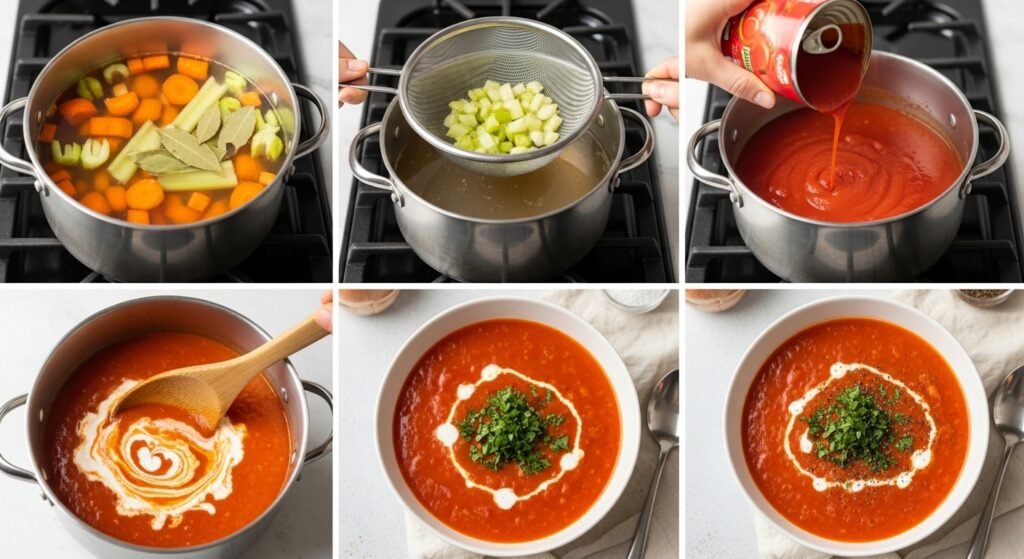
Next, temper sour cream in bowl, stir gradually combine, and add to pot stir combine smoothly. Always heat gently do not boil cream split, as boiling can ruin the texture. If it turns uneven, process in food processor fine-mesh strainer if lumpy for a silky finish. Finally, sprinkle chopped parsley and serve hot, making sure each bowl carries that comforting, balanced taste that defines this classic Polish soup.
Storage / Reheating / Freezing
After making Polish Tomato Soup (Zupa Pomidorowa), proper storage keeps the flavor fresh. You can Store in fridge up to 4 days or simply refrigerate 4–5 days in an airtight container. When warming it again, always reheat gently do not boil cream curdle, because high heat can ruin the smooth texture. I usually warm it slowly over low heat and stir often to keep it creamy.
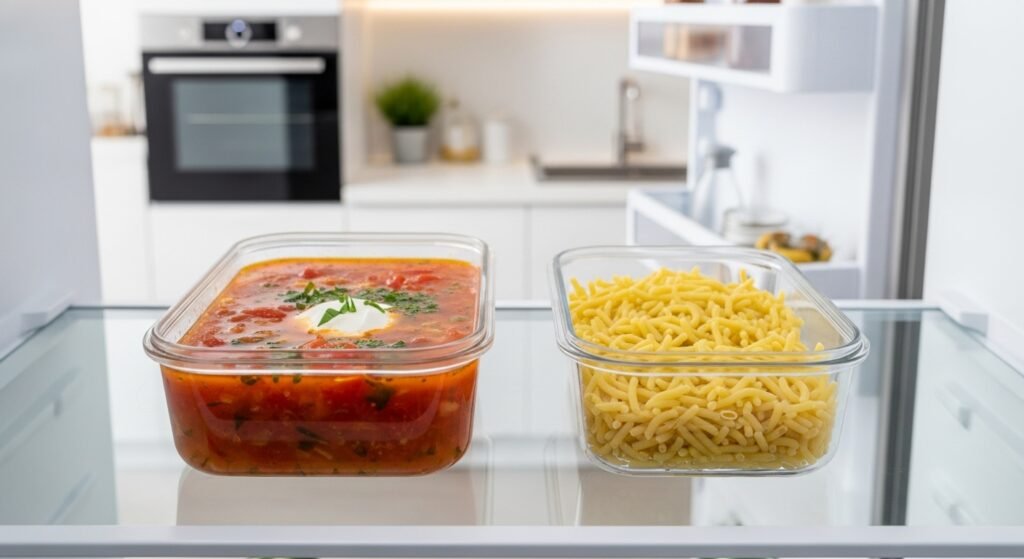
If you plan to store it longer, freeze without cream for best results. If you accidentally freeze with cream blend smooth again using a blender to restore the texture. For convenience, keep leftover cooked pasta rice option separate and add it fresh when serving, so it doesn’t soak up too much liquid.
Related Polish Soups
If you enjoy Polish Tomato Soup (Zupa Pomidorowa), there are many other classics worth trying. Start with Rosół recipe Polish chicken soup, which is often the base for tomato soup itself. Another favorite is Żurek recipe Polish sour rye soup, known for its deep, fermented flavor.
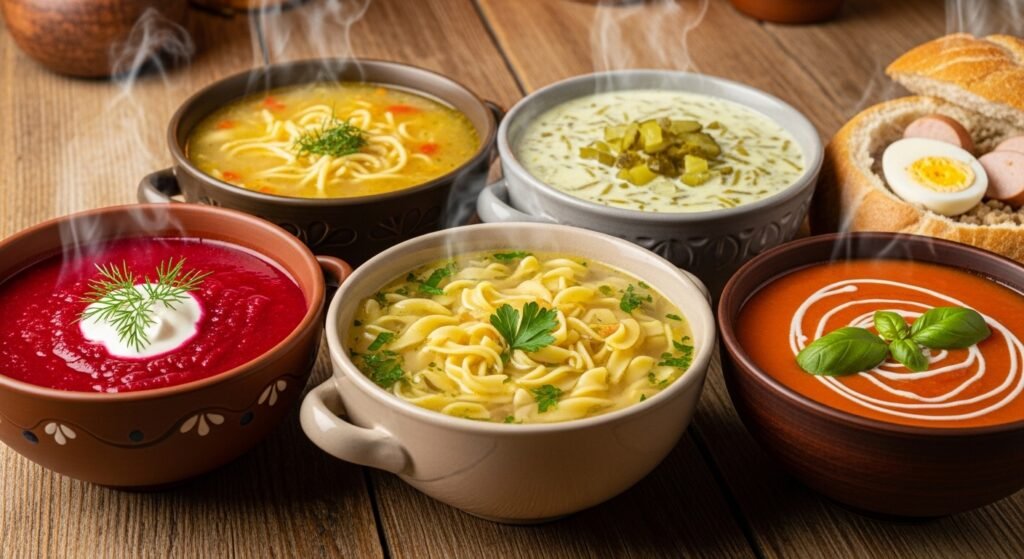
You can also explore Chanterelle soup, Beet greens soup botwinka, and Dill pickle soup Zupa ogórkowa Polish cucumber soup for something tangy. Heartier options include Stuffed Cabbage Soup and Polish Christmas Eve Beet Soup Barszcz Wigilijny. For more inspiration, browse a full Polish soup recipes post to see how diverse and comforting Polish soups can be.
Frequently Asked Questions (FAQ)
1. What is Polish Tomato Soup (Zupa Pomidorowa)?
Polish Tomato Soup, also called Zupa Pomidorowa or Pomidorówka, is a traditional Polish soup made from chicken broth (often leftover Rosół), tomato puree or passata, and cream. It is a popular comfort food usually served on Mondays after Sunday chicken soup.
2. Can I make Zupa Pomidorowa without Rosół?
Yes. While it is traditionally made with leftover Rosół, you can use homemade chicken broth or high-quality store-bought chicken stock. For a vegetarian version, vegetable stock works well.
3. Should I use tomato puree, passata, or fresh tomatoes?
Tomato passata or smooth tomato puree is the best choice because it gives a rich, velvety texture. Fresh tomatoes can be used, but they need to be peeled and seeded. Avoid crushed tomatoes if you want a smooth consistency.
4. What type of cream is best for this soup?
In Poland, 18% sour cream (“cream for soup”) is commonly used. You can also use heavy cream or a mix of sour cream and heavy cream. If using sour cream, always temper it first with a little hot soup to prevent curdling.
5. Is it better with noodles or rice?
This is a famous debate in Poland. Some prefer egg noodles, while others choose white rice. Both are traditional, so it depends on your personal taste.
6. How do I prevent the cream from curdling?
Do not boil the soup after adding cream. If using sour cream, temper it first by mixing it with a few tablespoons of hot soup before adding it to the pot.
7. How long does Polish Tomato Soup last in the fridge?
It can be stored in the refrigerator for up to 4–5 days. Reheat gently over low heat and avoid boiling.
8. Can I freeze Zupa Pomidorowa?
Yes, but it’s best to freeze it without cream. Add the cream after reheating. If frozen with cream, you can blend it to make it smooth again.
9. Is Polish Tomato Soup healthy?
It can be relatively light, especially if made with lean broth and moderate cream. You can adjust the cream quantity to reduce calories if needed.
10. Why is it traditionally eaten on Mondays?
In many Polish homes, Rosół (chicken soup) is served on Sunday. The leftovers are transformed into tomato soup the next day, making it a practical and traditional Monday meal.