
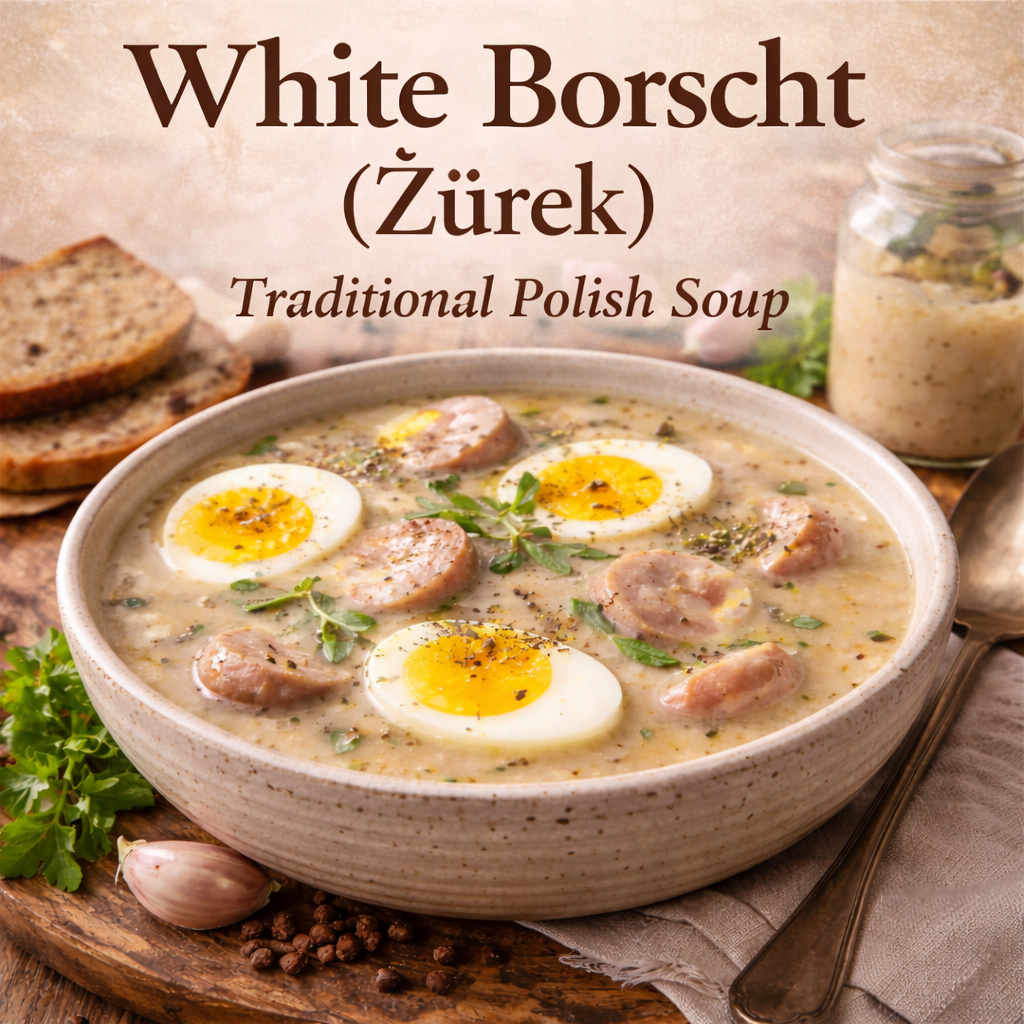
White Borscht (Barszcz Biały) / Żurek / Polish White Borscht
White Borscht (Żurek) In Poland, Żurek and Barszcz Biały are more than just soup names. White Borscht, also called Polish White Barszcz, is a traditional Polish soup known as a Polish cuisine defining soup. This Central Eastern European soup is common across Slavic cuisines Czech Slovak Belorussian, and it carries deep roots in Easter Sunday morning tradition and Christmas Easter family dinner gatherings. Often called żurek wielkanocny, it is served after the swięconka basket Holy Saturday blessing and enjoyed as a cold weather comfort food. The bowl itself is a hearty savory soup with a meaty smokey thick creamy sour flavor, built on a fermented base soup made from zakwas fermented mixture.
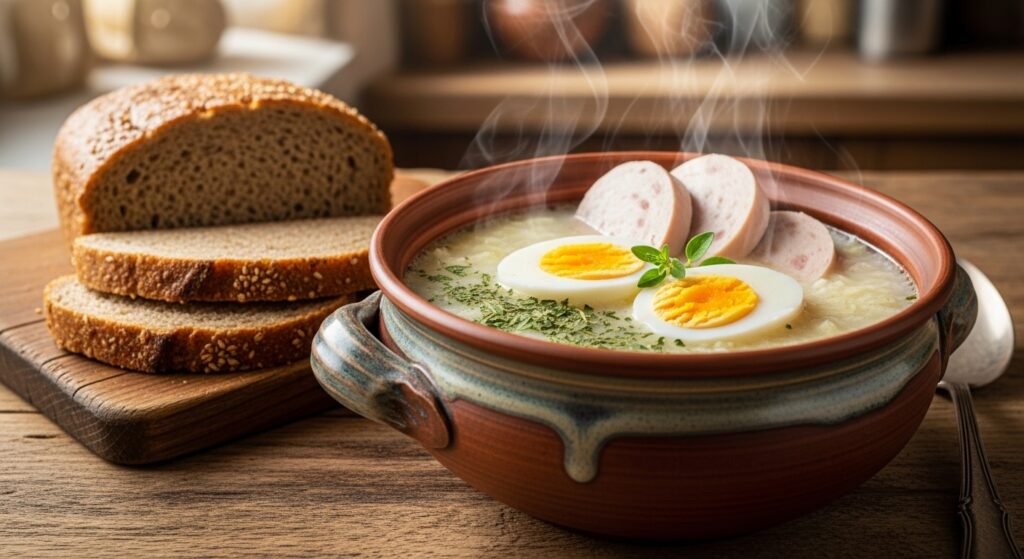
The name can be confusing because of barszcz vs żurek terminology and regional naming differences. The word comes from the old German word sūr sauer origin, and the diminutive żurek from żur explains why both names are used. This sour soup name includes versions like sour rye soup, fermented rye flour soup, and fermented wheat flour soup, depending on the flour used. Every home has its own touch due to family regional variations, but the core always remains a kwas sour base that gives the soup its distinct taste.
Barszcz Biały vs Żurek / White Barszcz vs Red Barszcz
Understanding white barszcz vs red barszcz difference helps clear confusion. White borscht no beets relies on a sour rye starter or sour wheat starter, created through rye flour fermentation or whole wheat flour fermentation. In contrast, beet borscht red barszcz and fermented beet barszcz get their color and flavor from beets, often balanced with vinegar lemon juice sourness. The key factor is the rye vs wheat flour difference, yet in many regions the names are used as interchangeable terminology regional variation.
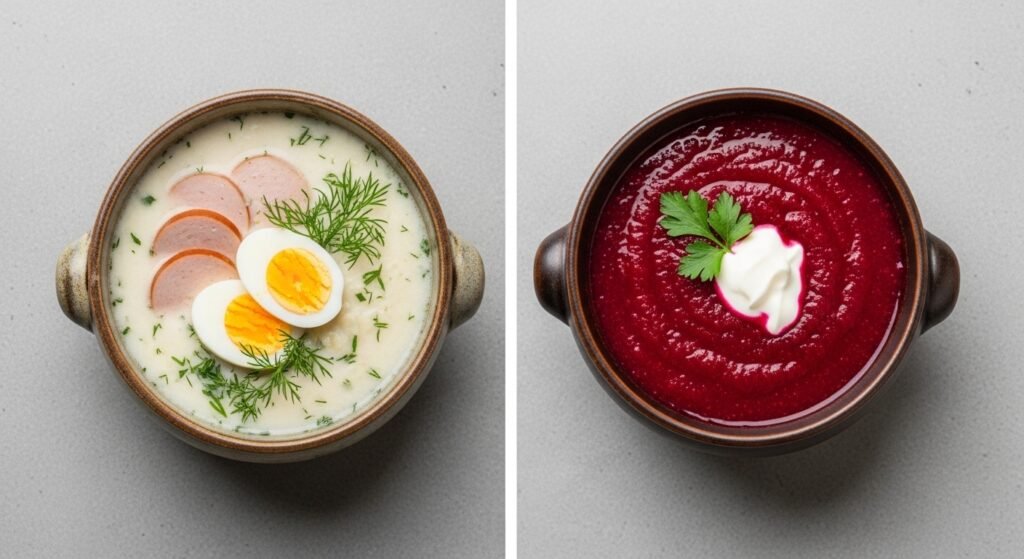
Traditionally, barszcz biały is slightly milder, meaning a less sour barszcz biały, often finished with sour cream addition. Both soups share the same idea of a kwas fermented base, and some versions even resemble a sour cream sour rye bread starter profile. From my experience cooking both, the real difference is not just ingredients but balance—choosing between the depth of rye and the softness of wheat while keeping the soul of White Borscht intact.
Zakwas / Sour Starter / Fermented Base
For me, the heart of White Borscht (Żurek) always begins with the Zakwas rye flour water spices fermentation process. This sour wheat starter fermented wheat flour liquid develops through lactic acid fermentation bacteria yeast, very similar to a sourdough starter comparison. When I prepare a homemade starter 5 days fermentation in a mason jar starter, I mix 5 tsp rye flour, 650 ml water, 5 cloves garlic starter, 4 bay leaves, and 3 allspice berries whole. Sometimes I add an optional sourdough starter kickstart to speed things up. The pickle smell indicator tells me it’s ready.
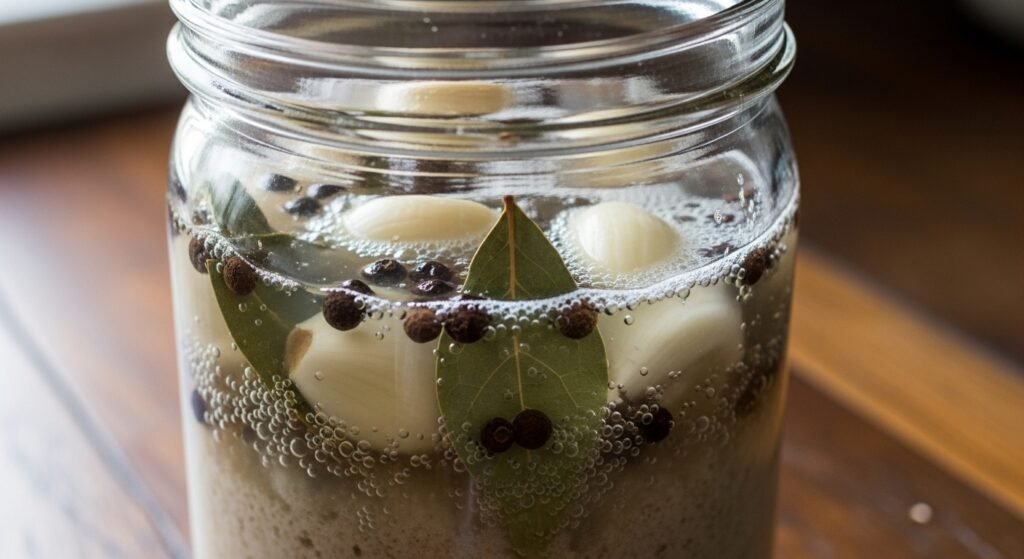
If time is short, I use ready-made zakwas bottle jar Polish shop, making sure it’s unpasteurised preservative free. In emergencies, I’ve tested a sour cream flour substitute by whisking 1 cup sour cream 1/4 cup flour whisk smooth, or even adding 1-2 tablespoons vinegar as a white wine vinegar substitute. A splash of dill pickle juice addition or a handful of dried wild mushrooms porcinis option can deepen the fermented flavor.
Ingredients
The structure of this soup depends on Polish white sausage biała kiełbasa fresh uncooked cooked scalded unsmoked, though a smoked sausage alternative works too. I often build flavor with 6 cups chicken broth 1400ml or vegetable broth pork broth, adding 12 oz 340g white sausage, 5 oz 140g smoked bacon optional, or even boczek smoked pork belly. Some families prefer smoked pork ribs broth or a smoked ham substitute. Into the pot go 1 tablespoon frying oil, 2 cloves garlic, 2 teaspoons marjoram, 1 lb 450g potatoes, or even 6 medium potatoes and 2 russet potatoes, depending on texture.

The soup thickens with 1–1 1/2 cups sour wheat starter, sometimes balanced by 1/3 cup heavy cream 30-36%, ¾ cup sour cream, or even 2 cups sour cream mixed with 1/4 cup all-purpose flour. I season with 1/2 teaspoon prepared horseradish, salt pepper to taste, and occasionally 1 pinch sugar 1 tablespoon vinegar for balance. In richer versions, I sauté ¾ small yellow onion diced in 3 Tbsp butter, add 300 g Polish sausage, stir in 1 Tbsp Vegeta seasoning, and finish with 6 hard-boiled eggs and 6 slices rye bread on the side. Even 1 link white Polish kiełbasa simmered gently can define the character of this traditional bowl.
Broth & Meat Base
For an authentic bowl of White Borscht (Żurek) – Traditional Polish Soup, the heart of the flavor starts with a rich flavorful broth. You can prepare it using Chicken thighs legs broth or a deeper beef bones broth, depending on how bold you want the taste. Many Polish cooks begin with rosół Polish chicken soup base, which already carries that slow-cooked comfort. Another traditional method is using the sausage cooking water base, making sure to remove fat from cooking water for a cleaner finish. I’ve found that combining meat with classic soup vegetables like onion carrot leek celeriac parsley root builds a balanced background flavor.

To deepen the taste, add stock cubes 1.5 cubes if needed, especially when the broth feels light. Season gently with bay leaf allspice berries marjoram seasoning, letting everything simmer slowly so the aroma develops fully. This layered broth is what gives Żurek its comforting, slightly sharp personality before the fermented base is even added.
Step-by-Step Cooking Process
Start by bringing the broth to a boil, then Bring broth to boil simmer 15-20 minutes gentle simmer so the meat cooks without becoming tough. If using raw sausage, cook white sausage slice brown optional afterward for extra depth. Prepare the add-ins: chop bacon 1/2 inch cubes 1 cm cubes, press garlic garlic press, and peel cube potatoes cook 7-10 minutes until tender but not falling apart. In a pan, fry sausage bacon medium-high heat brown sides, then scrape brown bits spatula deglaze pan and return all those flavors to the pot.

Now carefully add zakwas gradually stir taste adjust sourness, because balance is key in this soup. Stir in add heavy cream horseradish warm not boil to keep the texture smooth. If thickening is needed, whisk sour cream flour temper hot broth thicken before combining. Let it simmer gently 1-2 hours reduce 1-2 inches for a more concentrated flavor. Don’t forget to remove bay leaf allspice sachet option, then season salt pepper, and always serve hot for the best experience.
How to Serve
When it comes to serving White Borscht (Żurek) – Traditional Polish Soup, tradition matters. The classic way is to Serve with hard-boiled eggs, often alongside bread rye bread sourdough crusty bread to soak up every spoonful. In festive settings, you may see it presented in a hollowed bread bowl serving, especially for Easter brunch serving or even a formal wedding event serving. Some families like adding potatoes boiled mashed in soup, while others adjust the flavor with a touch of sugar vinegar adjust sourness depending on how sharp the fermented base tastes.
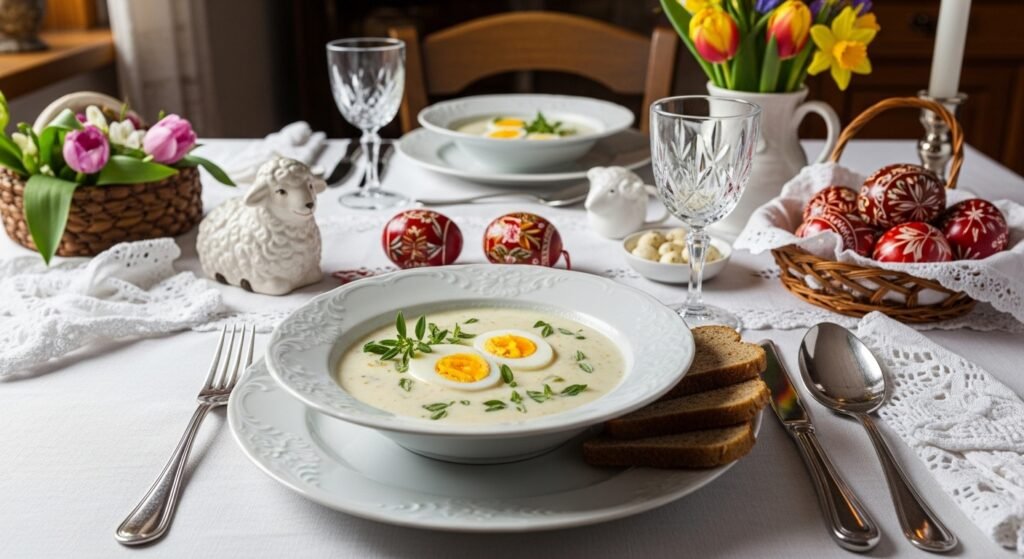
For a richer plate, add smoked sausage slices, a little horseradish sharp flavor, and finish with garnish marjoram herbs. During Lent, a lighter vegetarian postny version Lent fasting is often preferred, showing how flexible this traditional soup can be while still honoring its roots.
Vegetarian Version
A proper Postny vegetarian żurek keeps the soul of the soup but skips the meat. Use vegetable broth only and enhance the depth with dried porcini mushrooms for that earthy background flavor. You will omit sausage bacon, yet the soup still feels hearty when paired with potatoes eggs serving, keeping it satisfying without losing authenticity.

This version proves that even without meat, Żurek can remain rich and comforting, especially when served warm on a cold day.
Storage / Make Ahead
One thing I’ve noticed over the years is that Żurek truly improves with time. Make ahead tastes better next day, as the flavors settle and deepen. You can refrigerate up to 4 days, keeping it tightly covered. If planning longer storage, freeze before adding cream, since it can curdle cream if frozen with cream. Properly handled, it can freeze up to 3 months, and in some cases freeze up to 6 months (variation) depending on ingredients.
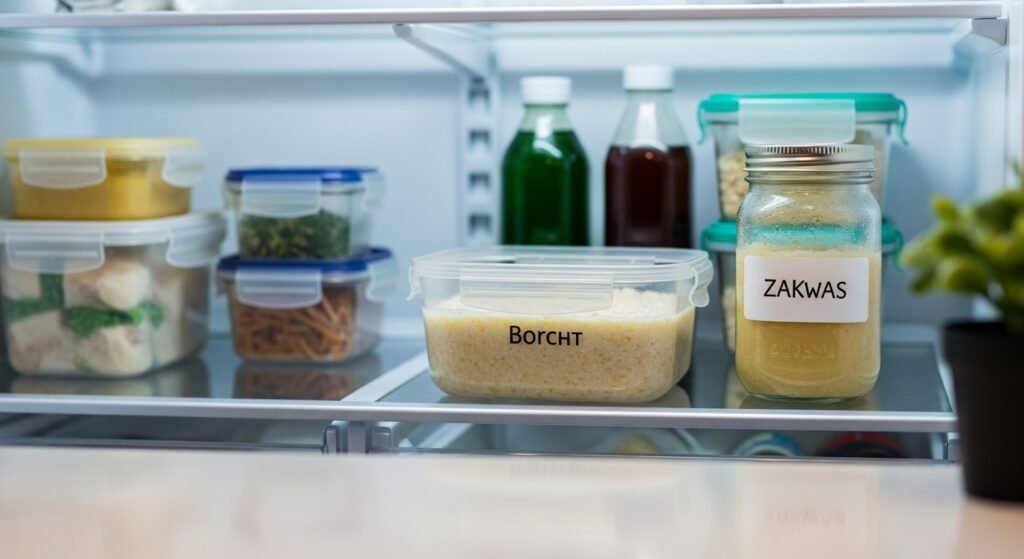
Remember to store zakwas 2 weeks refrigerated after opening to maintain its quality. When reheating, always remember it is best served hot, bringing back that comforting, slightly sour warmth that defines this traditional Polish soup.
Frequently Asked Questions – White Borscht (Żurek)
1. What is the difference between White Borscht and Żurek?
White Borscht (Barszcz Biały) is usually made with a fermented wheat starter, while Żurek is made with a fermented rye starter (zakwas). In many regions of Poland, the names are used interchangeably, and the difference often depends on family tradition rather than strict rules.
2. What is zakwas and can I replace it?
Zakwas is a fermented mixture of rye flour (or wheat flour), water, and spices that gives the soup its sour flavor. If you can’t find it, you can use sour cream mixed with a little flour, or add a small amount of white wine vinegar. The taste won’t be exactly the same, but it will still be good.
3. Can I make Żurek vegetarian?
Yes. Use vegetable broth instead of meat broth and skip the sausage and bacon. You can add dried porcini mushrooms for deeper flavor. Serve with potatoes and hard-boiled eggs for a traditional touch.
4. Why does my soup taste too sour?
You may have added too much zakwas at once. Always add it gradually and taste as you go. You can balance extra sourness with a little cream or a small pinch of sugar.
5. Can I make White Borscht ahead of time?
Yes, and it often tastes better the next day because the flavors develop more fully. Store it in the refrigerator for up to 4 days.
6. Can I freeze Żurek?
You can freeze it, but only before adding cream. Cream may curdle when frozen. Freeze for up to 3 months, then reheat gently and add fresh cream before serving.
7. What is traditionally served with Żurek?
It is commonly served with hard-boiled eggs and rye bread. During Easter brunch, it may even be served in a hollowed bread bowl.