
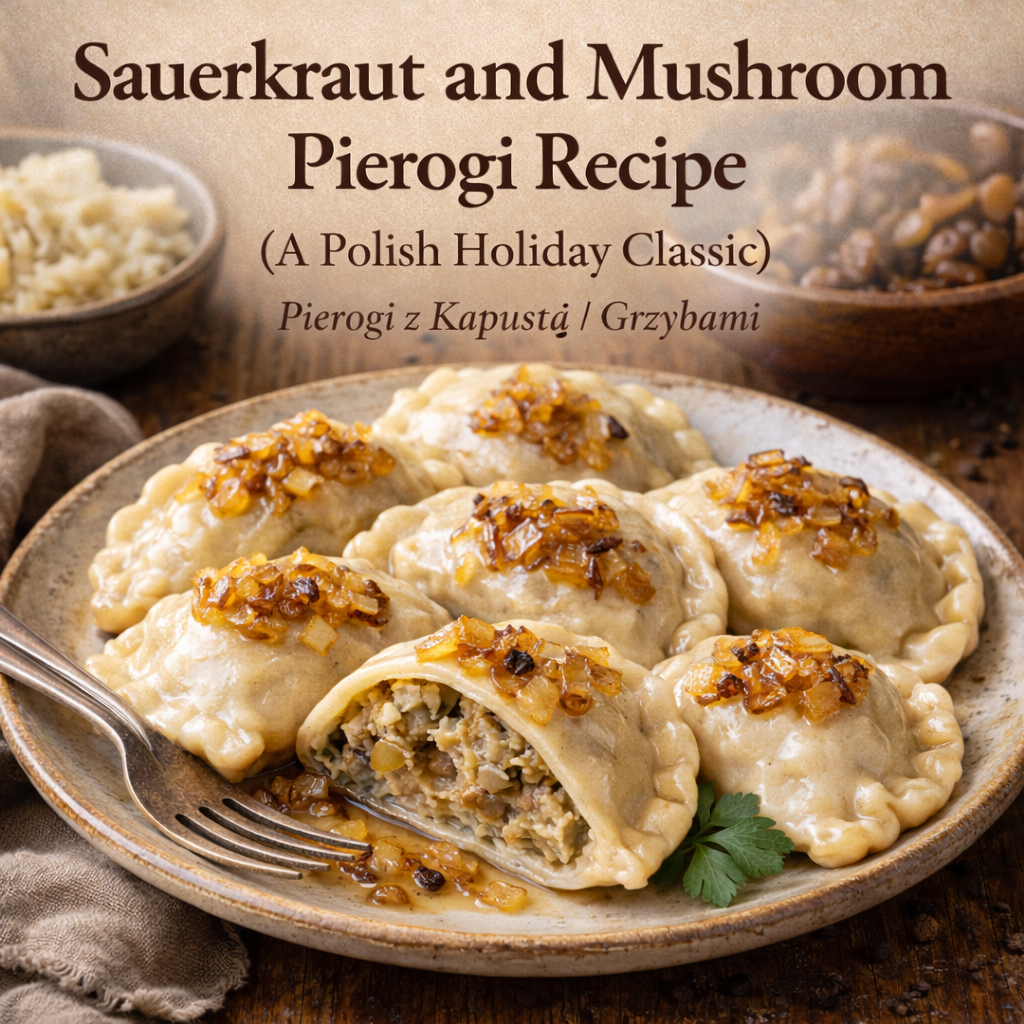
Sauerkraut and Mushroom Pierogies (A Polish Holiday Classic)
Sauerkraut and mushroom pierogies recipe, also known as pierogi z kapustą i grzybami, are deeply rooted in traditional Polish pierogi culture and hold a special place during Polish Christmas pierogi meals. These Wigilia pierogi are a classic example of Eastern European dumplings, loved as vegetarian pierogi and meatless pierogi served on Christmas Eve pierogi tables. This authentic Polish recipe reflects pierogi tradition, combining simple ingredients into a comforting dish that defines Polish cuisine, festive holiday pierogi, and timeless comfort food enjoyed across generations.
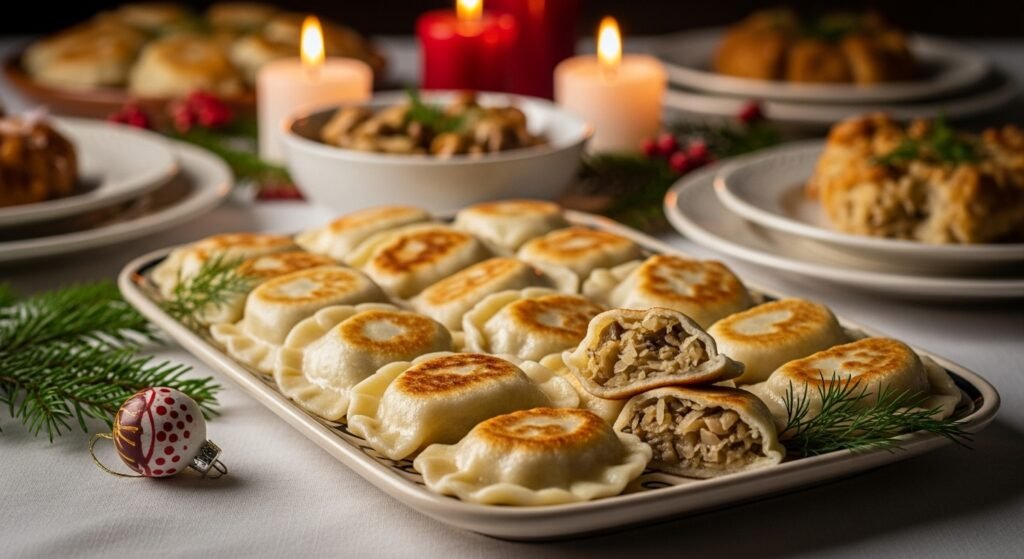
From my own experience, these pierogi feel most special when made slowly at home, following the rhythm of a traditional Polish dish prepared for family gatherings. Their popularity comes from how naturally they fit into Polish Christmas pierogi menus while still being enjoyed year-round as a satisfying part of everyday meals.
Pierogi Dough Ingredients Explained
A good pierogi dough starts with understanding the right pierogi dough ingredients, whether you use all purpose flour, unbleached flour, or traditional pierogi flour. The liquid base can vary between warm water, hot water, or even boiling water, combined with salt for balance. Some versions include egg, while others prefer egg free dough, sour cream dough, or milk dough depending on texture preference. Fat matters too, with butter, vegetable oil, or a vegan butter option helping create a soft dough, pliable dough, and elastic dough that follows a traditional dough recipe or a more simple dough recipe.
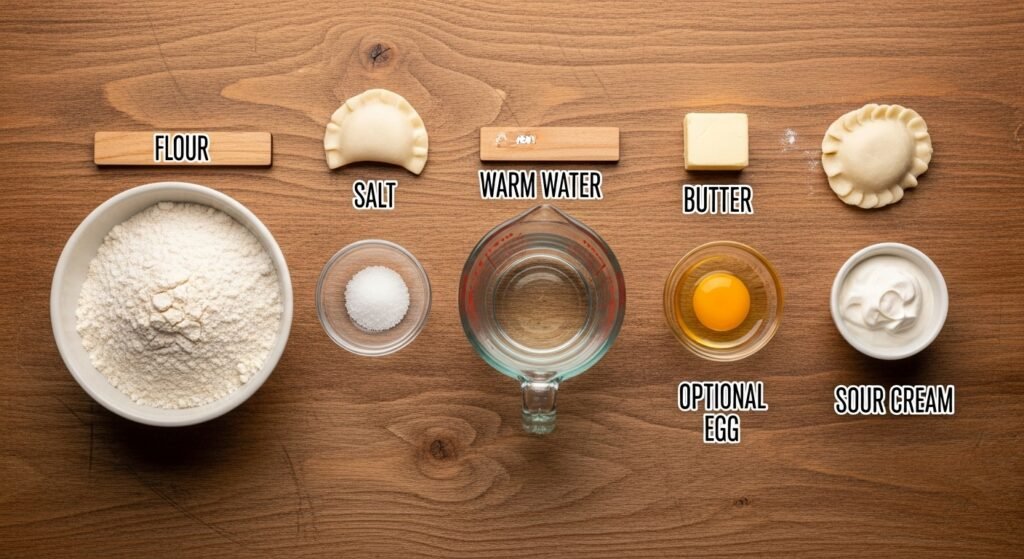
Personally, I find dough success comes from feel rather than rules. When mixed right, the dough becomes easy to roll, forgiving to handle, and reliable for shaping pierogi without tearing.
Sauerkraut and Mushroom Filling Ingredients
The heart of this recipe is the sauerkraut filling, specifically sauerkraut and mushroom filling made from fermented cabbage. Using sauerkraut in brine that is well drained sauerkraut is essential for flavor and texture. Mushrooms add depth, whether you choose wild mushrooms, dried mushrooms, porcini mushrooms, cremini mushrooms, button mushrooms, or other fresh mushrooms. Aromatics like onion, yellow onion, leek option, and garlic cooked gently in butter or oil, seasoned with black pepper and salt, create a rich cabbage mushroom stuffing that works perfectly as a vegetarian filling.Sauerkraut and mushroom pierogies recipe.
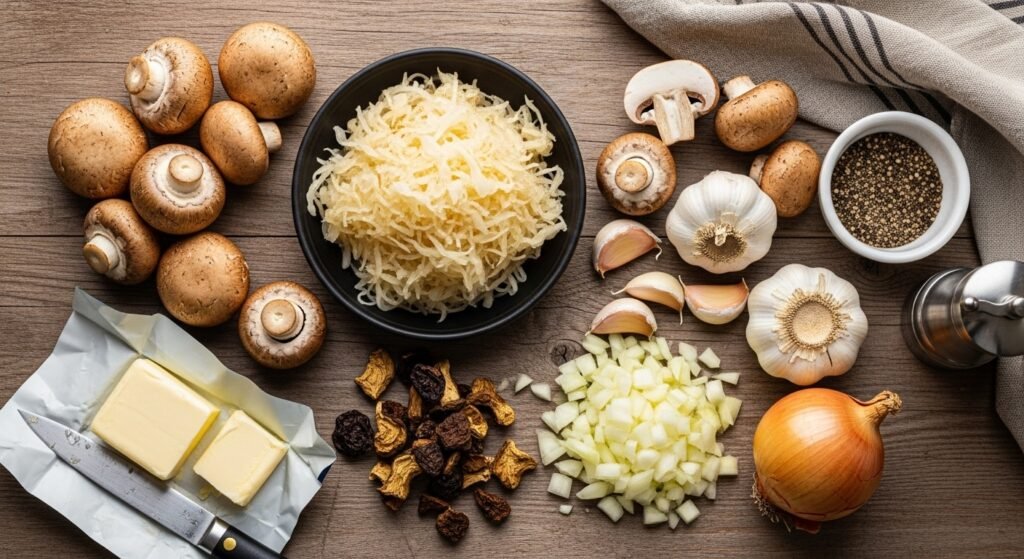
This filling is all about balance. Too wet and it leaks, too dry and it feels flat. When done right, it delivers bold flavor without overpowering the dough.
Preparing the Dough Step by Step
Dough preparation begins with mixing flour and salt, then making a well to control moisture. Depending on your method, adding egg optional, adding sour cream, or adding warm water slowly while wooden spoon mixing helps build structure. Proper kneading dough leads to a smooth dough, elastic dough, and non sticky dough that handles easily. Once ready, resting dough wrapped in plastic wrap, or even refrigerate dough, is key, whether you rest 20 minutes, rest 30 minutes, or rest up to 1 hour.
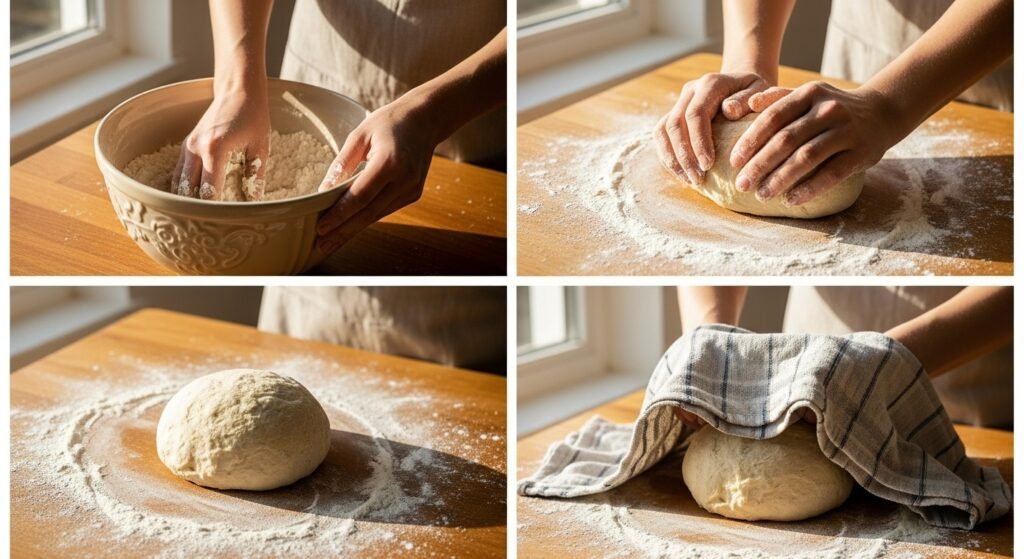
From experience, resting time is non-negotiable. Skipping it makes rolling harder and sealing frustrating, while rested dough feels cooperative and relaxed.
Preparing the Sauerkraut and Mushroom Filling
Flavor development starts with soaking dried mushrooms, followed by boiling mushrooms and reserving mushroom soaking water for depth. Properly draining sauerkraut and squeezing sauerkraut ensures good moisture control. Mushrooms are prepared through chopping mushrooms or shredding mushrooms, then cooked as sautéed mushrooms with onion frying in butter frying or oil frying until caramelized onions form. This creates a slow cooked filling that needs cooling filling before use, finished by seasoning filling for a deep savory taste, earthy flavor, and rich umami flavor.
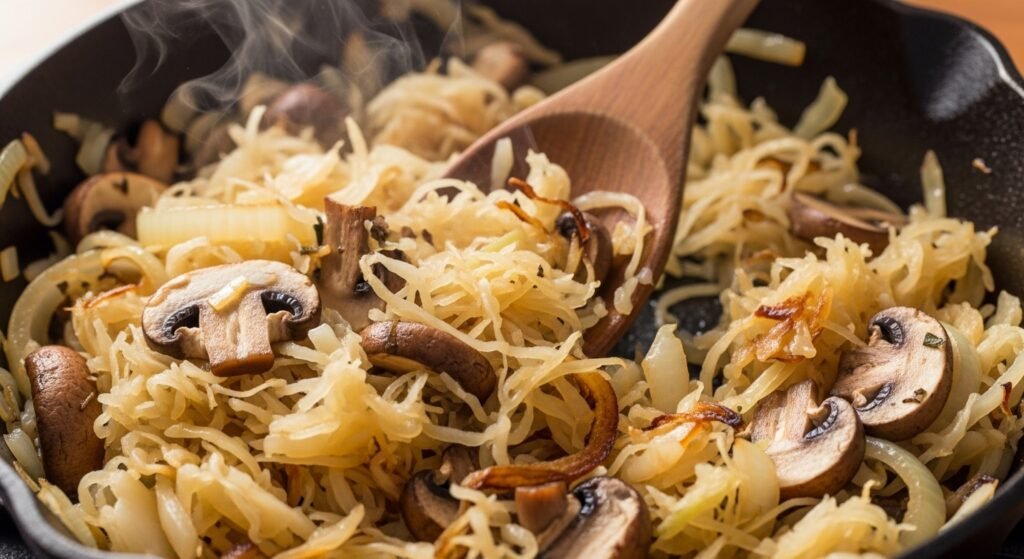
This is the stage where patience pays off. Letting the filling cool fully makes shaping easier and keeps the pierogi sealed during cooking.
Assembling the Pierogi the Right Way
When assembling pierogi, start by rolling dough on a floured surface until you get thin dough at about 1/8 inch thickness or even 1/16 inch thickness if you’re comfortable. Use cutting dough circles with a glass cutter, pastry cutter, 3 inch cutter, or similar tool. Add placing filling carefully using tablespoon filling, then folding dough into a neat half moon shape. Proper sealing edges is key, so take time pinching edges and crimping edges firmly to help preventing bursting during cooking.Sauerkraut and mushroom pierogies recipe.
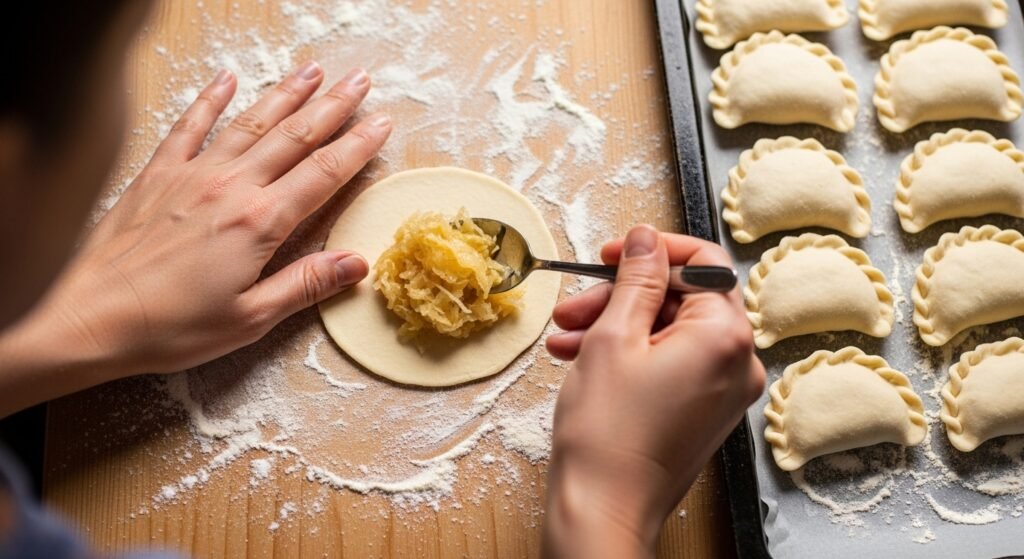
From experience, rushing this step causes leaks later. A calm pace and clean edges make pierogi hold their shape and cook evenly.
Cooking the Pierogi Gently
For cooking, use boiling pierogi in a large pot filled with salted water. Always work in batch cooking so the pierogi have space. At first, you’ll see pierogi sinking, then pierogi floating, which signals they’re nearly done. Continue cooking after floating for 3 minutes cooking if the dough is thin, or up to 5 minutes cooking for thicker dough. Remove them with a slotted spoon, allow draining pierogi, then lightly coat with butter coating or oil coating to stop sticking.Sauerkraut and mushroom pierogies recipe.
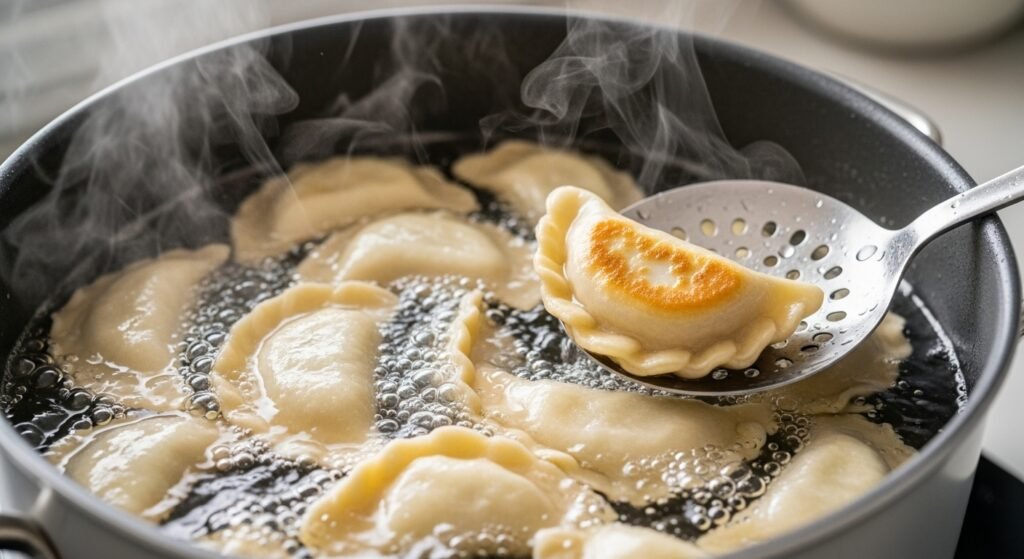
I’ve found gentle boiling keeps the filling intact and avoids tearing, especially with sauerkraut-based fillings.
Pan Frying for Extra Texture (Optional)
If you like extra texture, pan frying pierogi is worth it. Heat a skillet and use butter frying or oil frying until the pierogi turn golden pierogi with crispy edges. Cook just until lightly browned pierogi, not dry or hard.
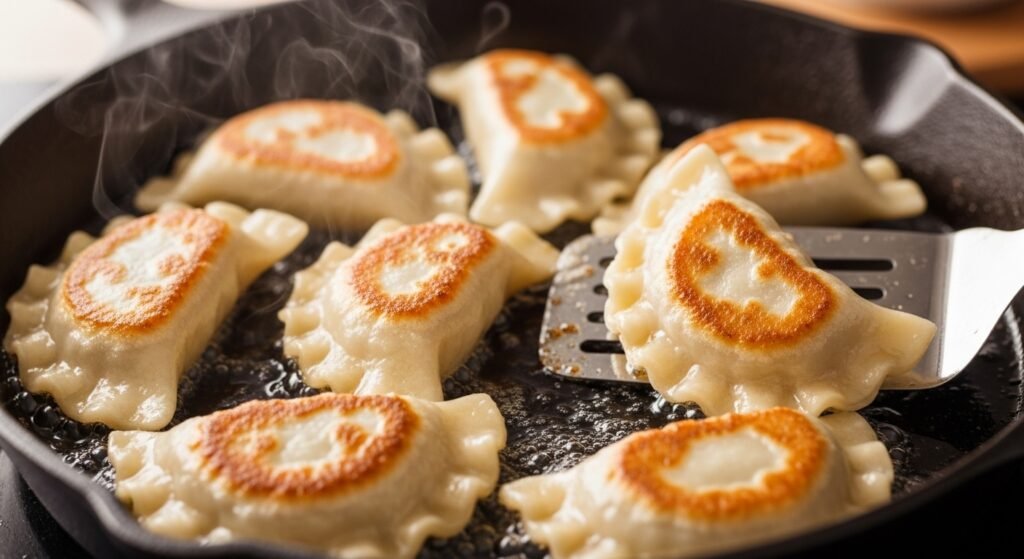
This step adds contrast and works especially well for leftovers or holiday platters.
Serving Ideas for Sauerkraut Pierogies
Simple pierogi serving ideas work best here. Top with sautéed onions, caramelized onions, or just melted butter. A spoon of sour cream or extra mushrooms fits perfectly with traditional Polish serving styles, especially for holiday serving. Serve warm and neat for proper comfort food plating.
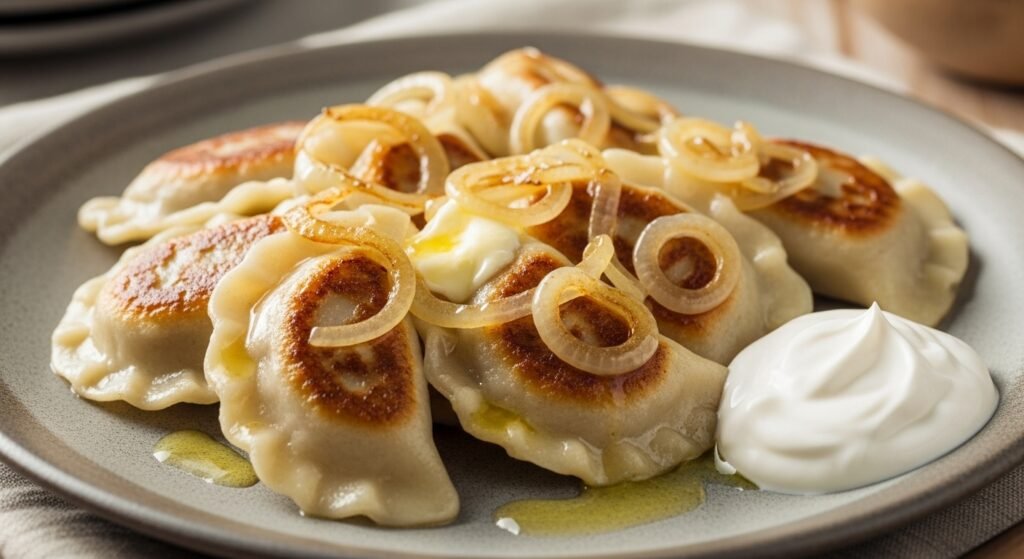
I usually keep toppings minimal so the sauerkraut and mushroom flavor stays center stage.
Storing and Freezing Pierogies
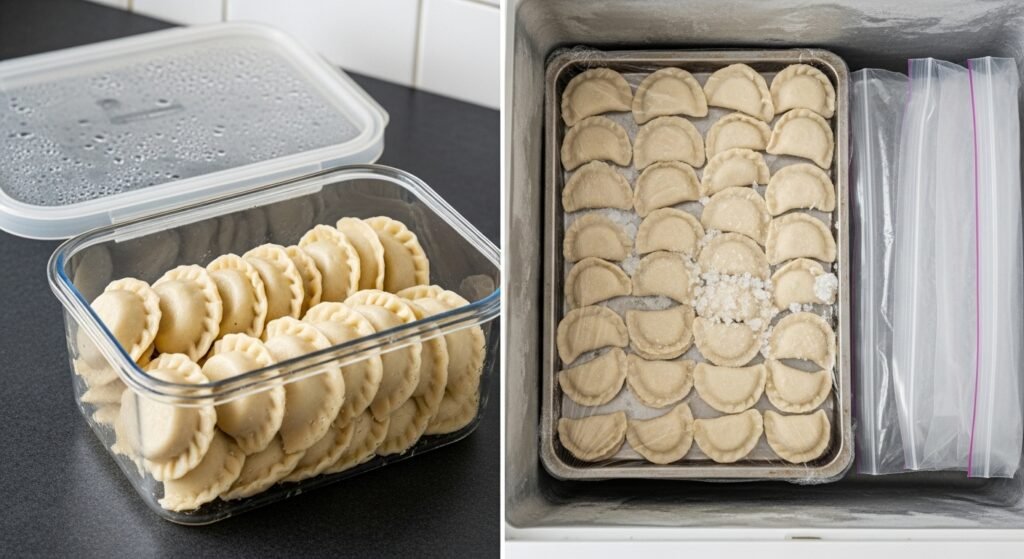
For pierogi storage, keep cooked pierogi in refrigerator storage inside an airtight container for short-term use. Handle cooked pierogi storage, dough storage, and filling storage separately to maintain texture. For long-term use, freezing pierogi works well for both cooked pierogi freezing and uncooked pierogi freezing. Arrange them in single layer freezing on a floured tray, then move to freezer bag storage. When ready, cooking frozen pierogi is simple—just boiling from frozen without thawing.
Frequently Asked Questions (FAQs)
What are sauerkraut and mushroom pierogi?
Sauerkraut and mushroom pierogi are traditional Polish pierogi filled with fermented cabbage and mushrooms. They are especially popular as Polish Christmas pierogi and are commonly served on Wigilia (Christmas Eve) as a meatless pierogi option.
Sauerkraut and Mushroom Pierogies Recipe?
Yes, these are naturally vegetarian pierogi and meatless pierogi as long as the filling is cooked with oil or butter and not animal fat. They are a classic choice for holidays and fasting days.
Do I need to rinse sauerkraut before using it?
It depends on the sourness. If the fermented cabbage is very sharp, lightly rinsing and draining it can balance the flavor. Always squeeze it well to control moisture in the cabbage mushroom stuffing.
What mushrooms work best for this filling?
A mix works best. Dried mushrooms or porcini mushrooms add deep flavor, while fresh mushrooms like cremini or button mushrooms give texture. Using both creates strong umami flavor and earthy flavor.
Why should the filling be cooled before assembling pierogi?
A hot filling can soften the dough and cause tearing. Letting the filling cool improves moisture control, helps sealing, and prevents pierogi from opening during cooking.
How do I know when pierogi are fully cooked?
Pierogi are ready when they float to the surface and stay there. After floating, cook them for a few extra minutes so the dough becomes tender but not mushy.
Can I freeze sauerkraut and mushroom pierogi?
Yes. Both cooked pierogi freezing and uncooked pierogi freezing work well. Freeze them in a single layer first, then store in a freezer bag. They can be boiled from frozen without thawing.
Should pierogi be boiled or pan-fried?
Traditionally, pierogi are boiled first. Pan frying in butter is optional and adds crisp edges. Many Polish homes do both, especially for leftovers.
What is the best way to serve sauerkraut and mushroom pierogi?
They are best served with melted butter, sautéed onions, or caramelized onions. Some people add sour cream, but many prefer them plain to enjoy the filling.
How long do cooked pierogi last in the fridge?
Stored in an airtight container, cooked pierogi keep well in the refrigerator for 2–3 days. Reheat by pan-frying or gently boiling.