
Perogies, also known as pierogies, are Polish dumplings that many people simply call dumplings, but their charm comes from the wide range of fillings like potatoes, cheese, sauerkraut, and mushrooms. Made with humble ingredients, they act as a blank canvas, which is why choosing the right accompaniments matters. From simple condiments to hearty mains and fresh vegetable sides, these options help build a complete spread. In my experience, thinking through serving ideas early makes a big difference, especially when planning a main dish that feels both traditional and satisfying.
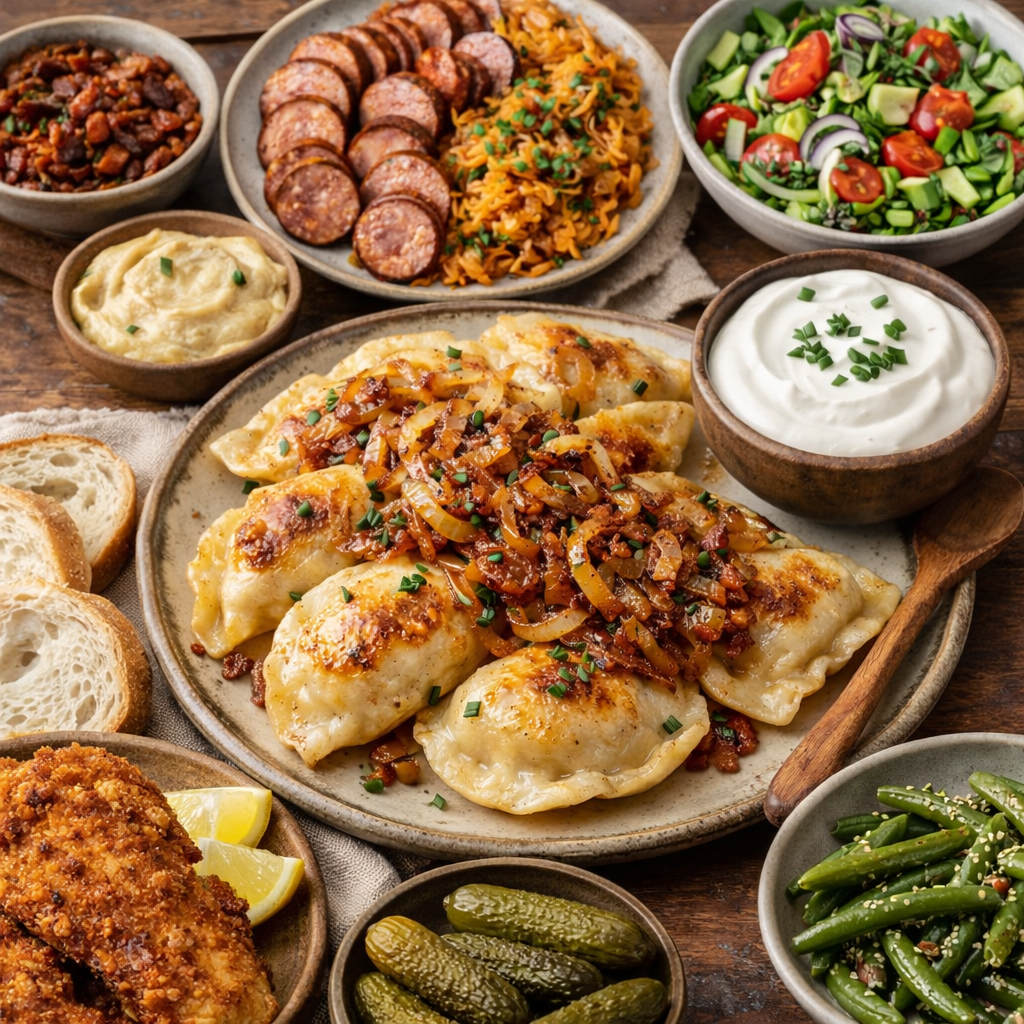
What makes this classic dish special is how easily it fits into different meals. In many Polish family kitchens, including those passed down through generations, perogies are loved as comfort food that works for both savory and sweet pairings. In the United States, they are often served as part of a larger table with side dishes, but they can also stand alone as a simple main dish. Good meal planning helps match them to the occasion, whether it is Easter, other holidays, or a relaxed family dinner where everyone wants something familiar and filling.
Caramelized Onions
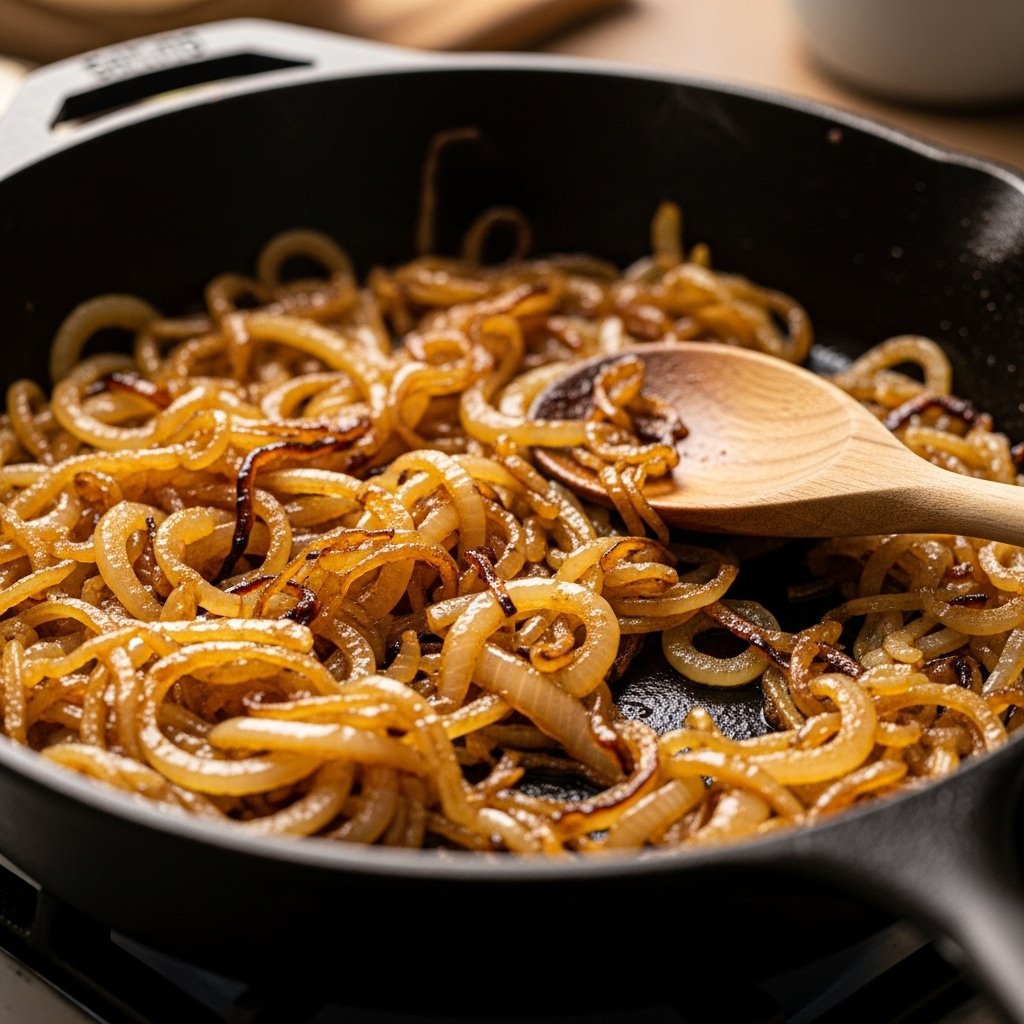
When serving perogies, adding caramelized onions instantly lifts the plate with deep sweet and rich umami flavor. I usually start by thinly slice fresh onions, then slowly sautee them in olive oil using a heavy bottom skillet or cast iron skillet. Keeping the heat at medium heat with a small pinch of salt allows the onions to soften without burning. It takes about 45 minutes, but stirring gently with a wooden spoon prevents sticking and helps build that soft, golden texture that makes the flavor payoff worth the wait.
From experience, a little patience and just enough oil make all the difference. As the onions break down, their natural sugars come forward, turning simple onions into a rich topping that pairs perfectly with perogies. This method creates onions that are not rushed, not bitter, and full of depth, making them one of the most reliable sides whenever dumplings are on the table.
With perogies, sour cream is one of those sides that feels natural and expected, yet it never gets boring. Its traditional accompaniment status comes from how well the tangy and smooth texture balance rich fillings. Over time, I’ve noticed that even a small spoonful can completely change the bite, especially when perogies are served hot. Many people now prefer plant-based sour cream, which is easy to find at a grocery store where at least one brand is usually available.
If store-bought options are limited, a homemade version works just as well. Blending soaked cashews with water and a splash of lemon juice creates a creamy finish that pairs beautifully with perogies. This simple blending method delivers a clean, fresh flavor without overpowering the dish, and it’s something I often recommend when serving guests with different dietary preferences.
Chopped Fresh Herbs
Adding fresh herbs to perogies brings a clean, bright contrast that keeps the dish from feeling heavy. Dill is the most traditional herb, and in my experience, it works especially well with potato-based fillings. I also like mixing in parsley, chives, basil, and tarragon to add layers of flavor without overpowering the dumplings. These herbs stay light and fresh, which helps highlight the natural taste of perogies rather than cover it up.
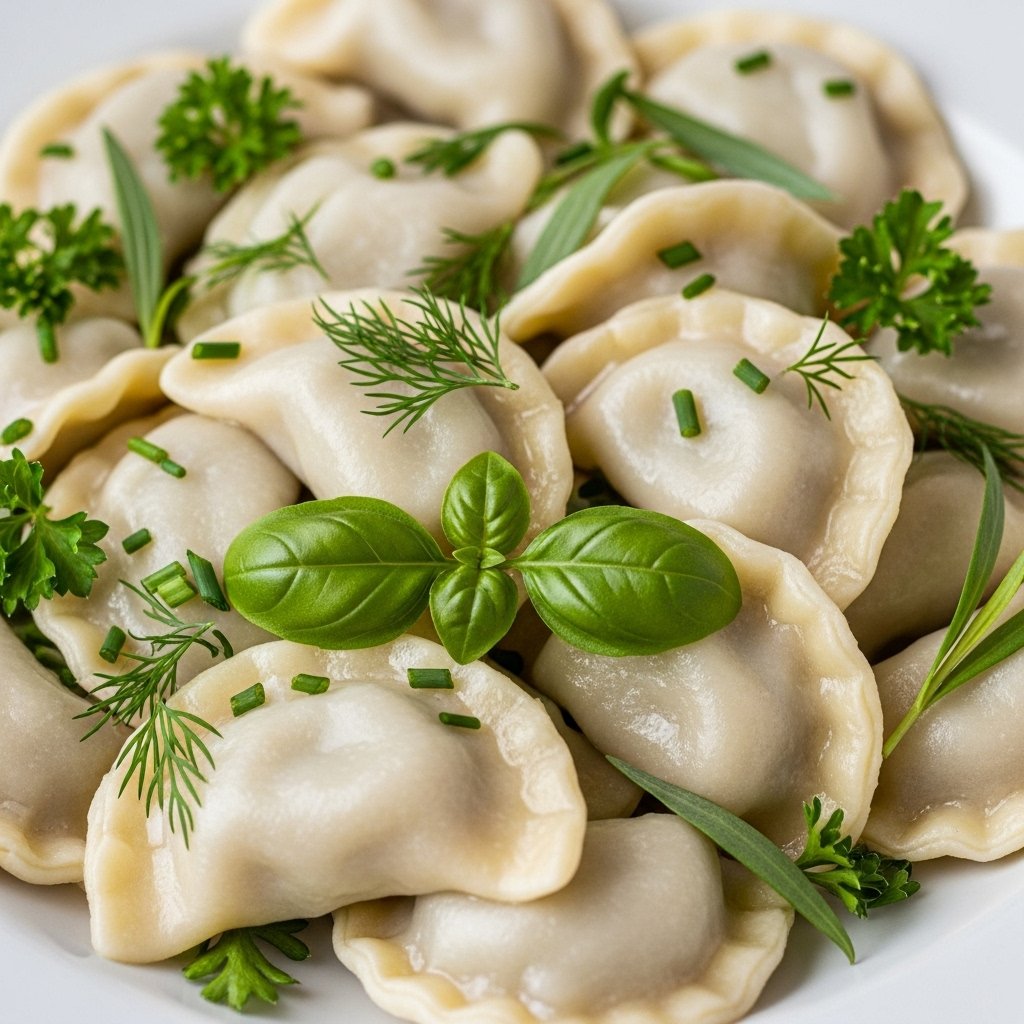
It’s best to avoid hearty herbs when serving them raw. Strong flavors like rosemary, thyme, and sage can easily overpower the delicate dumplings, especially when used uncooked. Keeping the herbs finely chopped and lightly sprinkled allows them to enhance the dish instead of competing with it, a small detail that makes a noticeable difference on the plate.
Savory Sides That Make a Meal
When turning perogies into a full plate, savory options like kielbasa, Polish sausage, or ham add depth and balance. I often reach for smoked sausage because its bold flavor stands up well to soft dumplings, especially with a dab of Dijon mustard on the side. Heavier mains such as pork chops, pork tenderloin, pork shoulder, or even Boston butt work well when you want something filling. For those who enjoy rich European-inspired comfort meals, dishes like Mary Berry’s Spanish chicken recipe also pair naturally alongside hearty potato-based sides. Special occasions call for prime rib or a well-seasoned chuck roast, while these meat fillings and cuts bring structure to the meal without stealing attention from the perogies.
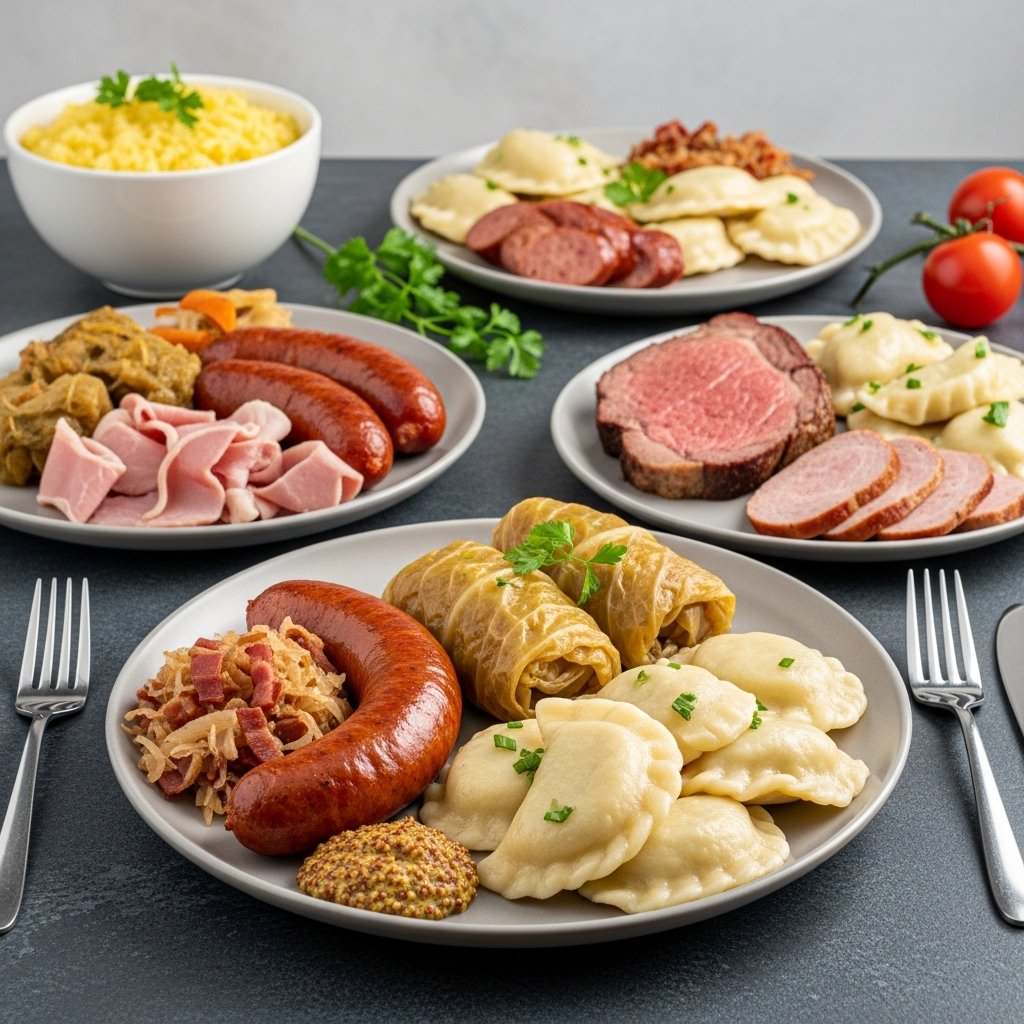
For a more traditional table, dishes like bacon with cabbage, stuffed cabbage rolls, or golabki feel right at home. I’ve also served bigos, the classic hunter’s stew made with sauerkraut and mushrooms, and swapped meat for tofu substitute when cooking plant-based—still full of rich flavors. These combinations lean into familiar comfort food, creating a spread that feels hearty, balanced, and deeply satisfying.
Warm Soup Pairings
Serving perogies with a warm bowl of soup adds comfort without making the meal feel heavy. I often pair them with vegan corn chowder made with potatoes and vegan sausage, especially when I want something smoky and creamy. Another reliable option is Italian wedding soup, where vegetables, a light white wine broth, tender meatballs, and pastina come together smoothly. These soups sit well beside perogies and let the dumplings remain the focus.
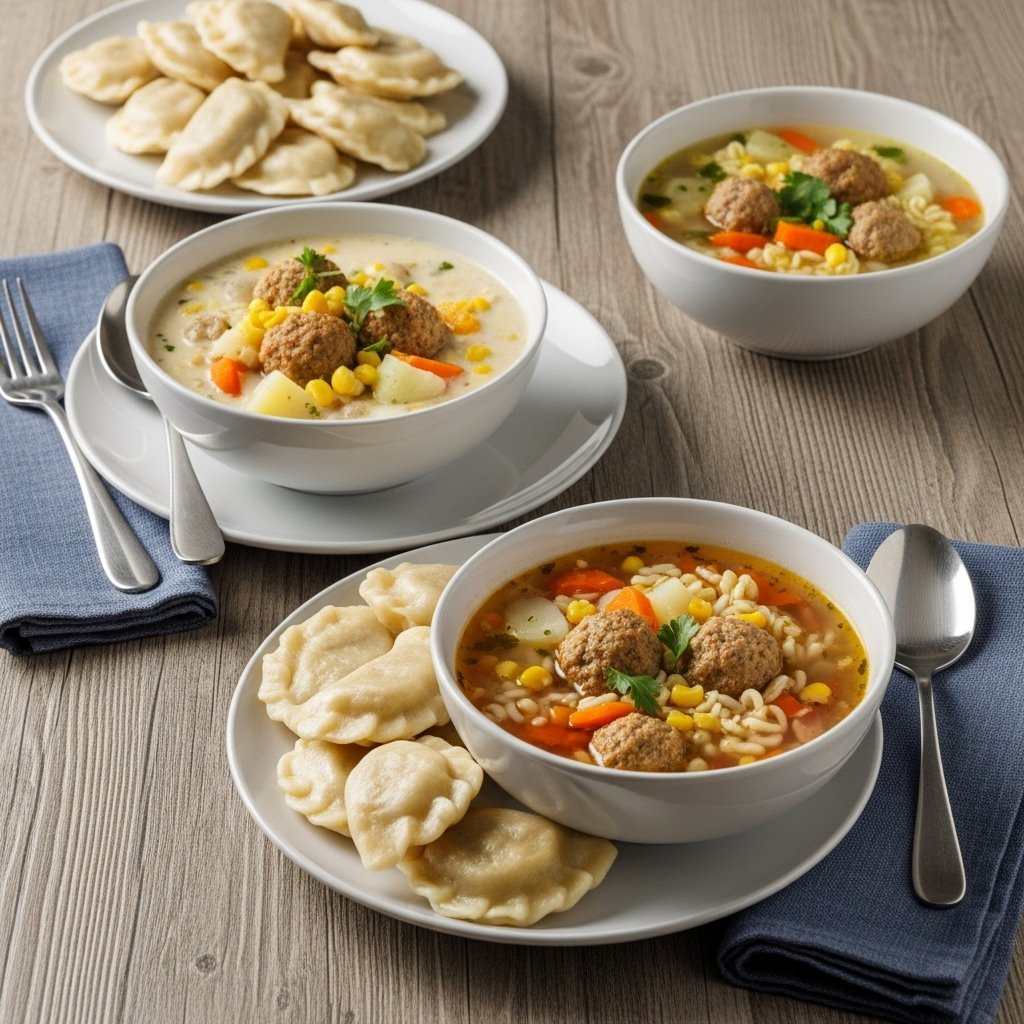
For colder days, I lean toward more traditional choices like parsnip soup or apple soup, which bring gentle sweetness, or hearty classics such as cabbage roll soup. A true favorite at the table is Polish beet soup, known as barszcz or borscht, with its clear, translucent broth and earthy depth. From experience, soups like these stretch the meal naturally and make perogies feel like part of a thoughtfully planned spread.
Fresh Salads and Lighter Sides
When perogies feel a bit rich, fresh vegetable sides and salads bring balance to the plate. I often serve a mix of arugula and radishes with soft herbs, tossed lightly so the greens stay crisp. Adding pistachios, cherry tomatoes, or cooked farro gives texture, while a simple vinaigrette keeps everything bright. These kinds of salads cut through heavier dishes and make the meal feel more complete without feeling heavy.

Roasted vegetables also fit naturally here. I like combining butternut squash with pecans and pomegranate seeds for sweetness, or going simple with a vegan caprese using basil, tomato, and vegan mozzarella. Heartier options like vegan chicken caesar salad, or chilled bowls made with iceberg lettuce, mayonnaise, parmesan, and even cauliflower, work well when feeding a crowd. Over time, I’ve found that these crunchy salads give perogies room to shine instead of competing with them.
Cooked Vegetable Sides
Cooked vegetables pair naturally with perogies, especially when you want something warm but not heavy. I often rotate between air fryer cabbage wedges and brussels sprouts, since both develop crisp edges while staying tender inside. Simple trays of roasted root vegetables like carrots, squash, and beets work well too, bringing out natural sweetness. For something lighter, grilled asparagus finished with lemon is a clean option that keeps the plate fresh.
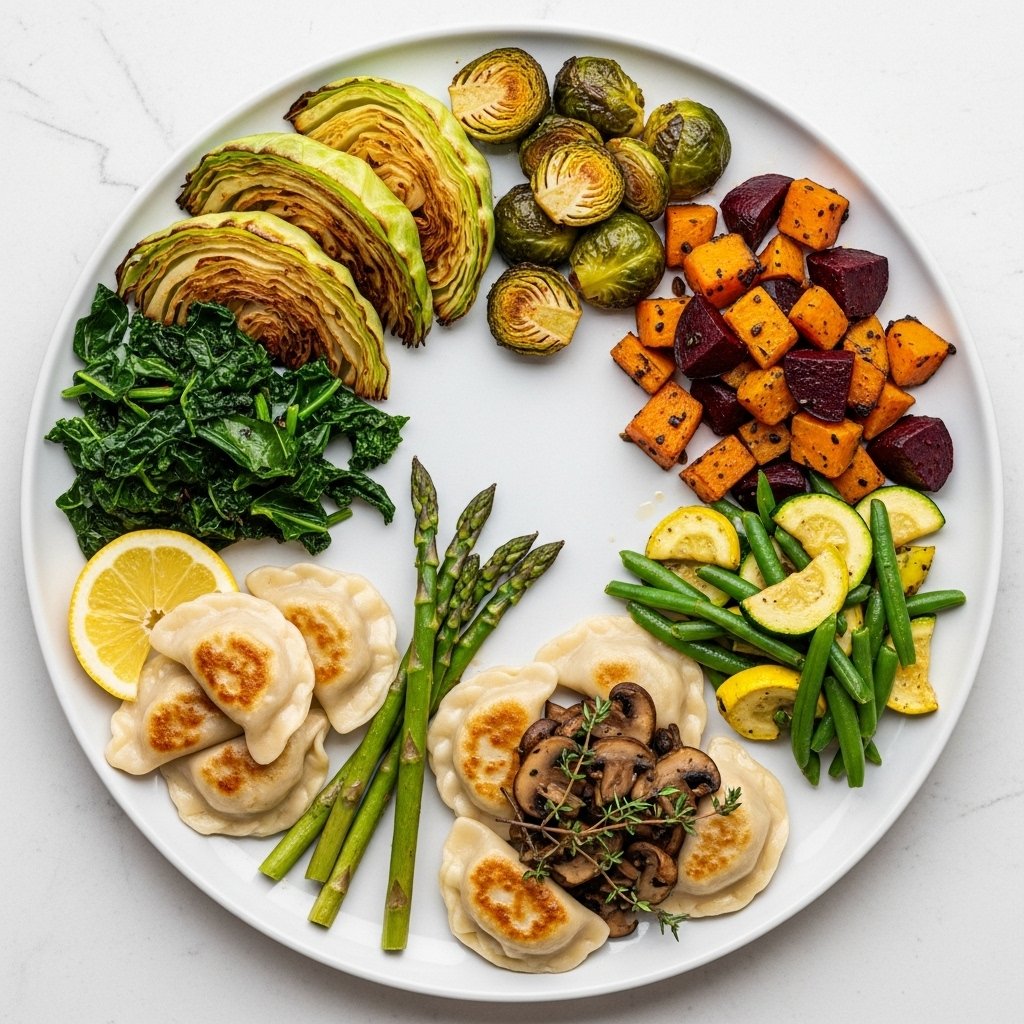
Leafy greens also fit easily alongside dumplings. A quick sauté of kale, spinach, chard, or mustard greens adds color and nutrition without overpowering the meal. I also like zucchini and yellow squash in warmer months, or classic green beans when I want something familiar. Earthy sides such as mushrooms cooked with thyme add depth and round out the meal, making these vegetables dependable companions for perogies.
Sweet Pairings for Pierogi
Sweet perogies open the door to a completely different experience, especially when paired with simple, familiar toppings. I often serve them with fruit compote made from berries, cherry, or blueberry, or keep it classic with apple puree or smooth apple sauce. A light sprinkle of cinnamon sugar or cinnamon sprinkles adds warmth without overpowering the filling, while a thin chocolate drizzle works well when you want something richer. These options highlight the filling instead of hiding it.

For more indulgent plates, syrup choices like maple syrup, honey, or caramel bring depth and shine. Adding whipped cream or ice cream turns dessert pierogi into something that feels special but still simple. From experience, mixing one warm element with one cold or creamy topping creates balance, making sweet perogies feel intentional rather than overly heavy.
Drinks That Pair Well With Pierogi
Choosing the right drink can quietly enhance perogies without pulling attention away from the food. Light beer styles like pilsner or lager work well because they refresh the palate, while darker options such as a porter add depth alongside richer fillings. For wine lovers, wine choices like sauvignon blanc or pinot grigio keep things crisp, while pinot noir offers a soft red option that does not overpower the dish. A chilled vodka is also a classic choice and fits naturally with Eastern European drinks served at traditional tables.

Non-alcoholic options are just as effective. I often recommend fruit smoothies for a fresh contrast, or sparkling water to cleanse the palate between bites. Calmer options like herbal tea, including chamomile or mint, feel comforting, while kombucha adds a light tang. Everyday choices such as soft drinks and iced tea remain reliable, especially when serving perogies to a mixed crowd with different preferences.
Cooking, Storage, and Preparation Tips
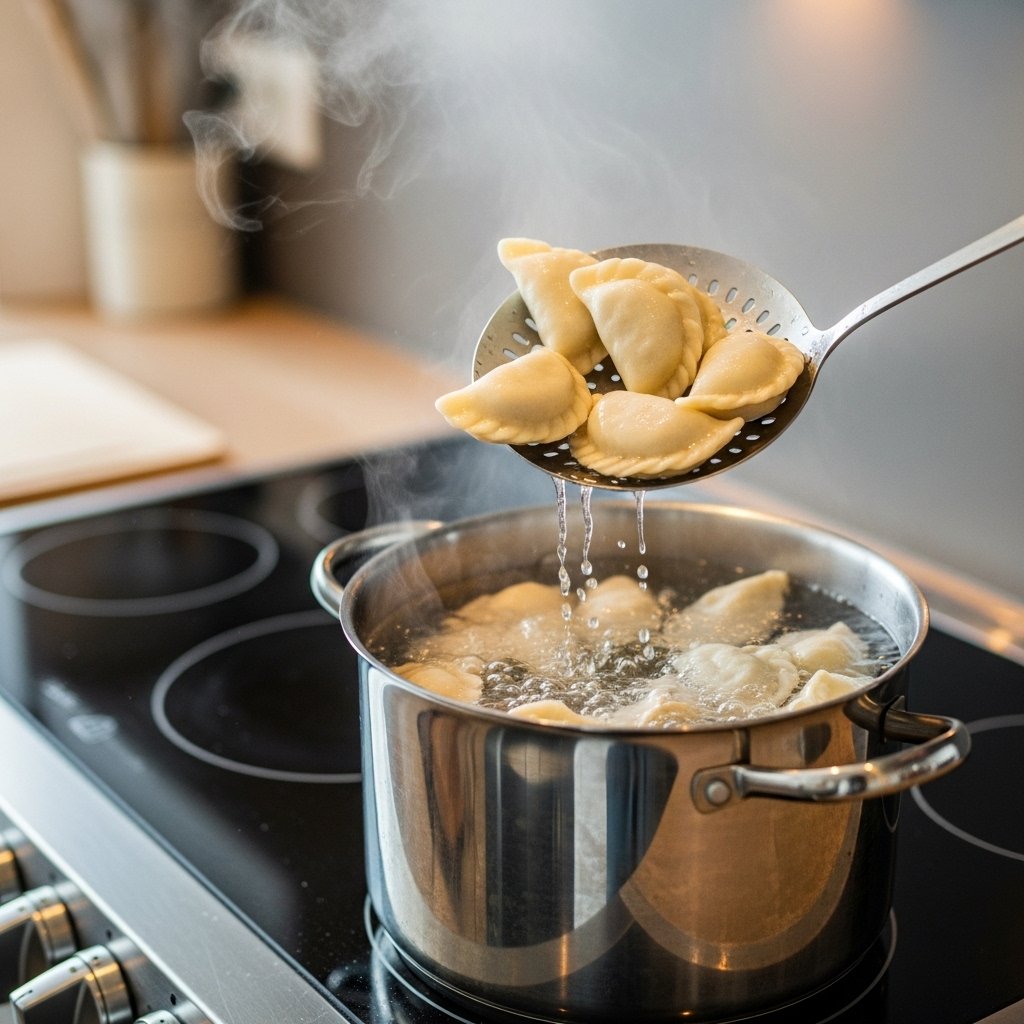
Proper boiling pierogi is the foundation of good texture. I always use a large pot filled with salted water, letting the dumplings cook until floating before lifting them out with a slotted spoon. Resting them briefly on a cooling rack helps remove excess moisture before the next step. When making extras, freezing them on a sheet pan first and then storing them in a zip-lock bag with parchment paper prevents sticking and keeps portions easy to manage later.
For serving, lightly crisping perogies in a skillet with butter or olive oil adds flavor, while reheating in an air fryer creates a quick crispy finish. From experience, good storage matters just as much as cooking—perogies can refrigerate well for up to 5 days or freeze safely for 3 months without losing quality. Paying attention to shelf life and reheating methods ensures they taste just as good the second time around.
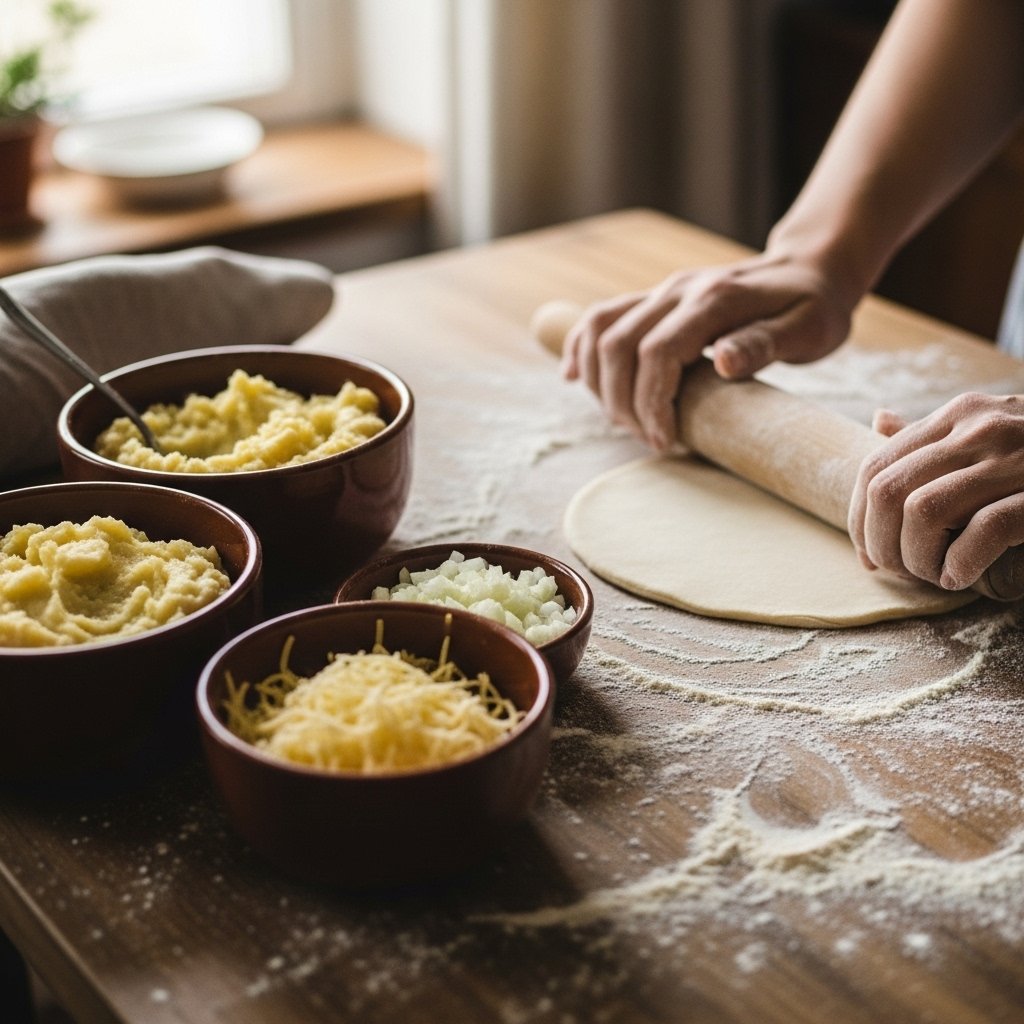
Good perogies start with simple, well-balanced components. A classic dough often includes egg yolk, whole milk, vegetable oil, and all-purpose flour, which come together into a soft base that is easy to work with. For richness, the filling usually blends mashed potatoes, farmer’s cheese, unsalted butter, and finely diced onions, seasoned gently with salt and black pepper. From experience, keeping these ingredients fresh and properly measured makes shaping and sealing much easier.
During assembly, brushing edges with egg whites helps the dough seal cleanly, while extra dough dusted with flour prevents sticking. Once filled, the perogies can be finished with a simple topping or served alongside sour cream. Many home cooks still refer back to a trusted recipe, including versions inspired by the Veselka cookbook, because consistent technique matters more than complicated steps when building reliable perogies.
FAQs and Dietary Variations
Perogies are flexible enough to suit many eating styles, which is why they stay popular across different tables. For vegetarian pierogi, fillings like cheese filling, potato filling, spinach, or mushrooms work naturally and keep the flavor satisfying. When cooking for plant-based guests, vegan pierogi made with egg-free dough pair well with light toppings such as tomato sauce, keeping the dish balanced without feeling heavy.
They also shift easily from savory to sweet. Dessert pierogi are often finished with simple sauces depending on the mood of the meal. For savory plates, gravy, mustard, or salsa fit well, while sweeter versions shine with caramel sauce or fruit-based toppings. From experience, this versatility and adaptability is what makes perogies dependable—you can adjust them without losing their familiar comfort.